 EN
Quick Answer
To find a shapewear manufacturer, start with one product brief, search for the capability that brief requires, and shortlist suppliers only after checking their samples, responsibilities and order conditions. An impressive catalogue or low headline MOQ is a discovery signal, not a complete buying recommendation. Compare the same garment and development scope before deciding who deserves a paid sample trial.
A useful shortlist contains evidence and unanswered questions beside each name. Identify the actual production location, who develops the product, which processes are subcontracted, and what your proposed quantity includes. Move candidates forward when their answers become specific enough to support an approval decision, rather than when they simply respond quickly.
What Should You Define Before Searching for a Shapewear Manufacturer?
Write a brief around a wearer problem and a garment. A founder looking for comfortable shaping shorts needs to define the intended occasion, coverage, support feel and relevant fit difficulties. A supplier cannot evaluate “premium shapewear for everyone” as precisely as a product with a clear use case. The search becomes more productive when it begins with a requirement a factory can discuss.
Select a reference direction using a catalogue such as S-SHAPER’s shapewear products. Identify what you like about the reference and what needs to change. A waistband adjustment, different torso length and a private label are separate requests. Explain the reason for each so a developer can distinguish essential function from a visual preference.
Include the launch market, approximate quantity, size direction, intended colors and branding. Mark unknowns openly. If you need material recommendations or a technical specification, state that support need rather than pretending you already have a complete design. The OEM/ODM service distinction helps separate manufacture from a defined design and supplier-assisted development.
Finally, decide what would disqualify a platform. If a garment cannot meet your essential size requirements or the proposed development commitment exceeds your budget, it should not progress because its photos look attractive. A short list of non-negotiable requirements makes the search faster without turning it into a contest for the lowest advertised price.
Where Can Startup Brands Find Relevant Supplier Candidates?
Search by the work required rather than only the product category. “Seamless shaping shorts ODM manufacturer” asks a different question from “wholesale shaping shorts supplier.” The first may lead to development conversations; the second may lead to available stock. Add the customer market or desired production location deliberately, then verify what that location actually represents.
Use company websites, relevant B2B listings, trade directories and referrals as candidate sources. Record where each name came from and which product or service made it relevant. A marketplace listing can introduce a product with public quantity pricing, while the company’s service pages may explain development responsibilities. Neither source alone establishes the complete relationship you would be buying.
Avoid treating repeated search visibility as independent verification. Several listings may repeat the same description or refer to the same business. Consolidate names by the commercial entity and contact details you can establish. This prevents a long spreadsheet from creating the illusion that you compared more independent options than you actually did.
Keep discovery and qualification separate. Discovery asks whether a candidate might perform the work; qualification asks whether it can support your particular project with acceptable evidence and terms. A strong search process does not need dozens of companies to receive a full brief. It needs enough relevant candidates to reveal meaningful differences and a method for deciding who progresses.
| Discovery route | Useful starting signal | Next verification |
|---|---|---|
| Company website | Relevant garment and service description | Current project scope and entity |
| B2B product listing | Identifiable product and quantity tiers | Exact material, branding and quote |
| Industry directory | Category or manufacturing specialty | Current capability and startup suitability |
| Referral | Experience with a particular project | Relevance to your own garment and terms |
Factory Capability vs Sales Promise: What Evidence Belongs on the Shortlist?
Ask who will perform design interpretation, pattern work, sample making, production and inspection. The answer can involve more than one business. A supplier should be able to describe that arrangement clearly enough for you to know who receives fit comments and who implements them. Outsourcing itself is not proof of poor work; undisclosed or unmanaged responsibility is the more useful concern.
Check production location separately from a sales office. S-SHAPER’s factory introduction provides a manufacturing starting point, while its public contact information also identifies an office. A regional domain or local telephone contact does not independently establish domestic production. Record the location and role instead of assigning one national label to the whole operation.
Request a sample close to your garment type and the relevant measurement information. A factory that makes many apparel categories may still lack the particular construction or fit support your project requires. Ask for a practical explanation of how your proposed change would be sampled. The specificity of that answer is more informative than a broad claim that any design is possible.
Use the quality-assurance overview to frame questions about actual order records. Which material and measurement checks would apply? What would be inspected before dispatch? Who can authorize a substitution? Shortlist evidence should identify the next document or sample that will reduce uncertainty, rather than accumulating unrelated photographs of machinery.
| Criterion | Evidence that helps | Weak substitute |
|---|---|---|
| Product competence | Relevant sample and technical explanation | Unrelated catalogue breadth |
| Stage ownership | Named roles and locations | One vague factory claim |
| Quality scope | Order-specific checks and reference | A logo without applicable documents |
| Repeatability | Material and version identification | Promise that future orders will match |
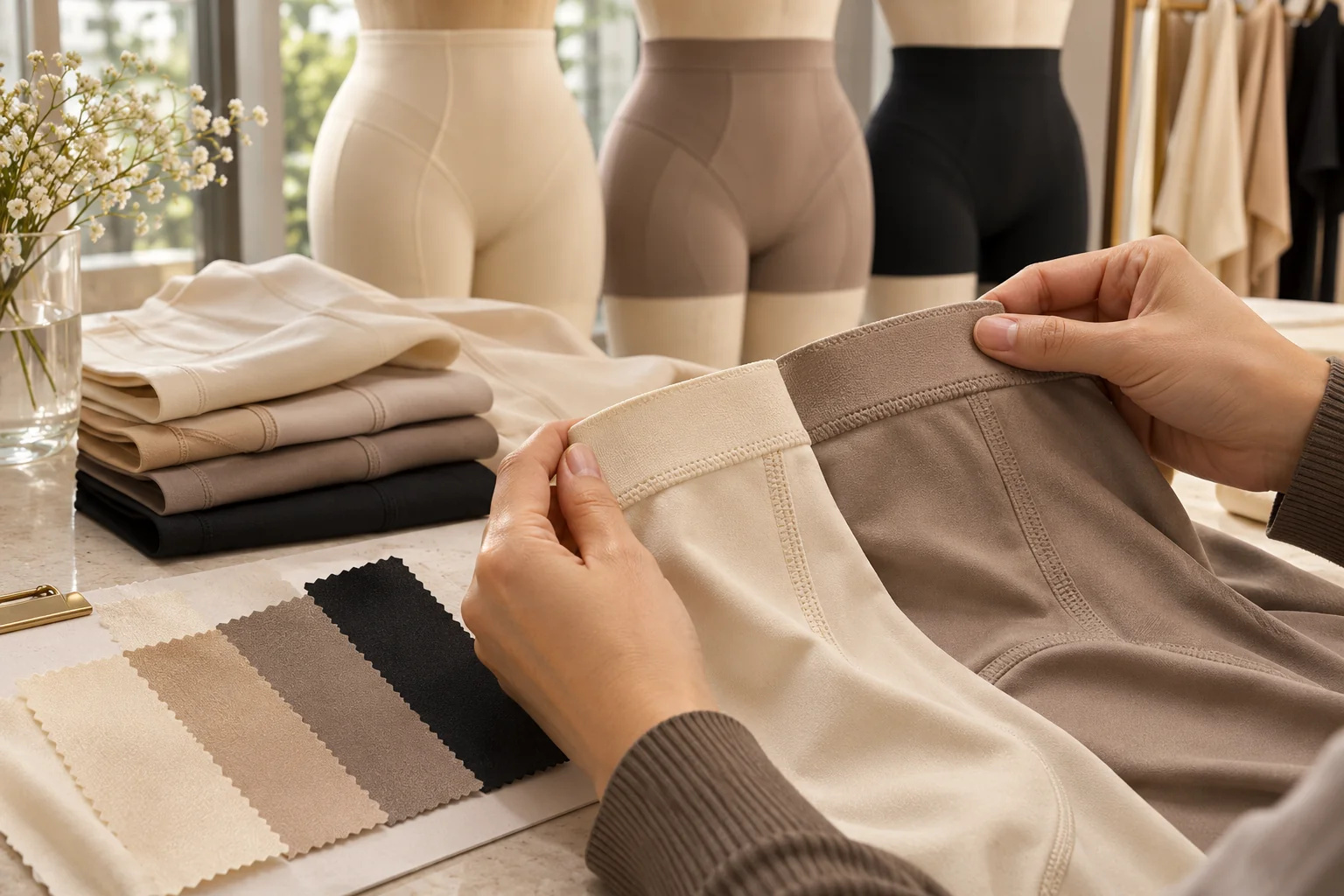
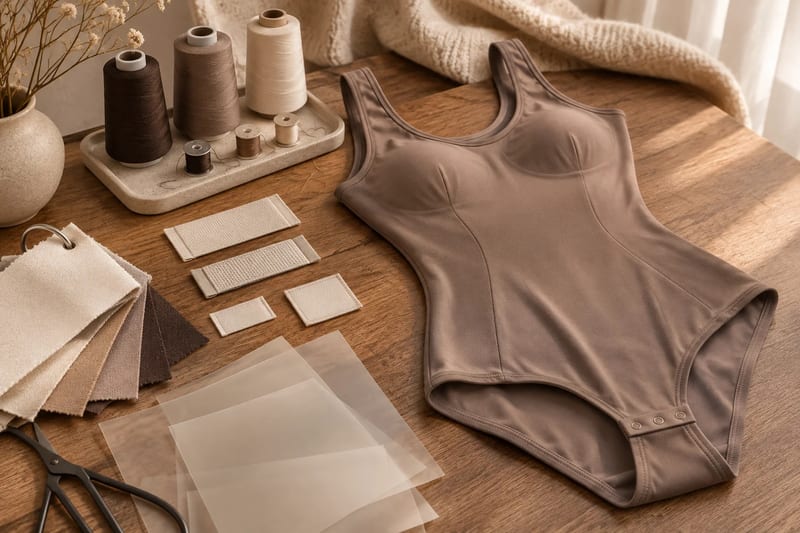
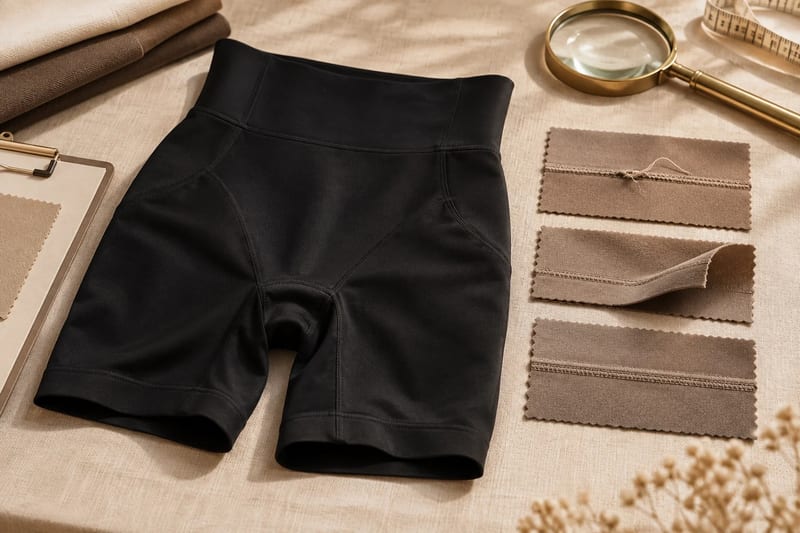
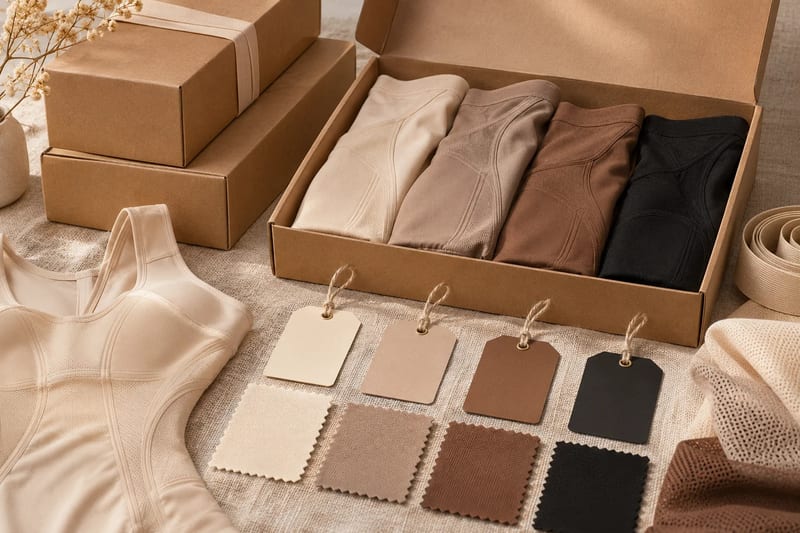
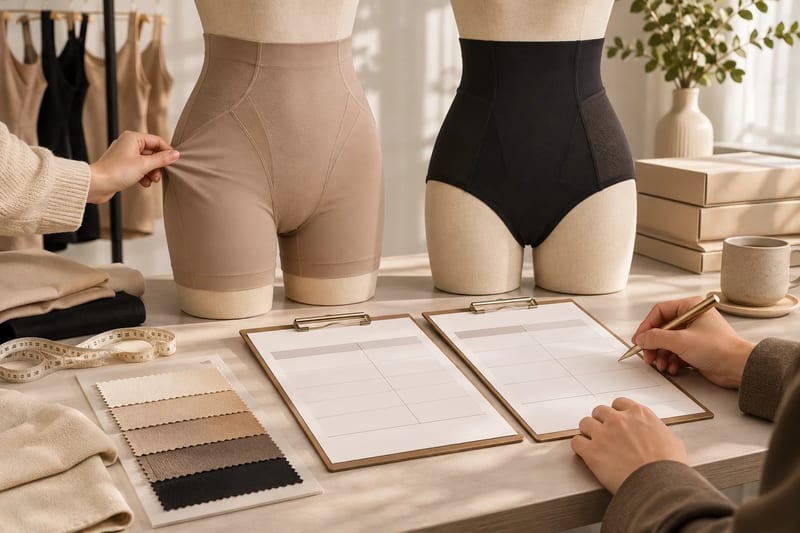
Illustrative sourcing and product-development scene. Click to continue the related buyer guidance.
How Can Four-Channel Price Evidence Improve a Manufacturer Shortlist?
Use channel observations to classify offers before ranking candidates. A consumer garment on Amazon, a brand-led retail product, a TikTok Shop promotion and a B2B bulk proposal can serve different purposes in the research process. Keep seamless and structured constructions distinct so an apparently cheap but unrelated product does not set the procurement target.
| Channel / buying model | Observed USD per garment | Product and order basis |
|---|---|---|
| Amazon US retail | $9.99–$43.99 | Seamless/lighter bodies $12.38–$19.99; Structured bodies $34.88–$43.99; Shorts $9.99–$28.60. |
| Brand websites / B2C | $26.99–$148.00 | Seamless/lighter bodies $29.99–$78.00; Structured bodies $69.00–$148.00; Shorts $28.99–$81.00; Briefs $26.99–$38.00. |
| TikTok Shop US / B2C | $19.99–$65.98 | Seamless/lighter bodies $21.99–$46.99; Structured bodies $39.99–$54.99; Shorts $19.99–$65.98. |
| B2B existing-platform garments | $2.50–$12.85 | Seamless/body-shaping offers; listed minimums 2–600 pieces; custom scope varies |
| B2B structured bodies / fajas | $14.00–$27.42 | More elaborate body shapers; listed minimums 1–500 pieces; specification-dependent |
US-facing USD single-garment observations reviewed November 10, 2026; variants, retail promotions and shipping/tax differ. Amazon uses May–October 2026 tracker snapshots, not live November checkout. These selected samples are not industry averages or matched constructions. B2B advertisements are not landed costs or final custom quotes. Deeper development needs separate specifications, deliverables and an itemized quotation.
A shortlist price field should identify seller, garment, quantity basis, selected variant and included work. B2B generally prices closer to inventory supply, with more selling and stock responsibility left to the buyer; that often explains a lower per-piece amount than B2C. It does not qualify the manufacturer or prove a custom quote. Ask S-Shaper and other candidates to respond against the same product brief and matrix. Advance them through sample evidence and written scope, using consumer positioning as context rather than treating one channel’s cheapest listing as a universal factory benchmark.
Seamless bulk supply and structured fajas have different specifications. Neither B2B row establishes a final price for deep development, samples or tooling.
How Can a Paid Sample Trial Turn a Longlist into a Shortlist?
Choose sample candidates based on the most important unresolved product question. If the requirement is a comfortable waistband, the sample should let you examine that construction and test it in relevant movements. If the requirement is a particular torso fit, ask which size and measurements the proposed sample represents. Do not pay for an unrelated item merely to receive something quickly.
Agree what will be supplied and which documents accompany it. Ask whether the material and construction represent the proposed production version, how any differences are identified, and what feedback process follows. Discuss changes through S-SHAPER’s customization service or the equivalent scope offered by another candidate. Sample work should have a purpose beyond visual approval.
Evaluate samples with one consistent record. Measure the agreed points, use relevant wear tasks, note the tester’s body measurements appropriately, and document the result after the intended care routine. Different suppliers may propose different technical solutions; your comparison should remain tied to the same wearer need rather than rewarding whichever sample looks closest to a photograph.
Keep responsiveness in perspective. A supplier that acknowledges a detailed problem, asks clarifying questions and proposes a documented revision may provide stronger support than one that immediately says everything is perfect. Shortlisting should reward a workable learning process, with clear responsibilities and commercial boundaries, rather than effortless agreement.
Which Shapewear Manufacturers Should You Consider for Your Manufacturer Shortlist?
Compare shapewear manufacturers in China, France, Turkey and Colombia for a qualified supplier shortlist. The recommendations below connect country-level capabilities with specific suppliers and the work your brand needs.
China Shapewear Manufacturer: Shortlist a Factory-Direct Development Proposal
China shapewear manufacturers offering factory-led development belong on an own-label shortlist when their platform matches the brief; progress candidates through relevant samples and documented production responsibilities.
Recommended China Supplier: S-Shaper
S-SHAPER’s OEM/ODM support combines material and style recommendations with design, production, QA and export roles. Its stated international client experience makes it relevant for discussing a product intended for different sales markets. Ask the team which platform addresses the brief and which changes require new sampling before adding it to the final shortlist.
Published price tiers and conditional small-order programs are useful screening inputs, not complete qualification. Confirm item-specific quantities, components and approval records. This route fits an own-label candidate lane when the founder needs development linked to manufacturing. Progress it on the strength of the sample and scoped response, rather than assuming that factory-direct access guarantees the lowest delivered cost or eliminates coordination work.
Source: S-SHAPER OEM/ODM and global-brand support.
France Shapewear Manufacturer: Shortlist by Occasion-Design Relevance
France shapewear manufacturer candidates specializing in occasion lingerie deserve consideration for outfit-specific requirements; shortlist the proposed solution and development scope rather than the national design reputation.
Recommended France Supplier: Gilsa Paris
Gilsa Paris documents invisible-lingerie expertise and distinct professional resale and own-label programs. If the brief concerns bridal outfits, low backs or neckline concealment, that is a specific reason to investigate its proposed product. Ask for the available solution or development scope tied to that outfit, then compare the physical result with other candidates.
Product-dependent own-label minimums and unquoted design or packaging work should remain visible in the shortlist. French service does not establish the origin of every garment. This route suits a shortlist built around occasion functionality and presentation. It is less relevant when the founder simply wants a basic shaping platform and has no evidence that specialized styling solves an important customer problem.
Source: Gilsa Paris professional resale and own-label development.
Turkey Shapewear Manufacturer: Qualify the Seamless Production Route
Turkey shapewear manufacturer options with integrated seamless production add a specific capability lane; qualify the sample, material identifiers and finishing route before ranking a broad factory claim.
Recommended Turkey Supplier: SML Seamless
SML’s documented yarn-to-packed integrated facilities and private-label shapewear offering provide a concrete Turkish manufacturing candidate model. For seamless products, ask which yarn, knit, dyeing and finishing stages apply and who handles your technical communication. That gives the shortlist a production-capability comparison rather than another broad apparel name.
Minimums and color-batch conditions require a current proposal. Inspect relevant samples for opacity, recovery, edges and size grading rather than treating the country or an integrated-factory description as a quality score. This route suits a seamless brief with defined technical needs. A final shortlist should identify the actual sample and records that connect the proposed product to the production capability being discussed.
Source: SML Seamless integrated private-label manufacturing.
Colombia Shapewear Manufacturer: Keep Specialist Wholesale in the Correct Lane
Colombia shapewear manufacturer wholesale ranges belong in a finished-product shortlist lane; compare specialist assortments without treating resale access as demonstrated capacity for your own revised design.
Recommended Colombia Supplier: Leonisa
Leonisa’s Colombian manufacturing and international wholesale program provide an established finished-shaping route to evaluate. That can strengthen a shortlist when the founder is considering resale or needs a tangible benchmark for coverage and support feel. Ask the relevant representative about the selected assortment and commercial conditions.
Do not count this as a qualified own-label manufacturer without separate evidence of that service. Available specialist products can be useful while still offering less control over brand and construction than a development project. This route fits a curated retail proposition, with fit and material checks on the actual garments. Keeping it in a separate commercial lane prevents an apparently simple stock offer from distorting the comparison of custom-development candidates.
Source: Leonisa Colombian manufacturing and shaping product range.
Advance candidates that supply evidence for the route you need; do not force finished wholesale, technical development and factory production into one misleading price ranking.
What Should Your Final Manufacturer Shortlist Look Like?
A final shortlist should explain why each candidate remains under consideration. Include the relevant platform, sample outcome, development responsibilities, order conditions, unresolved questions and next action. A name without those fields is a contact list, not a buying tool. Preserve the evidence links so another person can understand how the decision was reached.
Avoid hiding a critical failure inside an average score. A candidate can be helpful, responsive and attractively priced while its sample fails the central fit need. Make essential product and commercial conditions separate gates. Scores can organize secondary comparisons after those gates are satisfied, but they should not override the reason the garment is being developed.
Before selecting a supplier, ask the remaining candidates to acknowledge the same current brief and changes. Confirm what the next payment would authorize: another sample, branded-component preparation or production. Compare the exact scope, not a general impression left by several weeks of conversation.
Keep at least the reasoning and records from rejected candidates. They may explain why a material or construction was unsuitable and prevent the same investigation from being repeated later. The result of a good search is a manageable relationship supported by a clear product record, rather than certainty that every future issue has been eliminated.
How Can S-SHAPER Fit into Your Manufacturer Shortlist?
S-SHAPER presents a shapewear catalogue together with OEM, ODM, customization and production-related support. For a startup, that makes it a candidate to evaluate against a specific product brief. Its public pages provide starting references; the proposal, sample and confirmed conditions determine whether it suits your own launch.
Send the team your selected garment direction, target wearer, launch market, size range and quantity assumptions. Ask which platform it recommends, what development work is required, and which records you will receive before production approval. Review the published order FAQ but confirm the chosen item’s minimums and sample conditions directly.
Then request a product-specific proposal from S-SHAPER. Compare the response with the same evidence you request from other suppliers. A useful outcome is a clear sample route and responsibility map that helps you decide whether to proceed, rather than an unsupported conclusion based on a supplier’s search position.
FAQ: How to Find and Shortlist a Shapewear Manufacturer
How do I find a reliable shapewear manufacturer?
Start with a clear garment brief, identify relevant capabilities and qualify candidates through samples, technical records and written commercial scope. Reliability should be evaluated against the work your project needs. Search visibility, a low price or a large catalogue is not sufficient evidence by itself.
How many suppliers should I shortlist?
There is no universal number established by these sources. Keep enough relevant candidates to compare meaningful differences, but only progress those willing and able to address the same brief. Your review capacity matters: a small evidence-backed shortlist is more useful than many unexamined names.
Should I only contact direct factories?
Choose according to the responsibilities you need and can verify. A direct factory, development partner or intermediary may offer different support. Establish who performs each stage, who contracts with you and how product changes and quality issues are handled before comparing arrangements.
Can published prices identify the best manufacturer?
They can provide product-specific research references. They do not establish a comparable final price without the same materials, changes, quantities, branding and delivery scope. Obtain current written quotes and consider the total commitment alongside the unit price.
What should happen after the shortlist is complete?
Choose the next evidence-gathering step, usually a relevant sample or clarification of a critical condition. Confirm what any payment authorizes and keep the latest brief attached to the order record. Move into production only after the required product and commercial approvals are complete.