 EN
Quick Answer
Build a mixed-size shapewear trial order by confirming the supplier’s mixing policy, validating the product’s measurement chart and allocating units from evidence about your intended customers. Keep body measurements, garment measurements and commercial size names separate. Do not copy a universal bestseller ratio from another brand or assume equal quantities are automatically safer.
Send the supplier a complete size-color matrix and request written acceptance of the chosen platform, quantities and branding scope. Preserve the reason for the allocation, then compare actual fit questions and variant demand with it after the trial. The first mix is a documented hypothesis to improve, not a permanent rule.
What Mixing Rules and Measurement Records Must You Confirm Before Ordering?
Ask whether sizes can share one style or color total, whether packs are fixed and whether any size has separate conditions. A general low-MOQ statement cannot answer these questions. The supplier needs to evaluate the exact garment, material and requested work before confirming a matrix.
Use S-SHAPER’s catalogue to identify the platform and attach its current size chart if available. Ask which sizes are actually offered in the relevant stock or production program. A size shown elsewhere in the catalogue does not establish availability for every material or construction.
Clarify what a size variation means technically. A label name is not the same as a graded pattern. Ask how the measurements change between sizes and what body-measurement guidance the supplier provides. If the brand needs proportions that the platform does not serve, mixing more existing labels will not solve the underlying fit issue.
Keep colors in the same conversation. A supplier may allow mixed sizes within each color but require each color to reach a threshold. Another program may use fixed packs of finished goods. Ask for the applicable rules instead of assuming that size flexibility implies color flexibility.
Review the S-SHAPER order FAQ as preliminary context, then obtain item-specific confirmation. If the proposed mix is accepted only under limited customization, record that scope. A commercial exception is useful when the founder understands what it permits and what remains outside the arrangement.
| Confirmation area | Question | Document |
|---|---|---|
| Size mixing | Can sizes share the total for this item? | Accepted allocation matrix |
| Available range | Which sizes are supplied in this program? | Current product and size reference |
| Pack constraints | Are there fixed packs or size minimums? | Written quantity conditions |
| Color relationship | Can sizes mix within each color? | Color totals and applicable minimums |
| Customization | Does the mixing rule still apply after changes? | Quote linked to the approved specification |
Body measurements describe the wearer. Garment measurements describe the product using a defined method. The size label connects the customer guidance and product variant, but it cannot replace either set of measurements. Keeping these categories separate is especially important for a close-fitting garment where stretch and construction affect the wearing experience.
Ask how the supplier measures each relevant point. A flat waistband measurement and a stretched measurement answer different questions. Agree the method, units and identifiers so the founder and developer can reproduce the check. Avoid comparing numbers taken in different ways and calling the difference a fit defect.
For briefs, review the rise, waistband and leg openings. For shorts, add inseam and thigh behavior during movement. For bodysuits, review torso proportions, straps, coverage and closure access. The appropriate allocation may depend on which sizes have been physically validated and where important proportion questions remain.
Do not assume that a familiar retail size label produces the same fit as another brand. Use the approved product chart and your target customer evidence. If your site needs a conversion guide, build it around the actual garment rather than copying a regional conversion table with no product validation.
Record who tried which version and size, with the relevant body measurements and use context. Ask whether the chosen size was suitable and what happened during wear. A comment such as “M too tight” is difficult to interpret without knowing the product version, measurement context and where the issue occurred.
Which Customer Evidence Should Guide a Startup’s First Size Allocation?
Begin with information from the audience you can actually reach. Customer interviews, measurement-informed interest and structured sample trials can support a provisional mix. Each source has limitations. A social audience may not represent buyers, and a small trial group may overrepresent people who were easiest to recruit.
Ask participants about the actual garment use case and their current buying difficulty. If the proposition concerns a fit problem, recruit people who experience that problem rather than a convenient group with unrelated needs. Record the recruitment context so the size evidence does not appear more representative than it is.
Separate intended size from validated fit. Someone may expect to buy a familiar label, then need another variant under the product’s own chart. Use the appropriate guidance and trial result where available. A tally of usual clothing sizes is weaker evidence for a new platform than a record connected to the approved measurements.
Do not extrapolate precision that the evidence cannot support. If two important sizes have little information, identify the gap and decide how to investigate it. A perfectly detailed percentage table can still be based on a small biased sample. It is better to state uncertainty than to turn sparse observations into a universal demand ratio.
Combine the evidence with the supplier’s feasible matrix. The founder determines which audience the trial should represent, while the supplier confirms what can be supplied. If those conditions conflict, revise the test deliberately. Do not allow the easiest pack to silently define the brand’s target customer.
Equal Size Split vs Evidence-Led Split: What Can a Planning Example Show?
The following allocation is entirely hypothetical. It shows an uneven 50-unit size mix using a deliberately chosen $10 goods input per piece, not a public supplier quote, demand forecast or recommended size ratio. The size labels are placeholders for an appropriately validated range. Replace the unit input with the accepted proposal for the actual platform.
The quantities total 50: five plus ten plus fifteen plus twelve plus eight. At the chosen $10 each, the row values are $50, $100, $150, $120 and $80, totaling $500. An equal ten-per-size allocation would commit the same goods amount under that assumption; the difference is where the inventory sits, not a proven manufacturing saving.
An equal split can be a transparent arithmetic starting point when evidence is limited, but it is not automatically neutral. An uneven split may reflect evidence, or it may simply conceal a founder’s guess. The important distinction is the rationale and the plan to review it, not whether the table looks symmetrical.
Ask the supplier to confirm the actual range, labels and quantities before using any matrix commercially. If another color is added, create separate columns and recalculate the requirements. Preserve the total cash commitment and the fit coverage in the same decision record.
| Hypothetical size | Illustrative units | Goods assumption at chosen $10 |
|---|---|---|
| S | 5 | $50 |
| M | 10 | $100 |
| L | 15 | $150 |
| XL | 12 | $120 |
| 2XL | 8 | $80 |
| Total | 50 | $500 |
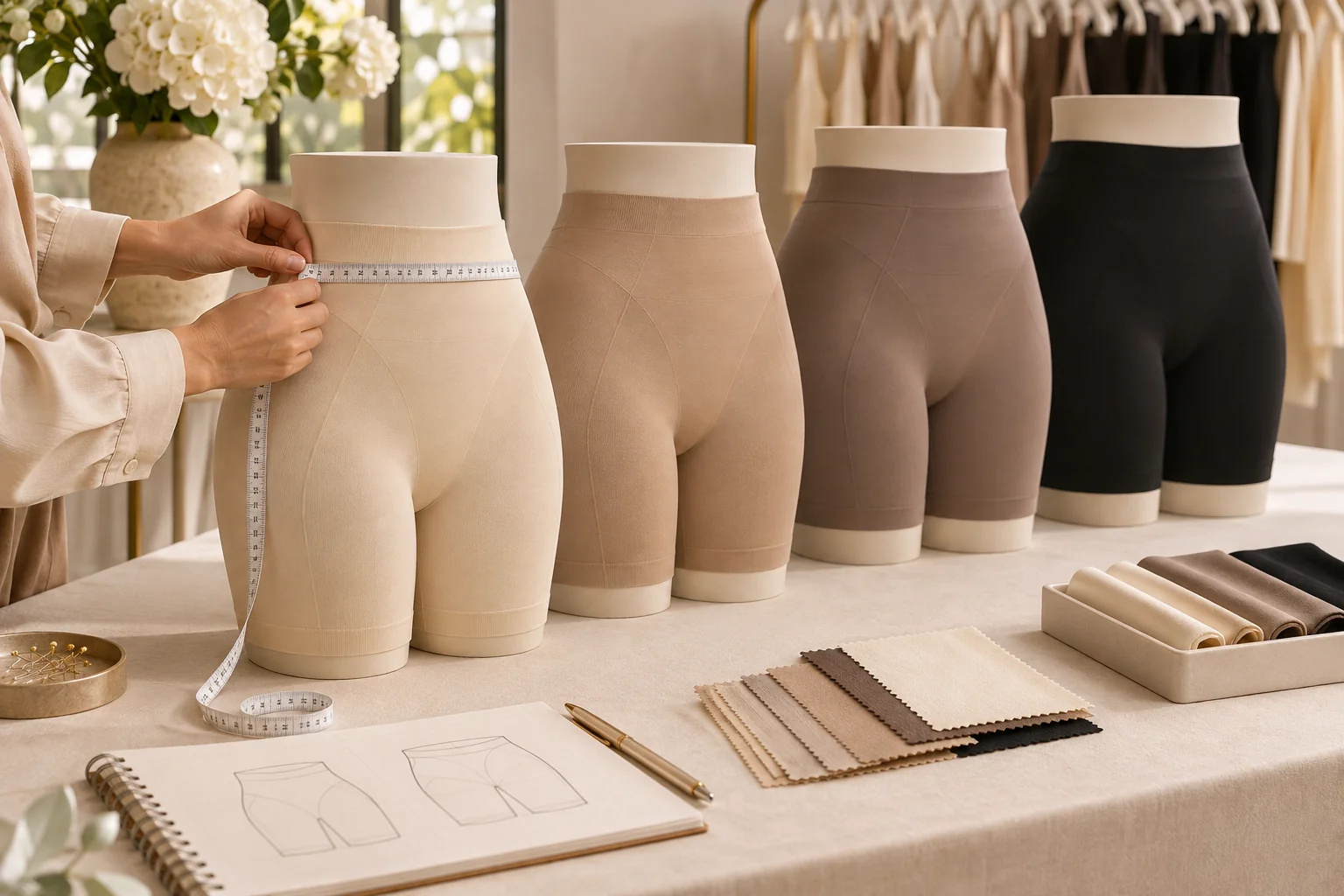
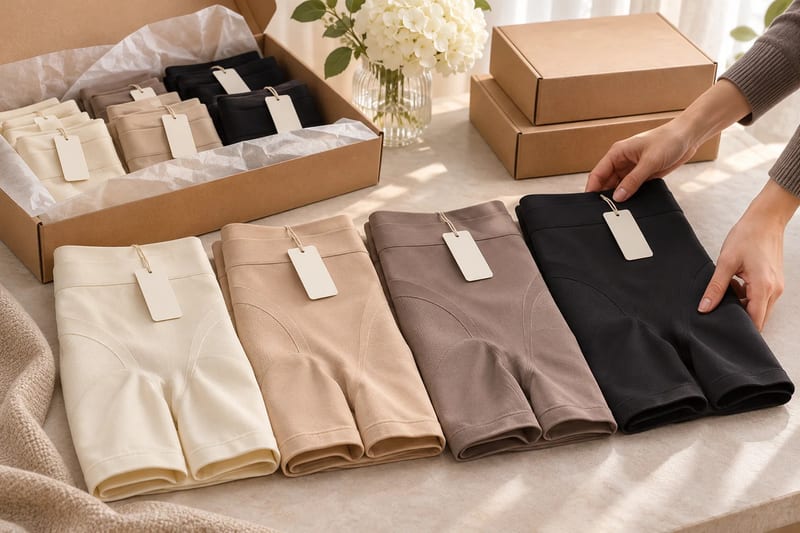
Illustrative sourcing and product-development scene. Click to continue the related buyer guidance.
Which Channel Price References Are Useful for a Mixed-Size Trial Order?
A mixed-size allocation should be priced against the exact platform, not against whichever online garment has the lowest ticket. Compare the consumer and B2B observations by product family first. Differences in construction, support coverage and service scope can matter more than the size label on the product page.
| Channel / buying model | Observed USD per garment | Product and order basis |
|---|---|---|
| Amazon US seamless bodies | $12.38–$19.99 | Three brands; dated tracker offer prices, not live checkout |
| Value/mid-tier brand DTC | $29.99–$49.00 | Shapermint/Shapellx everyday bodysuit sale prices |
| TikTok Shop US seamless bodies | $21.99–$46.99 | FeelinGirl selected single-item offers; limited subset of platform |
| B2B seamless/platform bodies | $2.50–$12.85 | Seven supplier offers; MOQ 2–600; custom work and delivery not automatically included |
B2B finished-garment ranges generally reflect a lower acquisition level than consumer channels, with quantity and scope conditions attached. They do not confirm your size mix, a uniform price for every developed size or a private-label component package. Amazon and TikTok Shop offers may be promotional; B2C brand sites may charge for a different presentation and customer experience, not merely the same factory piece with a new logo.
Send the supplier the matrix and ask which variants qualify, whether any size changes the quote and what branding or delivery work is separate. Keep the allocation model elsewhere in this guide explicitly hypothetical. The actual order should use the accepted product record and current quote rather than a public range multiplied across unconfirmed sizes.
US-facing USD per single garment, reviewed November 10, 2026. Amazon uses dated May–October 2026 third-party PriceHistory snapshots, not live November checkout. These selected-seller observations are not industry averages or matched-quality comparisons. Variants and promotions change; shipping and tax are not normalized. B2B bands describe advertised garments, not landed costs or a final custom-development quote. Sources: dated PriceHistory Amazon records, official brand/TikTok Shop pages and Made-in-China supplier listings.
What Should You Do When the Trial Reveals a Size or Grading Problem?
Identify whether the issue concerns customer guidance, a particular size, a body proportion or a production discrepancy. A customer choosing the wrong size because the instructions are unclear needs a different response from a correctly selected garment with unsuitable torso length. Do not treat every problem as evidence that one size should be removed from the next order.
Send structured feedback through S-SHAPER’s customization discussion. Include the version, body-measurement context, garment measurements, observed movements and photographs where useful. Ask the developer to explain the proposed change and which additional sizes it may affect.
Review the range after a substantive revision. A change in one size can have implications for grading or the relationship between sizes. Ask which variants require new samples and preserve the measurement method. Do not assume that a corrected middle size establishes the whole range automatically.
Use S-SHAPER’s quality-control overview to distinguish conformity checks from design validation. If the received garment differs from the approved specification, document the discrepancy. If it matches but does not fit the audience, revise the product or its intended use. Both deserve evidence, but they require different actions.
Update the product page and support instructions when guidance changes. Keep the pilot feedback linked to its version so later analysis remains interpretable. A mixed-size trial is useful when it improves the next product and allocation decision rather than merely producing a list of sizes that customers complained about.
Which Shapewear Manufacturers Should You Consider for Your Mixed-Size Trial Order?
Compare shapewear manufacturers in China, Canada and Colombia for an evidence-led mixed-size order. The recommendations below connect country-level capabilities with specific suppliers and the work your brand needs.
China Shapewear Manufacturer: Combine matrix confirmation with relevant fit expertise
China shapewear manufacturers need both a proposed allocation and the approved measurement basis, so flexible mixing does not conceal an unresolved grading or fit problem.
Recommended China Supplier: S-Shaper
S-SHAPER’s design and QA specialists can help distinguish an allocation decision from a grading or construction problem. Its recommendations on materials and functions, supported by work with international brand markets, create a useful discussion around the actual customer measurements rather than familiar size labels alone. Factory-price tiers also make the goods commitment of the proposed mix visible.
Ask the team to acknowledge the exact size-color matrix and identify which small-order conditions apply. An initial item-testing reference does not authorize every mixed-size custom collection. This route suits founders who need direct manufacturing and technical communication together, but the brand still needs physical fit evidence and a reason for each quantity; supplier flexibility does not establish customer demand. See S-SHAPER OEM/ODM and global-brand support, S-SHAPER item-testing MOQ and stock/bulk conditions.
Canada Shapewear Manufacturer: Investigate the local grading-to-production bridge
A Canada-based shapewear manufacturer or technical partner can be assessed on how local pattern and grading decisions are transmitted, approved and checked in overseas trial production.
Recommended Canada Development Partner: Hertex
Hertex identifies pattern work, grading, design and QC in Montreal while production occurs in China. For a startup facing an unresolved fit-range issue, this hybrid model offers a defined technical conversation about measurements and sample revisions before the allocation becomes a manufacturing instruction.
The benefit is a potential bridge between wearer feedback and overseas production. Ask who maintains the graded record, which sizes require physical review and how revised instructions are acknowledged. Startup suitability and the cost of coordination need confirmation, and the Canadian technical role should not be represented as Canadian fabrication or a promise of immediate stock. Compare the service with the expertise your own team would otherwise supply. See Hertex Montreal development with China production.
Colombia Shapewear Manufacturer: Validate the existing shaping platform before allocating it
With Colombia shapewear manufacturers offering established shaping products, validate the platform’s actual measurements and support feel before allocating sizes for a resale trial or assuming development access.
Recommended Colombia Supplier: Leonisa
Leonisa’s Colombian manufacture and established shaping range provide a finished-product alternative for a resale-led trial. When the available platform is relevant, the founder can focus on helping customers choose among actual sizes and gathering use feedback rather than beginning with a new graded pattern.
That advantage comes with less assumed control over the underlying product. Test the range’s measurements, coverage and support feel on the intended audience, then confirm variant availability and wholesale conditions. The reviewed route does not establish private-label development or permission to alter the size chart as if the garment had changed. It fits a curated assortment test, while a proprietary fit requirement may need another development arrangement. See Leonisa Colombian manufacturing and shaping product range, Leonisa international wholesale program.
Choose a matrix only after the product guidance, technical ownership and actual size availability make the trial interpretable.
How Do You Turn the First Size Mix into a Better Reorder?
Compare requested variants, completed sales, fit questions and unavailable-size inquiries with the original allocation. Look beyond which stock sold first: a size may move quickly because it started with very few units, while another may need clearer guidance. Preserve counts and context rather than using sell-out speed alone as the next ratio.
Review whether the audience reached during the pilot matches the audience planned for the next order. A new channel or customer group can change the relevance of the evidence. Keep the proposed expansion labeled as another assumption when the original trial does not cover it.
Before reordering, confirm the product version and any size-chart changes. Update the matrix and ask the supplier to acknowledge it. Do not copy the old purchase order and adjust only the total if fit feedback has changed the platform or guidance.
Discuss packing and variant identification through the S-SHAPER logistics overview. Request a variant-level packing list so receiving can reconcile the revised allocation. A better mix only helps if the right units arrive under the right identifiers.
Record why the new allocation differs. The next buyer should be able to see which observations supported the change and which uncertainties remain. That is how a first trial becomes a repeatable buying process rather than a one-time guess.
How Can S-SHAPER Help Structure a Mixed-Size Trial Order?
S-SHAPER presents shapewear products, development and customization services that can help a startup connect a wearer brief to a defined platform. Its public quantity references are useful starting points, while the particular size range, mixing policy and changes need written confirmation.
Send the selected item, intended market, current measurement evidence and proposed matrix. Ask the team to explain available sizes, grading information, any pack constraints and the sample route for unresolved fit questions. Identify the branding and packing records needed to keep the variants accurate.
Then contact S-SHAPER for a mixed-size trial proposal. Evaluate its response against your audience evidence and cash commitment. The supplier can clarify feasibility and development, while the founder owns the allocation rationale and the decision about what the trial can credibly test.
FAQ: How to Build a Mixed-Size Shapewear Trial Order
Can I mix sizes in a first shapewear order?
Potentially, subject to the supplier’s rules for the chosen product and scope. Ask whether sizes share a style or color total and whether fixed packs apply. Obtain written acceptance of the full matrix rather than relying on a general low-MOQ statement.
What size ratio should a startup use?
There is no universal ratio established by these sources. Use measurement-informed customer evidence, relevant trials and the limitations of your recruitment. The uneven matrix in this guide is a hypothetical calculation, not a recommendation for any particular audience.
Should I use the same labels customers buy in other brands?
Familiar labels can help communication, but the product’s approved measurement and fit guidance should determine size selection. Do not assume equivalence between brands. Validate the chart on your intended audience and keep body and garment measurements distinct.
What if the supplier only offers a fixed size pack?
Evaluate whether the pack can still support a credible trial. Ask about alternatives, but do not treat a convenient commercial structure as customer-demand evidence. Record any fit-coverage limitation and decide whether another platform or supplier route is more suitable.
How should I change the size split after the trial?
Review actual requests, fit outcomes, guidance questions and the context of the sales channel. Confirm any product revisions before revising the matrix. Document the reason for the new allocation and obtain a current quote and accepted packing plan.