 EN
Quick Answer
Check shapewear skin-contact comfort by turning the sample inside out and mapping every material, seam allowance, label, grip strip, closure and trim that can touch the wearer. Review the assembled garment during relevant movement and after the agreed care exposure, not just the softness of an isolated fabric swatch.
Separate mechanical comfort, material documentation and chemical-testing claims. A soft hand feel, an abrasion result and a harmful-substance certificate answer different questions. None automatically proves that a finished garment is hypoallergenic or comfortable for every wearer.
For a startup, record the contact location, sample version, task and precise observation, then request a controlled correction. Keep discomfort reports and product claims within the available evidence. The goal is a repeatable contact construction that suits the intended customers, with all components and approvals connected to the production specification.
Which Skin-Contact Points Should You Map Before the First Wear Trial?
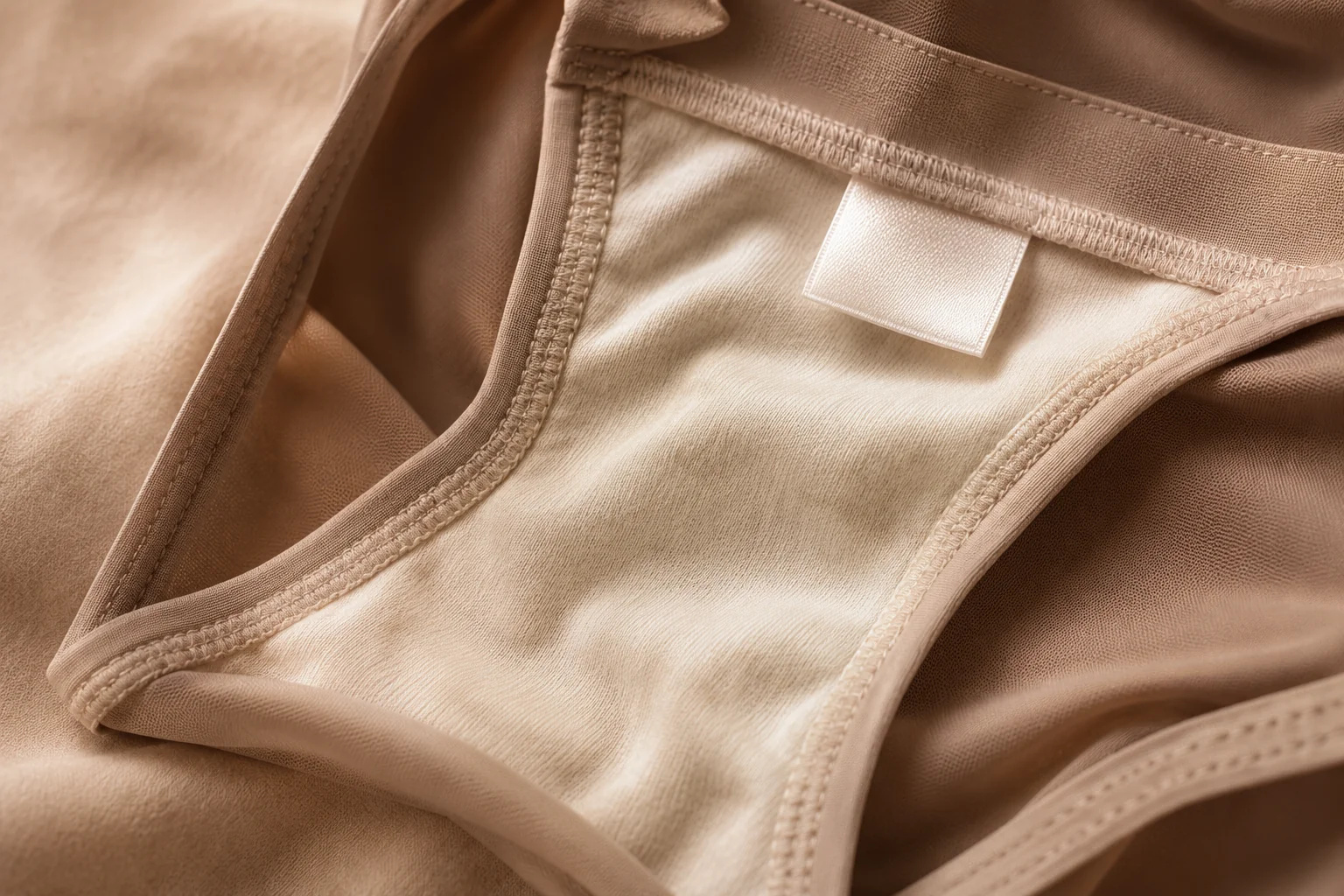
Lay out the inside of the actual sample and identify both broad surfaces and local junctions. The main lining may feel smooth while a label edge, trim end or overlapping allowance creates a localized problem. A general fabric description cannot identify those details.
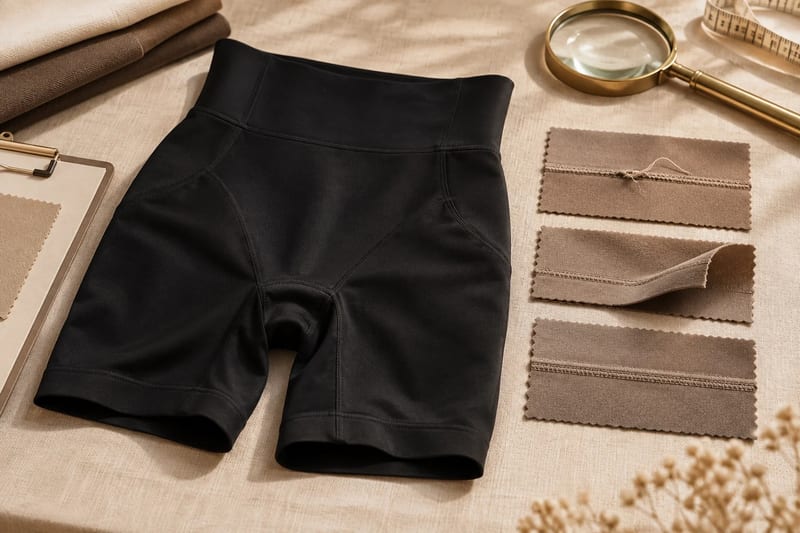
Mark the contact map on front, back and relevant inside drawings. Identify whether a part normally touches skin directly, sits over another garment or can move into contact during use. Review closure backs and adjustable hardware as well as the large fabric panels.
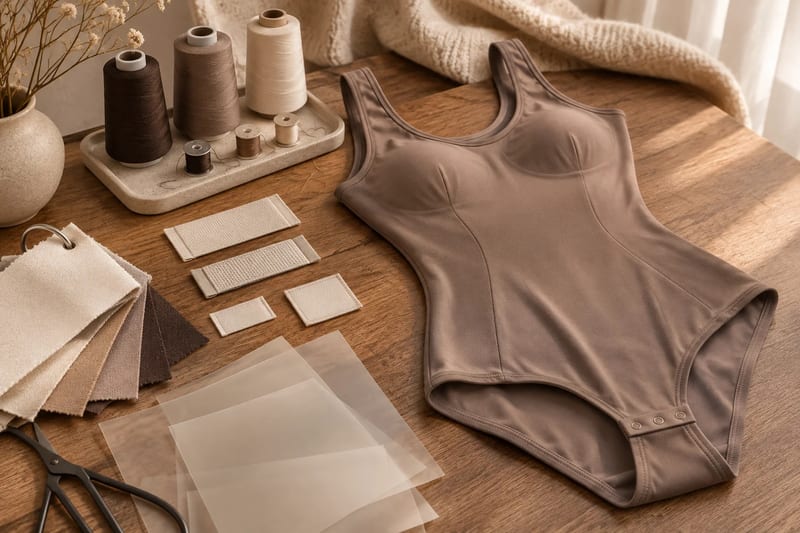
Record each material and component reference. A change in label substrate, seam finish, grip application or fastening reinforcement can affect the sample even when the main fabric code is unchanged. The contact review needs the bill of materials, not only a composition statement for the body fabric.
Ask S-Shaper’s component and lining customization team what alternatives are compatible with the platform. Explain the location and use concern before asking for the softest available material. A suitable alternative must also retain construction security and the intended function.
Keep the first inspection descriptive. Note an exposed edge or raised junction without prematurely diagnosing a medical reaction. The technical question is what touches the body, under which conditions and how that contact could be improved through a clearly identified construction change.
| Contact point | Detail to inspect | Relevant next question |
|---|---|---|
| Lining and body fabric | Faces, finish and layer junctions | Which surface actually contacts skin? |
| Seams and allowances | Ends, overlaps and raised regions | Does movement concentrate contact? |
| Labels and prints | Edges, placement and application | Could relocation or another method help? |
| Grip or adhesive regions | Boundary, surface and application | What evidence applies to the actual assembly? |
| Closure and hardware | Backing, ends and reinforcement | Is the contacting side suitably finished? |
Soft Fabric vs Comfortable Assembly: Why Are They Different Approvals?
Hand feel describes an initial tactile impression under limited handling. The complete garment introduces tension, seams, edges, components, moisture and movement. A pleasant swatch can therefore be useful without establishing the daily-wear result of the assembly.
A different lining may alter more than touch. Its stretch response, layer attachment and care behavior can change how the garment moves. Ask the technical team which relationships a substitution affects, rather than assuming that a softer material is a drop-in equivalent.
Likewise, removing a label can introduce another identification or information question. A print may avoid a sewn edge but needs material-compatible application and care review. The goal is a suitable presentation and contact method, not an unsupported claim that one label technology is always comfortable.
Ask for a controlled comparison where practical. Preserve the main platform and identify the changed contact detail. If several components change together, describe the result as an assembly alternative and retain all differences so another team can reproduce it.
The approval should connect appearance, construction security, usability and wearer evidence. A contact revision that feels better but damages the fabric or detaches after care is not ready for production. The buyer needs the accepted combination and relevant limits, not a supplier adjective such as luxury soft without a defined sample behind it.
| Review item | Swatch or component alone | Finished assembly |
|---|---|---|
| Touch | Initial material impression | Contact under garment tension and movement |
| Edges | Unattached piece or cut edge | Applied seam, overlap or boundary |
| Identification | Proposed artwork or label | Actual position and contacting face |
| Care | Material or component result | Combined construction after treatment |
| Approval | Candidate selection | Defined product evidence and limits |
What Can Material Tests and Certificates Actually Tell a Buyer?
Ask what property the evidence concerns and which specimen it identifies. A certificate for a fabric or accessory must not silently become a claim that every component of the final style is covered. Confirm the scope, reference and validity before using a certification statement.
OEKO-TEX describes STANDARD 100 as harmful-substance testing with product classes related to use; its direct-skin-contact class includes underwear. That framework is relevant to documentation, but it is a different question from whether a seam rubs during movement. Do not turn it into a guarantee that no wearer can react or that the product is universally hypoallergenic.
An abrasion test also needs careful interpretation. ISO 12947-2 concerns fabric specimen breakdown under a defined method and excludes coated fabrics from that scope. It is not a direct test of skin irritation or a complete garment comfort certificate. Ask a qualified laboratory about applicability to the actual material or surface.
Use S-Shaper’s quality-assurance discussion to establish which reports and component records will be supplied and who checks their relevance. Keep material evidence separate from fit observations and customer-facing wording.
Public method descriptions do not provide a complete test protocol or a universal pass value. Agree the appropriate evaluation and requirement with the responsible technical provider. The startup should understand what a result supports and what remains a sample or wearing question before it publishes broader claims.
| Evidence type | Can address | Does not establish alone |
|---|---|---|
| Relevant material certificate | Its stated tested scope | Every final component or all-person comfort |
| Fabric abrasion report | Defined specimen wear endpoint | Skin irritation or allergy outcome |
| Wear observation | Location and experience in a stated case | Population safety or universal performance |
| Finished-sample approval | Accepted construction and conditions | Unchanged result after unreviewed substitution |
Illustrative sourcing and product-development scene. Click to continue the related buyer guidance.
How Should a Startup Run a Useful Skin-Contact Sample Review?
Choose the intended wearing scenario and relevant body cases. Record sample size, material and component versions, care state and any outer clothing that matters. Obtain consent for technical images and use anonymous records where practical.
Start with dressing and ordinary positioning. A garment that requires unusual folding or repeated rearrangement may create a contact problem even before a longer trial. Record what the participant actually does, rather than coaching the sample into an ideal photograph.
Ask location-specific questions during relevant tasks. Sitting, walking, reaching and closure use can expose different contacting details. Distinguish surface sensation, an edge pressing locally and a component moving into an unintended position. Keep the participant’s words separate from the proposed engineering cause.
For a deliberately hypothetical planning example, reviewing six mapped contact locations during three tasks creates 18 location-task checks for one sample case. These are checklist cells, not 18 people or a required test procedure. Additional body cases and versions need their own identifiable records.
Allow a participant to stop and remove an uncomfortable sample. A product review is not a test of endurance, and an ordinary brand trial should not diagnose a skin condition. If a construction issue remains unresolved, describe the limitation and agree another appropriate comparison before approval.
How Can You Prioritize Contact Complaints Without Inventing a Comfort Score?
Count the actual type of record you collect. One person can report several locations, so issue counts are not automatically counts of affected people. Define whether the summary counts observations, unique cases or returned units before presenting a percentage.
Consider a deliberately hypothetical set of 12 distinct issue observations: five label-edge reports, four seam-junction reports, two grip-boundary reports and one main-fabric report. The descriptive shares are approximately 41.7%, 33.3%, 16.7% and 8.3%. These invented values demonstrate coding, not actual company performance or population prevalence.
In that illustration, the largest cluster suggests investigating the label detail first. It does not establish that changing all main fabrics is unnecessary in every case, or that a label revision will reduce complaints by a particular percentage. Inspect the individual observations and sample identities.
A serious localized finding should not be averaged away by many favorable general comments. Review whether the issue blocks the intended use and what evidence is needed to close it. The technical team can then distinguish a sample discrepancy from an unsuitable design detail.
Prioritize a revision that answers a clear question. If the label is moved, verify the new position; if a seam is changed, review security and movement as well as contact. The aim is a traceable decision, not a single composite comfort number that conceals the source and consequences of the problem.
| Hypothetical issue category | Observations | Share of 12 observations |
|---|---|---|
| Label edge | 5 | 41.7% |
| Seam junction | 4 | 33.3% |
| Grip boundary | 2 | 16.7% |
| Main fabric | 1 | 8.3% |
| Limit | Observations, not participants | Illustrative coding, not actual results |
Which Changes Need Rechecking After Care or Component Substitution?
Inspect the relevant assembly after the agreed care process. Labels can curl, edges can change, attachment can alter and layers can move differently. Record what treatment occurred and compare the same sample state rather than relying on an unspecified washed once description.
Review both the contact surface and construction security. A smoother edge that no longer remains attached is a different failure. Ask which measurements, appearance observations and functional checks apply to the actual material and method.
Use S-Shaper shaping-product references to keep the review platform-specific. A lining change in a body may interact with torso movement, while a short can have another edge and opening concern. Do not transfer approval solely because the material name is shared.
Discuss revisions through the OEM/ODM development route and retain the final component identifiers. A similar-looking label, elastic or backing is not automatically equivalent to the accepted version. Require substitutions to be identified and assess the affected evidence before production.
Keep customer descriptions within the record. Comfortable or soft should describe the product honestly without becoming an unverified allergy-prevention claim. A changed material or finish can also require review of the documentation supporting the earlier wording.
Which Shapewear Manufacturers Can Help Review Skin-Contact Details?
Compare access to the material and construction decisions behind the contacting surfaces. A finished assortment, a development service and an integrated production route offer different control over linings, labels and local junctions.
China Shapewear Manufacturer: Connect Contact Findings with Component Choices
China shapewear manufacturers coordinating product development and production can help localize a contact issue to a lining, seam, label or trim when the buyer provides the actual sample and task-specific observation.
Recommended China Supplier: S-Shaper
S-Shaper describes coordinated design, production, QA and export specialists and material recommendations informed by international-brand work. Ask the customization team which alternative is compatible with the platform and what documentation or care review it needs. Item-specific small tests do not make every new lining or component available under a stock minimum. Confirm current component supply and the sample approvals that affect dispatch. This route suits a startup needing the contact decision connected to manufacturing scope, without treating technical support as a universal hypoallergenic guarantee.
Portugal Shapewear Manufacturer: Separate Material Evidence from Wear Comfort
Portugal shapewear manufacturer candidates with research and laboratory coordination can be relevant when the founder needs to distinguish material documentation, surface durability and the finished garment’s local contact behavior.
Recommended Portugal Supplier: Impetus
Impetus describes research partnerships and physical or chemical checks across knitting, elastics, accessories and finished parts. Ask which reports and sample comparisons the proposed program can provide for the actual lining or component. Capability does not establish that every part is certified or that a laboratory result guarantees comfort. Development, material and evaluation work require an agreed scope and startup check. Confirm procurement and sample availability before planning production; the value is a defined technical route rather than a country-based assurance.
France Shapewear Manufacturer: Review Discreet Components Under the Intended Outfit
France shapewear manufacturer and adaptation proposals can be relevant when invisible edges, adhesive regions or small contact details must work under bridal or difficult-neckline clothing without making unsupported skin-suitability claims.
Recommended France Supplier: Gilsa Paris
Gilsa’s invisible-lingerie and occasion focus offers a useful context for specifying the outfit and contact location. It describes professional resale and own-label adaptation or development. Ask what the chosen style’s materials and instructions cover and whether changes can be sampled. A discreet appearance is not proof of all-person comfort or a particular certification. Product-dependent minimums, components and development need confirmation, while existing-stock replenishment differs from adaptation. French service is not evidence that every garment is fabricated in France.
Canada Shapewear Manufacturer: Translate Local Feedback into a Controlled Revision
A Canada-based shapewear manufacturer comparison can prioritize technical interpretation when a founder needs help deciding whether the contacting problem comes from a pattern position, seam junction or material rather than changing the complete product.
Recommended Canada Supplier: Hertex Lingerie
Hertex identifies Montreal design, pattern, grading and QC work with China production. Ask who will mark the issue, define the revision and maintain the component and sample record through the factory handoff. The hybrid route may help where technical interpretation is the gap, while scope, startup eligibility and sample timing need agreement. Canadian involvement does not imply locally made replacement stock. Confirm how final materials and component approvals reach production before treating the reviewed contact detail as ready for dispatch.
Choose a partner that can identify the contacting detail and verify a compatible correction, while keeping testing, certification and wearer claims clearly scoped.
How Can S-Shaper Support a Skin-Contact Sample Checklist?
S-Shaper’s shaping products, customization, OEM/ODM and quality services provide a starting point for reviewing an identified lining, seam or component concern. A startup can ask the team to propose a specific alternative and explain the approval work. The project agreement should state the actual material, sample and documentation deliverables.
Send the inside contact map, sample version, intended use and precise observation. Ask what changes, what remains shared with the platform and which evidence needs renewing. Review the S-Shaper order FAQ for preliminary conditions, then confirm component availability and the supply handoff.
To begin, request a skin-contact construction and sample review. Seek a repeatable assembly and accurate customer information, with no promise broader than the actual materials, checks and wearer cases support.
FAQ: Checking Skin-Contact Comfort in a Shapewear Sample
Does a soft lining prove the garment will be comfortable?
No. The assembled product adds tension, seams, labels, components and movement. Review the actual contact map and relevant wear tasks, then retain the sample and component versions that produced the accepted result.
Can I call shapewear hypoallergenic after a fabric check?
Do not make that claim without appropriate substantiation for the actual product and intended use. A soft swatch, harmful-substance certificate or ordinary wear trial does not automatically establish that no wearer can react.
What does a direct-skin-contact certificate cover?
Check the certificate’s actual scope, references and validity. A fabric or accessory document is not automatically a certificate for every component in the final garment. Keep that evidence separate from mechanical comfort and fit observations.
Is a fabric abrasion test a skin-irritation test?
No. It addresses the property and specimen defined by its method. Ask a qualified laboratory about applicability and interpretation, especially for coated or assembled surfaces. Do not convert a fabric wear endpoint into a universal skin-comfort claim.
What should be rechecked after a component change?
Identify the changed material or application and review affected contact, movement, care, attachment and documentation evidence. Preserve the final reference and substitution approval so production does not replace an accepted part with an unreviewed lookalike.