 EN
Quick Answer
To compare shapewear suppliers fairly, give each candidate the same current specification and order matrix, then normalize what their proposals include. Align the garment, materials, size and color split, branding, development work, quality checks and delivery responsibilities before comparing price. Mark unresolved items instead of converting them into assumed zero costs.
Use separate product, commercial and operating decisions. A lower quote cannot compensate for a sample that fails your essential fit need. A helpful development service should not be treated as equivalent to garment-only supply. Choose the proposal whose scope and evidence support your first launch, with the remaining responsibilities clearly assigned to your brand.
Which Specification Should Every Shapewear Supplier Quote Against?
Create one baseline brief and give it a version number. Identify the garment type, intended wearer, use case, material direction, relevant measurements and required changes. Use an identifiable reference from a catalogue such as S-SHAPER’s product range when helpful. Explain whether the reference is an exact platform or only an example of a feature.
Separate essential requirements from optional requests. If the audience needs a particular coverage or size range, mark it as a condition. If an extra color is optional, ask for it separately. Suppliers may otherwise quote different interpretations, leaving the founder unsure whether a price difference reflects efficiency or an omitted requirement.
Give each supplier the same variant matrix. Total quantity, styles, colors and sizes should be explicit, with the allocation status identified. If the size split is preliminary, ask which quantity rules apply and what must be finalized before a firm quote. A 100-piece total is not a complete commercial denominator when a candidate requires minimums by color or component.
Record any supplier-proposed alternative beside the baseline instead of silently replacing it. A different fabric or construction might be a useful solution, but it creates a separate product comparison. Keep the original requirement visible so you can decide whether the alternative achieves the same wearer result before comparing its cost.
| Baseline field | Required clarification | Why it matters |
|---|---|---|
| Product platform | Exact item or defined development reference | Avoids comparing different garments |
| Material | Identified option and approval status | Defines the physical product |
| Variant matrix | Styles/colors/sizes/units | Defines quantity and minimums |
| Optional changes | Quoted separately | Prevents hidden scope differences |
| Version | Current dated brief acknowledged | Prevents obsolete assumptions |
Garment-Only Quote vs Development Proposal: How Should You Normalize Scope?
List the work before comparing the number. A garment-only proposal may assume that patterns, measurements and artwork are already complete. A development proposal may include help preparing some of those inputs. Ask what each candidate expects from you and what documents or samples it will deliver. The OEM/ODM distinction is a useful starting framework, but actual responsibilities should be written down.
Identify sample and revision work separately. Does the proposed sample represent the final material and construction? Which technical decisions remain open? What revision process and charges apply? Do not assume the same number of rounds or a universal fee simply because both offers use the word sampling.
Discuss branded components through the customization scope. A label, hangtag and packaging change can create different setup and quantity conditions. Ask whether the offer includes preparation, physical proof, component production and application, or only some of those stages. Compare unused-component ownership and storage where relevant.
Finally identify work left with the brand. A lower-cost proposal may be appropriate if your team can supply the missing technical or coordination capability. If it cannot, obtain a separate proposal for that support before deciding. Normalization means making the differences visible, not forcing every supplier into an identical service bundle.
| Scope item | Proposal A might include | Proposal B might expect from buyer |
|---|---|---|
| Technical preparation | Supplier-assisted specification | Finished technical pack |
| Samples | Defined development sample | Selected existing item |
| Branding | Preparation and component coordination | Final approved artwork/components |
| Inspection | Agreed check records | Separate inspection arrangement |
| Interpretation | Illustrative scope comparison | Not actual supplier offers |
How Can You Compare Samples When Suppliers Use Different Platforms?
Use the same wearer problem and trial method even when the technical solutions differ. If the need is seated comfort, evaluate that condition across samples. If it is coverage under an outfit, use comparable outer clothing. Do not choose the winner solely by how closely a garment resembles the inspiration image.
Identify each sample’s version, size, material and difference from the proposed production product. If one is a stock demonstration and another is a revised development sample, note the limitation. Both can teach you something, but they do not establish the same approval status. Ask what additional work is necessary before each platform can be released.
Use a consistent measurement and feedback sheet. Record relevant body measurements, selected size, movement observations and the result after the intended care routine. A satisfaction score without context can hide why one sample performed better. Specific comments help distinguish a material issue, a fit issue and a difference in customer preference.
Keep essential fit conditions as gates. A lower quote or smoother sales conversation should not override a garment that fails the main customer need. Where the sample needs revision, compare the supplier’s explanation and proposed next step. The ability to respond usefully to evidence can matter as much as the first version’s appearance.
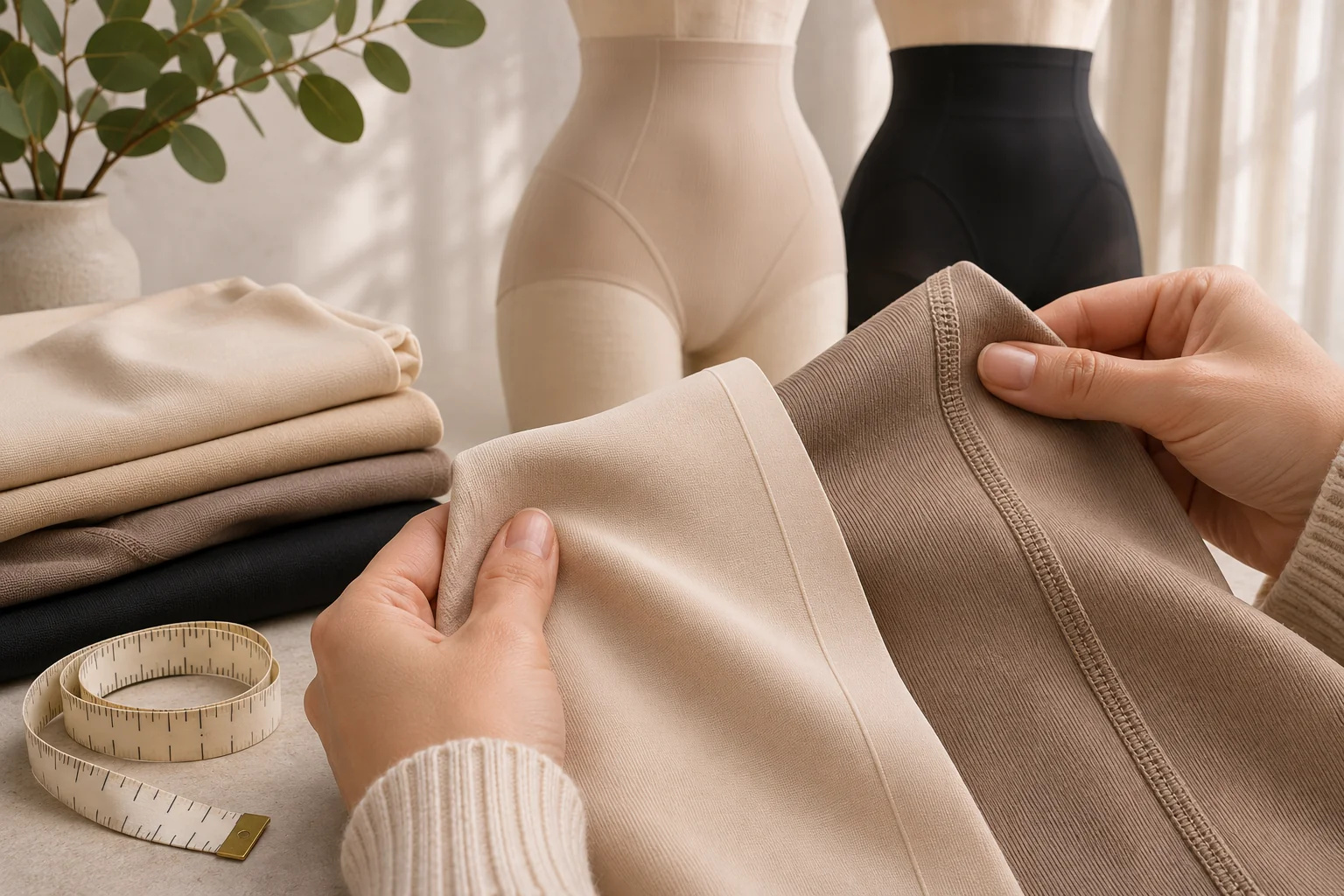
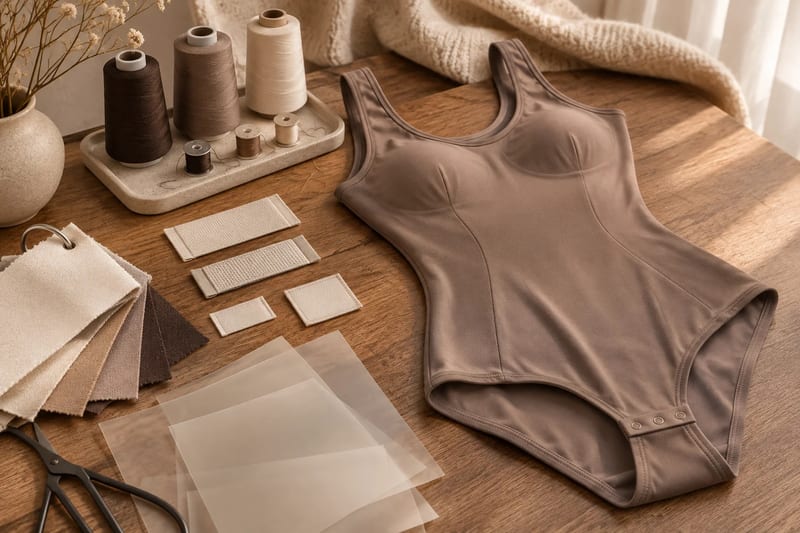
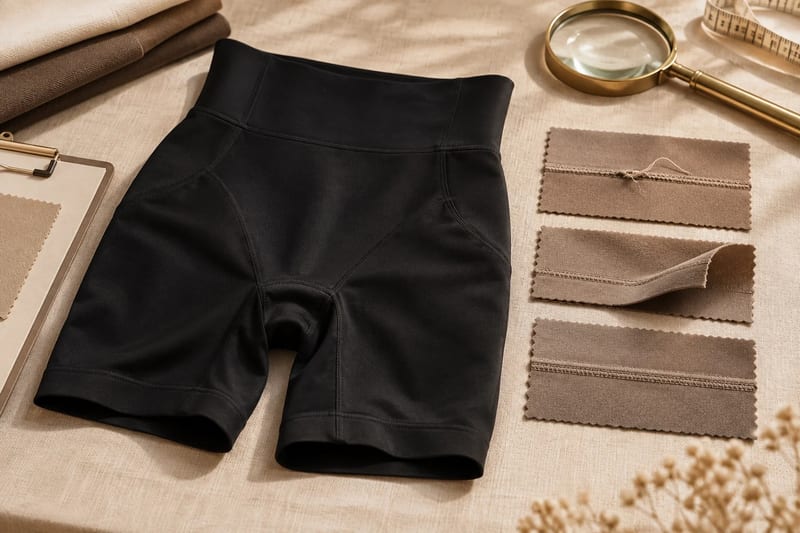
Illustrative sourcing and product-development scene. Click to continue the related buyer guidance.
Retail Channel vs B2B Quote: How Do You Normalize the Price Comparison?
Normalize the product before the number. The table separates consumer channels and B2B procurement, with seamless and structured products treated differently. A retail sale, branded website offer and bulk listing can all be valid observations while still failing to quote the same material, fit, quantity or included work.
| Channel / buying model | Observed USD per garment | Product and order basis |
|---|---|---|
| Amazon US retail | $9.99–$43.99 | Seamless/lighter bodies $12.38–$19.99; Structured bodies $34.88–$43.99; Shorts $9.99–$28.60. |
| Brand websites / B2C | $26.99–$148.00 | Seamless/lighter bodies $29.99–$78.00; Structured bodies $69.00–$148.00; Shorts $28.99–$81.00; Briefs $26.99–$38.00. |
| TikTok Shop US / B2C | $19.99–$65.98 | Seamless/lighter bodies $21.99–$46.99; Structured bodies $39.99–$54.99; Shorts $19.99–$65.98. |
| B2B existing-platform garments | $2.50–$12.85 | Seamless/body-shaping offers; listed minimums 2–600 pieces; custom scope varies |
| B2B structured bodies / fajas | $14.00–$27.42 | More elaborate body shapers; listed minimums 1–500 pieces; specification-dependent |
US-facing USD single-garment observations reviewed November 10, 2026; variants, retail promotions and shipping/tax differ. Amazon uses May–October 2026 tracker snapshots, not live November checkout. These selected samples are not industry averages or matched constructions. B2B advertisements are not landed costs or final custom quotes. Deeper development needs separate specifications, deliverables and an itemized quotation.
B2B generally carries a lower piece price because the business buyer supplies more of the downstream selling layer. That spread is not automatically profit, and a ready-made bulk tier does not include every design or private-label service. Brand premiums may reflect product, marketing and service investment; Amazon and TikTok Shop offers may reflect selected variants and promotions. Request the same scope from S-Shaper and each candidate, then record what remains unquoted. A comparison matrix should show product and responsibilities alongside the channel amount rather than rank unlike offers from cheapest to most expensive.
Seamless bulk supply and structured fajas have different specifications. Neither B2B row establishes a final price for deep development, samples or tooling.
How Do You Compare Quality and Change-Control Responsibilities?
Ask each supplier how the order will be checked against the approved product. Review the topics in the S-SHAPER quality-assurance overview and request the checks relevant to your garment. A claim of premium quality cannot be scored as equivalent to an identified measurement method, reference sample and inspection record.
Compare inspection arrangements at the same stage. One proposal may include factory checks while another assumes an independent finished-goods inspection arranged by you. These can serve different functions. Establish access, scope, timing and responsibility for findings before assigning costs or deciding that a check is unnecessary.
Ask about material substitutions and specification changes. Who proposes an alternative, who evaluates it and who must approve it before use? A supplier’s willingness to document that process supports a more meaningful comparison than a promise that every reorder will always be identical. Relevant product changes should remain visible to the brand.
Consider the next order as well as the first. Ask how materials, size information and approved artwork are preserved, and what conditions can change on reorder. The proposal with the clearest product record may reduce future coordination uncertainty, but evaluate that benefit through actual deliverables rather than assigning an invented financial saving.
| Control area | Compare this evidence | Avoid this shortcut |
|---|---|---|
| Acceptance | Product-specific criteria and reference | Generic quality adjective |
| Inspection | Stage, scope and records | Assuming all checks are identical |
| Changes | Written approval responsibility | Verbal equivalence claim |
| Reorder | Maintained specification and change notice | Promise without product identity |
Which Shapewear Manufacturers Should You Consider for Comparable Supplier Quotes?
Compare shapewear manufacturers in China, the USA, Portugal, Turkey and France for a like-for-like quotation comparison. The recommendations below connect country-level capabilities with specific suppliers and the work your brand needs.
China Shapewear Manufacturer: Benchmark the defined factory proposal
Compare China shapewear manufacturers against one specification and quantity matrix, making development, branded components and export responsibilities visible alongside any published factory-level product prices you reference.
Recommended China Supplier: S-Shaper
S-Shaper’s current factory-direct proposal should identify the product and quantity matrix alongside development, branded components and delivery responsibilities. Its design, QA and export specialists can explain the material and style choices behind the garment. Compare that acknowledged scope with the multi-seller channel observations rather than using one brief’s public tier as a benchmark for unrelated products.
Use the same material, matrix and development request when asking for a current quote. The channel spread does not prove China is always cheapest or that branding and freight are included. It suits a founder seeking a direct manufacturing baseline, provided the exact small-order and customization conditions are confirmed. See S-SHAPER OEM/ODM and global-brand support.
USA Shapewear Manufacturer: Value confirmed ready assortment separately
A USA shapewear manufacturer shortlist may include distributors, so compare confirmed stock and replenishment services separately from domestic fabrication claims or an overseas factory quotation.
Recommended USA Supply Partner: Vedette
Vedette’s wholesale style and size selection and B2B support can be valuable when the buyer wants an established assortment and local replenishment coordination. Compare the proposed available goods and their actual dispatch location with other ready-supply offers.
Do not normalize this into an invented US factory quote. Wholesale access does not establish domestic fabrication, custom development or relabeling rights. For a reseller, availability and reorder clarity may matter more than design control; an own-label founder should first confirm that the required service exists. See Vedette US-facing wholesale program.
Portugal Shapewear Manufacturer: Identify research and testing deliverables
Portugal shapewear manufacturer proposals involving research or testing should identify those deliverables explicitly, allowing the buyer to compare technical value with work excluded from garment-only offers.
Recommended Portugal Supplier: Impetus
Impetus describes research, technical partnerships and development across seamless and cut-and-sew products. Its quality scope includes physical and chemical testing. These capabilities make a research-led proposal relevant when the brief depends on a material or construction distinction that an existing garment cannot provide.
Compare the quoted development, samples and testing with the work your team would otherwise obtain separately. No verified minimum or startup acceptance is established here. The advantage is potential technical depth; the commitment must be scoped rather than assumed from a European address. See Impetus research and development, Impetus quality control.
Turkey Shapewear Manufacturer: Compare integrated seamless scope
For Turkey shapewear manufacturers proposing integrated seamless production, normalize yarn, color, grading and finishing requirements before deciding whether a lower number represents an equivalent product.
Recommended Turkey Supplier: SML Seamless
SML describes private-label shapewear and integrated yarn-to-packed production in Turkey. That offers a substantive alternative when your brief fits a seamless platform and the buyer wants to understand the production sequence without coordinating every stage independently.
Ask which yarn, knitting, dyeing, finishing and grading decisions the quote covers. Integration does not establish the minimum, price advantage or finished quality of your order. Compare relevant samples and records against the same wearer requirement, particularly when a low initial offer changes the proposed material. See SML Seamless integrated private-label manufacturing.
France Shapewear Manufacturer: Distinguish occasion design from standard supply
France shapewear manufacturers or design-service partners should be evaluated against the intended occasion, with adaptation and packaging work separated from finished professional stock in the comparison.
Recommended France Supplier: Gilsa Paris
Gilsa’s invisible-lingerie specialization can be relevant for bridal and difficult-neckline products, with both resale and own-label routes. Its design context may improve the relevance of the proposed solution when your baseline brief identifies a specific outfit problem.
Ask which adaptations, new development and packaging are included, and confirm product-dependent minimums. No public verified wholesale price supports a national premium comparison. This route belongs in the shortlist when the application merits that design work, rather than being treated as an interchangeable generic garment source. See Gilsa Paris professional resale and own-label development.
Compare the complete route that meets the brief; keep useful service differences visible instead of reducing every proposal to an incomplete unit price.
What Should the Final Supplier Comparison Matrix Show?
Use columns for the baseline requirement, each supplier’s response, evidence and unresolved condition. Add a separate next-action column so the matrix drives progress. A supplier name and price alone cannot explain why an offer is suitable. The record should let another person see which differences are material to the product or order.
Date each piece of evidence. Stock availability, quotations and capacity statements may change, while a sample photograph can refer to an earlier product version. The matrix should distinguish current confirmed information from background material that needs revalidation. Before the final decision, ask candidates to acknowledge the current baseline and refresh any expired commercial conditions. Keep old entries for the change history, but remove them from the live comparison when superseded. This avoids a subtle error in which the preferred supplier is judged on its latest answer while another candidate is still represented by an outdated scope or price.
Keep scores subordinate to essential conditions. A candidate that fails a required fit or cannot identify the production scope should not win because other categories add up well. If you use weighted scoring, label the weights as your own decision framework and explain why they reflect the project. They are not an industry certification.
Review delivery responsibilities through the logistics scope and request confirmation of key schedule dependencies. Factory completion, dispatch and warehouse-ready dates are different. Compare the same stage before treating an earlier date as an advantage. Include your own review and receiving tasks in the operating comparison.
Finish with a documented recommendation and conditions. You may choose a candidate subject to a revised sample, a complete quotation or another specific approval. State what evidence closes each condition. A fair comparison does not require certainty about every future event; it requires a clear explanation of the proposal you are prepared to authorize.
How Can You Request a Comparable Proposal from S-SHAPER?
S-SHAPER provides public product references and OEM/ODM, customization and manufacturing-related service descriptions that can help build a defined inquiry. Send the same baseline brief used for other candidates, with the required garment, changes, quantity matrix and target destination. Ask the team to distinguish included support from work requiring a separate proposal.
Review the published order FAQ as preliminary context and confirm the selected item’s conditions. Request a relevant sample, technical deliverables, current quote and inspection arrangement. A concrete response can then be compared against the product and scope evidence supplied by other candidates.
To begin, send S-SHAPER your supplier comparison brief. Identify the unresolved decisions you most need answered. The useful result is a proposal whose product and responsibilities you can place directly into the matrix, rather than another broad promise that is difficult to compare.
FAQ: How to Compare Shapewear Suppliers on the Same Specification
How do I compare shapewear suppliers fairly?
Give them the same current product brief and quantity matrix, then identify differences in materials, development, samples, branding, inspection and delivery responsibilities. Compare evidence as well as price. Keep essential product requirements as approval gates rather than averaging them into a general score.
Should I choose the lowest quote?
Only after understanding what it covers and whether the product meets your needs. A lower amount may omit work your team still has to obtain. Compare the current specification and complete relevant commitments before deciding that the proposal is more economical.
Can I compare different sample platforms?
Yes, against the same wearer problem and trial method, while acknowledging each sample’s purpose and approval status. Record material, size and version differences. A similar appearance does not establish equivalent fit or use performance.
How should I treat costs that have not been quoted?
Mark them unresolved and assign an owner to obtain the relevant proposal. Do not enter zero or invent a universal allowance. Keep the comparison conditional until missing costs or responsibilities that affect the buying decision are understood.
What should the final matrix include?
Include the baseline, supplier response, evidence, open condition and next action, with a clear recommendation and any approval prerequisites. The matrix should explain what you would authorize and why, rather than simply rank company names by an incomplete price column.