 EN
Quick Answer
Custom shapewear sampling has no single reliable duration until the garment, materials, deliverables and start conditions are defined. Separate a stock reference, label adaptation and original development, then distinguish making the sample from shipping, buyer review and revisions. Ask which clock a supplier’s published time describes.
S-Shaper’s partner page currently lists 2–5 days for regular sampling and 7–10 working or business days for complex custom styles. It separately lists 7–15 days for bulk production. These are published program references, not a promise for every project or the full elapsed time to an approved garment. Confirm your written scope and schedule.
Why Do Stock Samples, Label Adaptations and New Development Have Different Clocks?
A ready reference can show an existing garment without resolving your own material, size or labeling changes. Ask whether the requested size and shade are actually available and what the dispatch includes. Availability and courier transit remain separate from the time required to make something new.
A label adaptation can add artwork approval, label sourcing or attachment work to an existing platform. Confirm what adaptation means in the offer and whether the physical garment remains unchanged. Do not call it full development simply because the brand name changes.
Original development can require interpretation, material selection, pattern or program work and a first prototype before the buyer has evidence for revisions. Its relevant clock begins only when the agreed inputs are ready. Ask what the manufacturer needs before it can commit to a production task.
Use S-Shaper’s product range to identify a starting platform and mark the intended changes. A familiar style with one available component change can be a different project from a new silhouette and custom fabric, even if both are described casually as a sample.
Keep the stage objective visible. A prototype meant to explore an opening can be useful before all labels are final; a production-material sample needs another level of readiness. Schedule the sample that answers the current question rather than asking the supplier to promise a finished collection from an undefined request.
| Route | Question before timing | What the number cannot cover automatically |
|---|---|---|
| Ready reference | Is the exact version available? | Your unmade custom changes |
| Label adaptation | Which artwork and components are approved? | Original fit or material development |
| New development | Which brief and inputs trigger work? | Every later revision or size approval |
| Pre-production stage | Are actual order inputs ready? | Transit and buyer release unless included |
What Do S-Shaper’s Published Sampling Ranges Actually Say?
The current S-Shaper partner page distinguishes regular sampling at 2–5 days from complex custom styles at 7–10 working or business days. The same page separately gives 7–15 days for bulk production. Preserve those labels when discussing them: the regular figure is written as days, while the complex figure expressly uses working/business-day language.
Other company pages describe different offers. The OEM/ODM page contains a 48-hour sample reference and a small-batch example, while the partner page describes a standard quantity program and a trial route. These are not automatically one service with interchangeable conditions. Do not average their numbers or choose the shortest phrase and attach it to an unrelated garment.
Ask which current program applies to the approved brief and what makes the clock start. Confirm material availability, artwork readiness, sample purpose, quantity, queue and any exceptions in writing. A public page is useful context, but your project needs a defined scope and an accountable schedule.
Bulk timing is a separate stage again. A 7–15-day production reference does not establish that every original style can be developed, reviewed, manufactured and delivered in that interval. Keep approvals, material readiness, production, dispatch and destination receipt distinguishable.
| Published company reference | Stated interval | Boundary to confirm |
|---|---|---|
| Partner: regular sampling | 2–5 days | Applicable platform and meaning of days |
| Partner: complex custom styles | 7–10 working/business days | Brief readiness and included work |
| Partner: bulk production | 7–15 days | Actual order and production scope |
| OEM/ODM: another sample reference | 48 hours | Different offer; do not merge programs |
Sample-Making Time vs Approval Lead Time: Which One Belongs in Your Launch Plan?
Sample-making time is one activity. Approval lead time can include preparing the request, confirming materials, making and dispatching a garment, transit, buyer review, clarification and further samples. The launch plan needs the relevant end point, not merely the shortest manufacturing stage.
Ask whether the supplier’s estimate means ready for dispatch, delivered to an address or approved by the buyer. Those milestones require different responsibilities. A manufacturer can control some production tasks while courier conditions and the buyer’s decision time belong elsewhere.
Separate dependencies from tasks that can proceed together. Artwork preparation may overlap another activity when that is actually feasible. A revision dependent on wearer feedback cannot be completed before the feedback exists. Show the dependency instead of adding or subtracting a vague buffer without explanation.
Track uncertainty by task. An available stock trim, an undecided custom material and an unresolved fit issue do not have the same planning risk. A useful estimate states its assumptions and the event that triggers an update. It should not make unsupported promises about every style or all national holiday calendars.
| Milestone | Owner to identify | Planning evidence |
|---|---|---|
| Brief ready | Buyer and developer | Accepted inputs and open questions |
| Sample ready | Manufacturer | Identified version and dispatch readiness |
| Received | Transport/receiving parties | Actual route and receipt |
| Reviewed | Buyer review owner | Measurements and relevant trial record |
| Next version authorized | Agreed decision owner | Consolidated revision or release |
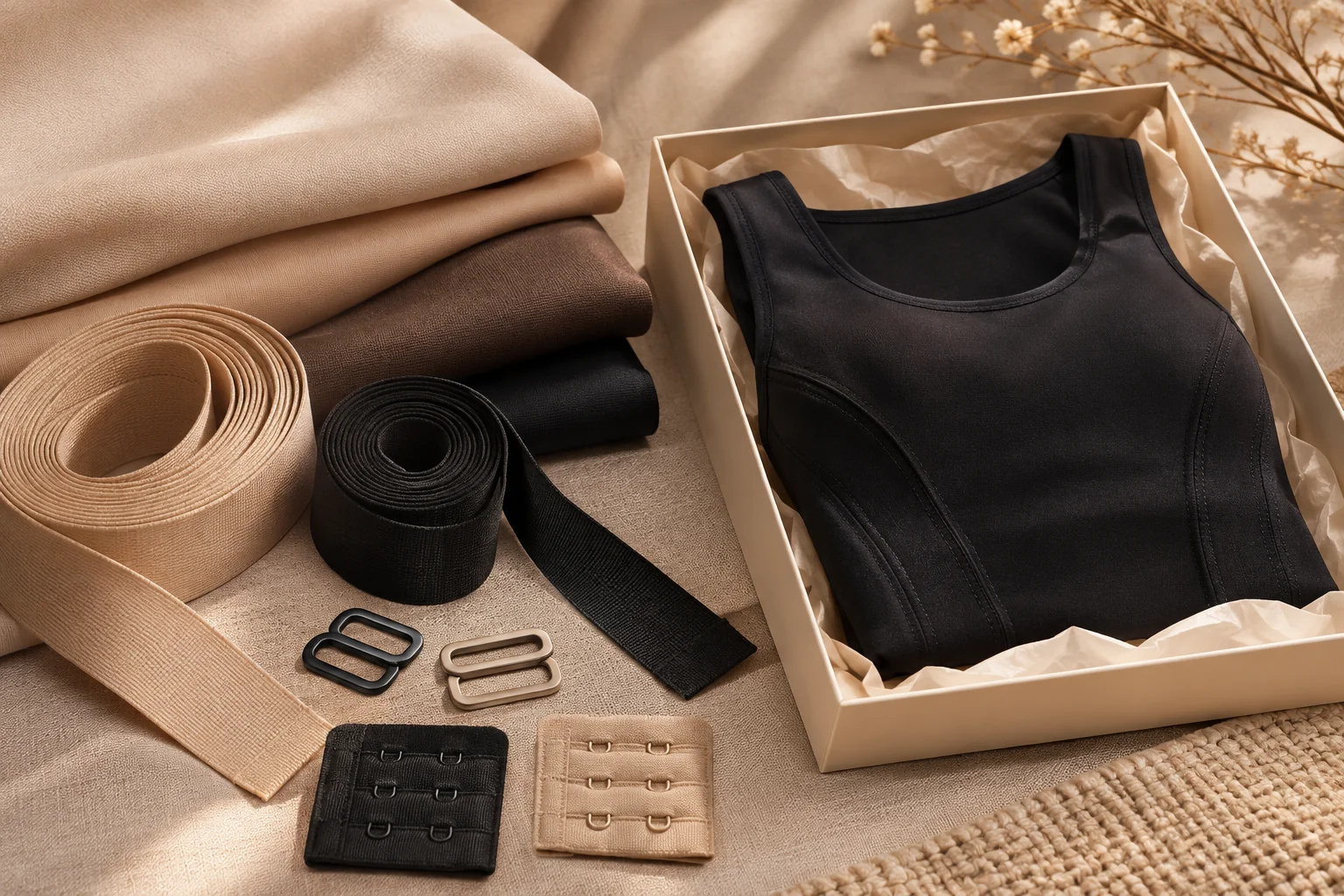
Illustrative sourcing and product-development scene. Click to continue the related buyer guidance.
How Can a Simple Dependency Example Explain a Longer Calendar?
Consider a fictional sequence using chosen working-day allocations: four for the first making stage, three for outbound transit and two for buyer review. That is nine planning days before the first decision. Suppose a revision then needs six making days, three transit days and two review days: another 11. The sequential total is 20 working-day allocations.
These are hypothetical inputs, not S-Shaper durations, courier estimates or a forecast for your launch. They exclude any unlisted queue, holiday, material delay or additional work. Do not convert them into calendar dates without the actual working calendars and dependencies.
The example explains why a short first-sample production task does not establish the full approval duration. It also shows where a change matters. Removing a revision because the actual evidence permits approval is different from assuming no revision before a sample has been reviewed.
For a separate overlap example, chosen material confirmation of five planning days and artwork preparation of three can occupy five days if they genuinely run in parallel and have no blocking dependency. If artwork cannot begin until a material decision, the same chosen durations total eight. The arithmetic is max(5,3) versus 5+3, not a claim that a particular factory can overlap those tasks.
Use the schedule to ask practical questions: which input is blocking, who owns it and when will the estimate be updated? Do not use a spreadsheet to turn uncertain work into a guaranteed dispatch date.
Use a worksheet that separates duration from status. A four-day chosen making allowance is not already four completed days merely because the brief was emailed. Record whether inputs were accepted, whether work is authorized, whether the task has started and which event completes it. Otherwise a founder can mistakenly count an unresolved material discussion as part of a manufacturing commitment. The same distinction applies after dispatch: a tracking number is evidence of a transport event, not evidence that the buyer completed its review.
Ask what happens when a task finishes but the next task cannot begin. In the fictional sequence, the sample could be received before a representative wearer is available. That waiting period is another dependency to record, not a reason to change the factory’s making duration. Conversely, if a revised material is unavailable, buyer readiness cannot make the revised garment complete. A transparent plan keeps the blocking event visible without assigning unsupported blame or inventing a guaranteed total.
Which Delays Can a Startup Clarify Before Another Sample Is Made?
Resolve ambiguity about the base version. If comments refer to different prototypes, the manufacturer may need clarification before a useful revision can be made. Consolidate the current instructions and preserve accepted features so the next sample does not reopen the entire brief.
Discuss material and construction alternatives through S-Shaper’s customization service. Ask whether the preferred option is actually available for the sample and later order. An alternative can be practical, but identify it and state which conclusions require confirmation with production inputs.
Plan the buyer’s review as real work. Arrange relevant wearers, measurements and outer clothing before the parcel arrives where feasible. Do not claim that this guarantees a shorter project; it simply identifies tasks the buyer must complete before giving a meaningful decision.
Agree the evidence and release conditions with the quality-assurance team. A rushed approval that leaves fit or component questions unresolved can move uncertainty into the order. If the launch date conflicts with the required work, ask for a narrower feasible scope or a revised plan rather than treating the published range as a guarantee.
Prepare a concise readiness packet for the current stage: the accepted brief, selected material or explicit substitute, relevant measurements, current artwork and consolidated comments where applicable. Ask the supplier to identify missing fields rather than allowing different team members to assume they are complete. If a field remains provisional, state whether work can proceed for a limited purpose and what must be confirmed later. This is a planning recommendation, not a promise that every complete packet qualifies for the shortest public interval. Technical feasibility and the supplier’s actual program still matter.
Which Custom Shapewear Manufacturers Can Give a Meaningful Sampling Schedule?
Compare the applicable program and dependencies, not a national speed ranking. These examples distinguish coordinated factory development, an integrated seamless route and a handoff across locations. Published capabilities identify useful questions; only a project-specific proposal can connect the brief with an accountable milestone.
China Custom Shapewear Manufacturer: Confirm the Applicable Sampling Clock
China custom shapewear manufacturer comparisons should distinguish ready references, platform adaptations and original work before using a published sampling interval in the brand’s launch schedule.
Recommended supplier: S-Shaper
S-Shaper’s OEM/ODM service describes material and style recommendations with design, production, QA and export specialists. Ask the factory team which program applies to the brief and what readiness conditions trigger its estimate. Experience across several customer regions supports the conversation, while actual scope and calendars require confirmation.
Conditional small-order routes and different published programs should not be merged into one universal minimum or lead time. Request a written sequence for the identified garment and distinguish sample making from approval and delivery. This route suits an own-label founder who needs coordinated development and can provide timely, consolidated decisions. A fast reference does not remove the evidence needed for the actual product.
Turkey Custom Shapewear Manufacturer: Map Yarn, Knitting and Remaining Assembly Dependencies
Turkey custom shapewear manufacturer routes involving integrated seamless production should identify yarn readiness, knit development and remaining assembly before the buyer compares sample schedules.
Recommended supplier: SML Seamless
SML describes private-label shapewear and activewear production in Turkey from yarn through packed goods, with dedicated communication. Ask which tasks the proposed platform requires and which decisions must be completed before a sample can be made. An integrated workflow provides a way to discuss dependencies, not a universal speed advantage.
The reviewed source does not establish a standard startup sampling duration or included revision package. Obtain a current estimate for the actual yarn, shade and design. This route suits a seamless-aligned brief with clear priorities. Keep buyer review, additional versions and transport separate unless the written proposal explicitly includes them in the stated milestone.
Canada Custom Shapewear Manufacturer: Include the Development Handoff in the Schedule
Canada custom shapewear manufacturer routes can involve development in one location and manufacture in another, so approval ownership and sample transport belong in the actual planning discussion.
Recommended supplier: Hertex
Hertex describes Montreal design, pattern development, grading and quality control, with manufacturing in China since 2006. Ask who reviews the brief, transfers revisions and authorizes the next sample. The schedule should identify the actual route of information and garments rather than assuming every task happens beside the buyer.
The published background does not establish Canadian manufacture, current local sample stock or a guaranteed development duration. Obtain a scoped estimate and clarify which milestone it covers. This route suits a buyer who values the stated development interface and can assign decisions across locations. A local commercial contact does not eliminate overseas production or transport dependencies.
Choose the route that states its inputs, start conditions and end point clearly, then update the launch plan when evidence or scope changes.
What Should Your Written Sampling Schedule Contain?
List the identified garment, sample purpose, materials, required inputs, start condition, included work and milestone. Add the decision owner and the rule for revising the estimate. Preserve whether durations are working days or calendar days and which calendar applies.
Record dispatch and delivery separately, including actual destination and transport terms. Use the supply-chain and logistics discussion to clarify the handoff. A sample ready for dispatch is not a parcel already received or a garment approved by the buyer.
Use the published FAQ to prepare the conversation and ask for item-specific answers where public pages differ or remain general. Do not replace an unresolved scope field with the shortest number found on another page.
Finally, keep a change log for the schedule itself. A new material, added size or late design change can alter the work. Identify its effect and agree the next plan instead of accusing either party of missing a date that was never scoped to the revised garment.
Confirm how calendar interruptions are communicated. The buyer, factory, material source and transport service may not share the same working days. Do not convert a business-day range into a calendar arrival by multiplying or dividing without those calendars. Ask for the actual proposed dates after the inputs and route are known, and keep any assumptions about holidays or cutoff times explicit. A launch announcement should be based on the project’s current evidence rather than a generic website interval copied into a public promise.
How Can S-Shaper Help Define a Realistic Sampling Milestone?
S-Shaper can be approached with a marked brief and a clear desired end point: a reference, an initial prototype, a revised fit version or a production-ready sample. Ask the team to confirm the applicable program, required inputs and what its estimate includes.
Its published services support recommendations and specialist communication across development, production, quality and export. Confirm current conditions for the actual garment rather than combining separate public offers into one promise. The useful schedule links a named deliverable with its assumptions and decision owner.
Send the project through S-Shaper’s inquiry page. Request written scope and an update process. A meaningful milestone helps the brand plan its own review and launch work while preserving the evidence needed to approve the product.
FAQ: What Affects Custom Shapewear Sampling Lead Time?
Does 2–5 days mean my custom garment will be approved then?
No. The partner page describes regular sampling, while complex styles have a separate working/business-day reference. Confirm the applicable program and distinguish making, transit, review and revisions.
Can I use bulk-production timing as development timing?
No. A bulk interval concerns a separate stage and its actual scope. It does not automatically include original development, buyer approvals or destination delivery.
Why should different website timing claims not be averaged?
They can refer to different programs, inputs and milestones. Ask which applies to your approved brief rather than merging a 48-hour reference with another sampling or bulk interval.
How can I make the schedule more useful?
Name the sample purpose, readiness trigger, included work, end point, working calendar and decision owners. Update the plan when scope or evidence changes instead of treating uncertain tasks as guaranteed dates.