 EN
Quick Answer
ODM shapewear design services help translate a product concept into a proposed garment, samples and an approvable specification. Start by explaining the intended wearer, wearing problem, reference features, size direction, quantity assumptions and target market. Ask the manufacturer to identify what it will develop, which decisions remain yours and what records each stage will produce.
An idea is enough to begin a scoped conversation, but not enough to authorize bulk production. Before release, the concept must become an identified physical product with approved material, construction, measurements and branding. Do not assume a service-page description includes unlimited design work, every revision or exclusive ownership. Confirm the actual deliverables and commercial conditions for the project.
What Does an ODM Manufacturer Need from a Founder with an Idea?
Describe the problem in the customer’s routine before choosing a technical solution. A founder might want shaping shorts that remain comfortable during seated work or a bodysuit suited to a specific neckline. Explain the use context, coverage and difficulty with current products. That helps the development team evaluate relevant options rather than decorate an undefined silhouette.
Use references to communicate particular features. Mark what you like and what must be different. A reference garment might show useful coverage while its material or closure is unsuitable. Identify the role of each image or sample so it does not become an instruction to reproduce another brand’s protected design.
Provide the target market, intended size coverage, approximate quantity and brand presentation. Label unvalidated assumptions. If you do not know material composition or construction terminology, say so and ask for relevant choices with explanations. An honest unknown is more useful than copying a technical value that does not represent your requirement.
Review S-Shaper’s product range to identify possible platforms. An existing style may already solve most of the problem, leaving selected changes rather than entirely new development. Ask the supplier to explain the gap between the reference and your intended product before deciding the development route.
Prepare a concise brief with numbered requirements and supporting attachments. Separate essential outcomes from optional preferences and identify how each outcome will be tested. The founder should be able to explain why a requested feature matters. That connection keeps the ODM discussion focused when several visually attractive options compete for the same first-launch budget.
| Founder input | Useful detail | Development question |
|---|---|---|
| Wearer and use | Who wears it, under what clothing and activity? | Which platform can address the problem? |
| Reference | Features to retain or change | What requires original development? |
| Size direction | Relevant measurements and coverage | Which grading and fit questions remain? |
| Order assumptions | Quantity, colors and branding | Which scope and minimums qualify? |
| Open decisions | Unknown material or construction details | Which recommendations are needed? |
ODM vs OEM vs Existing-Style Private Label: Which Starting Point Fits?
ODM is useful when the supplier is asked to help develop the product solution. OEM generally starts with a more defined buyer design and technical specification. Existing-style private label starts with a platform that may need limited brand presentation or selected changes. Suppliers use the terms differently, so ask for a responsibility map instead of relying on the acronym alone.
The S-Shaper OEM/ODM service page distinguishes client-design manufacturing from concept-led assistance and describes material recommendations, sample creation and revisions. Those are relevant categories to discuss, not proof that every activity or revision is included in your order. Request the proposed documents, physical samples and approval stages.
Choose the route around the unresolved requirement. If a platform already meets the wearing need, further product development may add little value to the first test. If it fails an essential fit condition, a new label is not a substitute for development. Ask what the supplier would change and how that change will be evaluated.
Keep design control and brand control distinct. A supplier-assisted concept can still use shared platforms or known construction methods. Clarify ownership, permitted use and any intended exclusivity separately. Do not assume paying a sample charge automatically transfers every pattern, file or production right.
| Starting route | What the founder brings | What to confirm |
|---|---|---|
| ODM | Concept, wearer problem and references | Development deliverables and decision ownership |
| OEM | Defined design and technical inputs | Interpretation, feasibility and manufacturing scope |
| Existing-platform private label | Selected garment and branding brief | Permitted changes and component conditions |
| Independent design plus factory | Separate technical-development arrangement | Complete handoff and approval responsibility |
Which ODM Deliverables Should Be Defined Before Work Begins?
Ask what the first development stage will produce. A design suggestion, material proposal, sketch and physical sample answer different questions. Identify which output allows you to approve the next stage and which information remains provisional. A visually complete sketch does not establish physical fit or manufacturability.
For material proposals, request identifiers and a reason each option suits the brief. Review relevant samples physically where needed. For measurements, agree the method and distinguish the wearer’s body dimensions from finished-garment dimensions. The same number measured under different conditions may not be comparable.
For samples, identify the purpose and version. One may demonstrate construction while another incorporates the intended material and branded components. Ask whether the proposed production version differs from the sample you receive. Keep those differences visible until they are approved.
Discuss the customization service scope for colors, labels and packaging. Request artwork preparation and proof responsibilities, including what the founder must supply. A development proposal for the garment should not leave the branded-component work undefined when those components are required for the launch.
Agree how changes are recorded and what triggers additional work or quotation. The sources do not establish a universal number of revisions or a fixed sample fee. Request the actual arrangement rather than assuming unlimited rounds. A useful ODM agreement defines the information you will receive well enough that both parties can recognize completion.
| Output | Approval purpose | Limit to record |
|---|---|---|
| Concept proposal | Choose a direction | Not physical fit approval |
| Material option | Select a relevant textile | Identify whether production material is represented |
| Development sample | Evaluate a defined change | List unfinished elements |
| Specification | Define approved production inputs | Identify current version and owner |
| Branding proof | Approve component execution | Separate from garment fit approval |
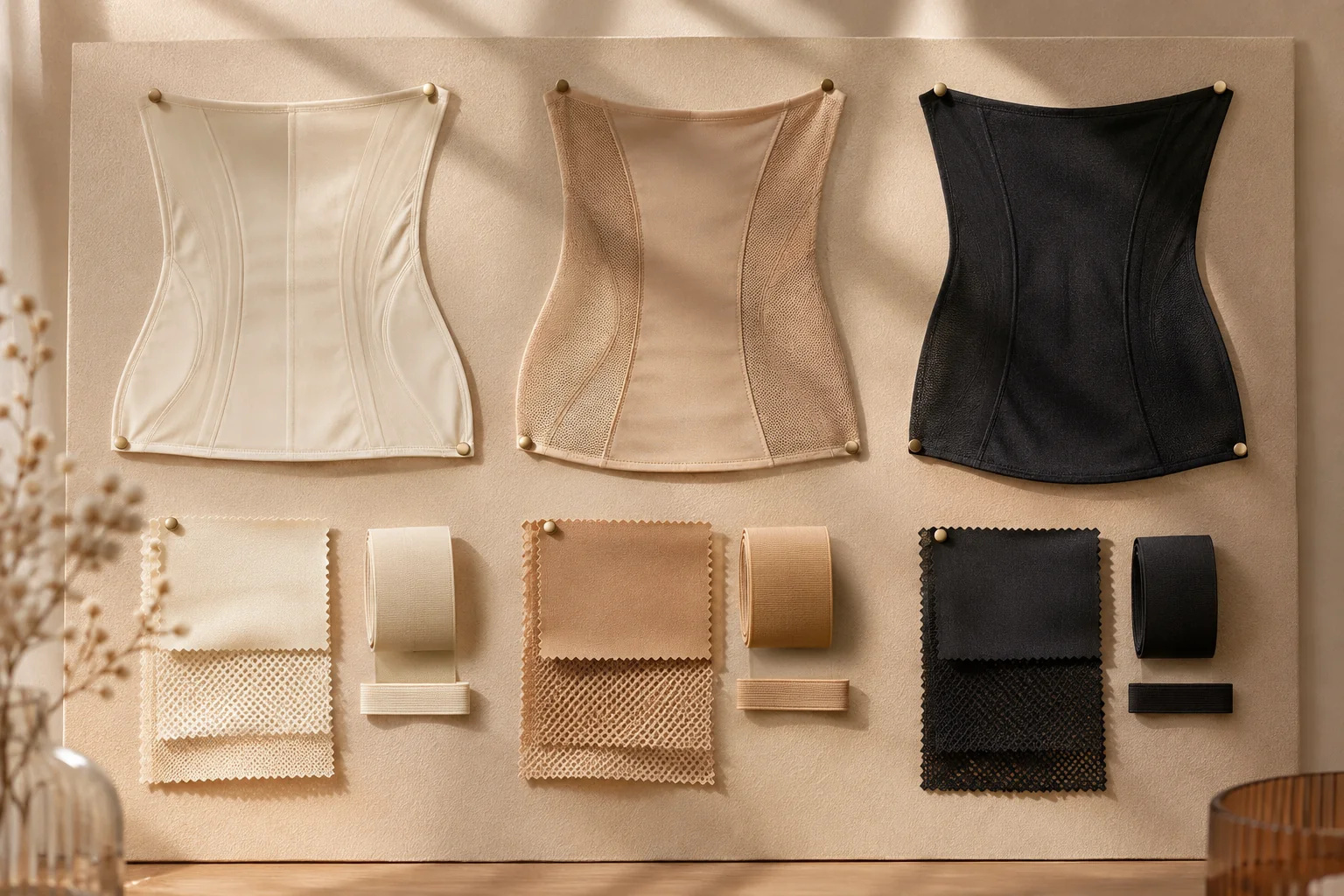
Illustrative sourcing and product-development scene. Click to continue the related buyer guidance.
How Should You Turn Sample Feedback into a Useful ODM Revision?
Review the sample against the original problem before reacting to overall appearance. Identify its size, material and version, take the agreed measurements and use relevant wearing tasks. A waistband observation should state when it happens and on which sample, rather than instructing the factory to make it premium.
Recruit testers representing the body measurements and proportions central to the launch. For a bodysuit, torso length may reveal issues that a waist measurement alone misses. For shorts, examine the leg opening during movement and the waistband while seated. Record the actual use context and keep it consistent between revisions.
Send a numbered comment list with an explanation of each essential issue. Ask the developer to respond to each point, identify the proposed change and explain any effect on other features. Consolidate feedback through one owner so the factory does not receive conflicting instructions from several reviewers.
Check the revised version against both the change request and the rest of the garment. A material or construction change can solve one problem while altering coverage, recovery or comfort elsewhere. Do not approve it solely because the original issue looks improved in a photograph.
Use S-Shaper’s quality-assurance overview to discuss relevant checks and acceptance records. Agree which sizes need additional physical review before the range is released. ODM development becomes more useful when each round closes a named uncertainty, rather than producing another sample without a clearer decision.
How Can Four-Channel Price Observations Support an ODM Budget?
An idea-stage founder needs to distinguish what a finished product costs from the work required to develop the intended version. The retail rows span different constructions, while the B2B rows identify advertised OEM bodies and a different shiny-fabric project. These are scope examples, not a basic-to-structured cost ladder. They cannot price an undefined concept or unlimited sample revisions.
| Channel / buying model | Observed USD per garment | Product and order basis |
|---|---|---|
| Amazon US retail bodies | $12.38–$35.14 | Seamless/lighter bodies $12.38–$19.99; Structured bodies $35.14–$35.14. |
| Brand DTC bodies | $29.99–$148.00 | Seamless/lighter bodies $29.99–$78.00; Structured bodies $69.00–$148.00. |
| TikTok Shop US bodies | $21.99–$54.99 | Seamless/lighter bodies $21.99–$46.99; Structured bodies $39.99–$54.99. |
| B2B advertised OEM bodies | $4.25–$8.30 | Rihope/Shangyou garment offers; listing MOQ 600/100; own-design terms reconfirmed |
| B2B custom shiny-fabric example | $22.00–$23.00 | Hucai FOB garment example, MOQ 200; a different fabrication; development fees unconfirmed |
B2B finished-garment acquisition is generally lower than consumer tickets because the buying model assigns inventory and downstream work to the brand. New patterns, materials, testing and components may remain separate. Amazon and TikTok Shop promotions and B2C brand presentation influence consumer observations; that spread is neither a disclosed development fee nor all recoverable brand premium.
Ask the ODM provider to connect each charge with a deliverable and approval. Confirm which proposed platform qualifies for the quoted production terms after development. Keep the customer-offer test separate from the supplier budget: a polished brand-site price does not establish that your concept will be technically feasible or command the same willingness to pay.
US-facing USD per single garment, reviewed November 10, 2026. Amazon uses dated May–October 2026 third-party PriceHistory snapshots, not live November checkout. These selected-seller observations are not industry averages or matched-quality comparisons. Variants and promotions change; shipping and tax are not normalized. B2B bands describe advertised garments, not landed costs or a final custom-development quote. Sources: dated PriceHistory Amazon records, official brand/TikTok Shop pages and Made-in-China supplier listings.
Which Shapewear Manufacturers Can Help Turn a Concept into a Product?
An idea-stage founder should compare technical ownership and development deliverables, not expect every supplier model to provide the same assistance. The following routes illustrate where concept interpretation, material work or fit coordination may sit.
China Shapewear Manufacturer: Translate the Wearer Brief
China shapewear manufacturers combining design and production can help translate a wearer problem into a platform and change list, provided the development outputs and approvals are explicit.
S-Shaper
S-Shaper describes material, function and trend recommendations alongside design, QA and export expertise for international brands. Its ODM service scope is therefore relevant when the founder has references but needs technical interpretation. Ask which sample and specification work is included and how revisions affect the quantity and price conditions. Small-order references are item-specific; confirm material availability, component commitments and the starting conditions for production rather than planning from a general speed claim.
Portugal Shapewear Manufacturer: Define the Research Question
Research-oriented Portugal shapewear manufacturer proposals are useful when the concept depends on a material or construction distinction that an existing garment cannot already demonstrate for the audience.
Impetus
Impetus describes an internal research team, technical collaborations and seamless or cut-and-sew development, with quality-testing functions. That provides a substantive conversation about technical differentiation. Request the stages, samples and relevant test work as a quote, not an assumed free service. No verified startup minimum or acceptance is established here. This route suits a concept with a genuine technical problem; an already suitable platform may be a more direct first commercial test.
Canada Shapewear Manufacturer: Connect Fit Interpretation and Production
A Canada-based shapewear manufacturer or development partner can be assessed on how local pattern and grading decisions are documented and transmitted to an overseas factory before samples are revised.
Hertex Lingerie
Hertex identifies Montreal design, pattern, grading and QC work with production in China. The hybrid arrangement may suit a founder needing technical communication around fit. Confirm the local deliverables, the production handoff and who owns the current specification. Coordination can add work beyond the garment quote, and startup suitability needs direct confirmation. The Canadian office does not establish Canadian fabrication, local stock or a guaranteed rapid development cycle.
Turkey Shapewear Manufacturer: Test Seamless Concept Compatibility
For Turkey shapewear manufacturers offering integrated seamless production, assess whether the concept fits the proposed knitting, material and finishing capability before treating integration as proof of design feasibility.
SML Seamless
SML describes private-label shapewear across yarn-to-packed facilities. A compatible concept can benefit from discussing connected stages with the supplier. Ask how grading, custom colors and finish would be developed and checked for the actual garment. No universal minimum or price advantage follows from the process description. Confirm the sample route and material commitments, particularly when simplifying the design could alter the wearer benefit that motivated the project.
Select the development route that resolves the concept’s real technical gap, then require a sample and record that make the next decision reviewable.
When Is an ODM Concept Ready for Production Approval?
Release production only when the essential product questions have become approved inputs. Identify the garment version, material, construction, measurement chart, size and color matrix and branded components. Record the reference sample and the specific criteria the production order will be checked against.
Ask the supplier to acknowledge the same files and changes. A founder should not approve one sample while the factory works from an earlier chart or different material note. Withdraw superseded instructions from the live approval set and preserve them only as history.
Confirm the current quotation after the specification stabilizes. Development assumptions may have changed material use, component requirements or production scope. Ask which amounts are fixed and which remain conditional. An attractive preliminary price should not become the final budget without that reconciliation.
Review the supply and logistics handoff and distinguish production completion, dispatch and receiving readiness. Public lead-time statements do not cover every development or buyer-review task. Use a stage plan tied to actual approvals, with a process for proposed substitutions and schedule changes.
Finish with a written release describing what the payment or instruction authorizes. If a critical fit or component issue remains open, keep the relevant release conditional rather than hiding it in a casual approval message. An ODM relationship succeeds operationally when the original idea has become a product another qualified person can identify and evaluate.
How Can S-Shaper Support an Idea-Stage Shapewear Brand?
S-Shaper presents concept-led ODM support alongside OEM manufacturing and customization. Its public service scope includes design suggestions, material recommendations, sample creation and revisions. Those offerings provide a starting point for a founder who needs help developing a specific wearer requirement rather than simply sourcing a finished anonymous garment.
Share the concept, references, intended audience and market, essential changes and first-order assumptions. Ask the team to propose an existing-platform or development route, name the deliverables and identify the decisions you must approve. Use the supplier FAQ for initial questions, then confirm the selected product’s actual conditions.
To begin, send S-Shaper an ODM development brief. Compare the proposed support with your technical gaps and customer evidence. Manufacturing expertise can help turn the idea into an approvable sample; it does not replace your brand’s responsibility to validate the product promise or decide whether to launch.
FAQ: ODM Shapewear Development for Brands Starting with an Idea
What does an ODM manufacturer need to turn my idea into a sample?
It needs the intended wearer and use case, references, essential changes, size direction, quantity assumptions, branding and target market. Explain what remains unknown and ask which development support is available. The supplier should identify the sample purpose and documents required for the next approval.
Do ODM shapewear design services include unlimited revisions?
The reviewed sources do not establish a universal revision allowance. Request the included work, change process and charges if applicable. Each round should address a named uncertainty, with a version and decision record, rather than relying on the word ODM to define the whole service.
Can ODM begin from an existing garment platform?
Yes, if the supplier’s program supports it and the platform is relevant. Identify the necessary changes and how they affect sampling and order conditions. Starting from an existing reference does not automatically make the final product exclusive or eliminate physical fit validation.
Can I use public product prices to budget a developed design?
Use them as dated references for the listed product only. A changed material, pattern or construction requires confirmation and may need a new quote. Record development and component costs separately when they are not included in the garment proposal.
What should exist before production starts?
An approved version with material, construction, measurements, variants, brand components, reference sample and acceptance criteria, plus a current commercial scope. Confirm the production and delivery handoffs. An idea or attractive sketch alone does not authorize a repeatable bulk order.