 EN
Quick Answer
The shapewear product development process turns a wearer requirement into an approved manufacturing record through a sequence of decisions: confirm the brief, choose material and construction options, review samples, validate fit, close revisions and release the final specification. Each stage should produce evidence that allows the next stage to begin. Sending a concept does not by itself authorize bulk production.
The founder approves the product promise and final result, while the supplier’s development and production roles should be defined in the proposal. Keep the garment, size range, brand components and quote linked to the current version. A clear process is measured by resolved decisions and controlled changes, rather than the number of samples made or the speed claimed on a service page.
What Must Be Confirmed Before a Concept Enters Development?
Begin with the intended wearer and use context. Describe the problem, relevant coverage and support feel, outer clothing and the situation in which the garment must work. A production team can respond more usefully to a concrete waistband or torso-fit requirement than a broad request for premium shapewear.
Identify a reference and its role. Use S-Shaper’s catalogue to select possible platforms, or provide an appropriately used sample with numbered observations. State what should be preserved, what should change and why. Inspiration images can guide presentation without defining technical construction.
Record the target market, first-order assumptions and support the founder lacks. If materials or size allocation are undecided, label them as open questions. Do not fill the brief with copied specifications simply to make it look complete. False precision can send the development team toward the wrong solution.
Ask the supplier to confirm the proposed route through its OEM/ODM service scope. Identify the people preparing technical information, recommending options and consolidating feedback. A startup without an in-house designer can still run a disciplined approval process when responsibilities are explicit.
Close this gate with an acknowledged brief and a sample proposal. The proposal should say what the first physical sample will establish, what is provisional and which information the founder must provide next. If the parties still disagree about the essential wearer need, producing a sample quickly may only make the misunderstanding more expensive.
| Gate | Decision | Evidence required |
|---|---|---|
| Brief | Which wearer problem and product route? | Acknowledged requirement and sample proposal |
| Material/construction | Which options represent the intended benefit? | Identified options and reasons |
| Sample review | What works and what needs revision? | Measurements and structured trial comments |
| Final approval | Which version is accepted? | Reference sample and complete specification |
| Production release | What work is authorized now? | Current quote, matrix and release record |
Development Sample vs Production Reference: Why Are They Different?
A development sample may be made to investigate a particular question. It can demonstrate a construction, material or revised fit without representing every final component. A production reference should identify the accepted combination the order is intended to reproduce. Confusing these purposes can turn a useful trial into an accidental bulk approval.
Ask what each sample represents when it is sent. Identify its size, material, construction and unfinished elements. If it differs from the intended production garment, record that difference prominently. The founder should know whether a positive trial applies to the final textile or only to a provisional development version.
Use version numbers consistently. Connect comments, photographs and measurement sheets to the relevant sample. Keep superseded garments available as history where helpful, but separate them from the accepted reference. The factory should not need to guess which attractive sample on a rack represents the release decision.
A production reference does not eliminate ongoing checks. The order still needs suitable material, process and finished-goods acceptance arrangements. It establishes what the buyer approved, while inspection and production controls provide evidence about whether the supplied goods match that reference.
Ask who holds the reference and which records accompany it. If the founder and factory each retain a sample, confirm how identity is established. If a later substitution is proposed, compare it with the approved version before authorizing use. A sealed or retained garment is useful because it is linked to a specification, not merely because somebody calls it final.
| Sample purpose | Appropriate conclusion | Conclusion to avoid |
|---|---|---|
| Construction trial | This feature can be evaluated | Every final material and component is approved |
| Fit revision | The defined change can be reviewed | All sizes are automatically validated |
| Branding proof | The proposed application can be checked | Garment fit is accepted |
| Production reference | The identified version is approved | Future goods require no conformity checks |
How Should Material and Construction Choices Become Technical Inputs?
Ask for options tied to the product requirement. If the wearer needs a particular coverage or feel, the developer should explain why each proposed material or construction may help. Compare physical examples under relevant conditions rather than selecting from technical-sounding descriptions alone.
Request material identifiers and the measurement methods relevant to the garment. Clarify stretch directions, opacity or other observations through the intended sample and agreed checks. Do not assume a fiber percentage alone establishes comfort, support or the behavior of the complete product.
Discuss available and new options through S-Shaper’s customization service. Existing resources may simplify procurement if suitable, while a new textile or color can create additional commitments. Ask whether the sample represents the actual production choice and what changes if availability is different later.
Map the components that interact with the material: panels, straps, closures, elastics and labels as relevant. A main-fabric approval should not silently authorize every other part. Identify the intended relationship and the sample stage at which the complete garment will be reviewed.
Record the chosen inputs and approval status. If a material becomes unavailable, require a proposed alternative and review its effect before use. Substitution is a product decision, not merely a purchasing convenience. A controlled development process preserves the founder’s ability to approve what the customer will actually receive.

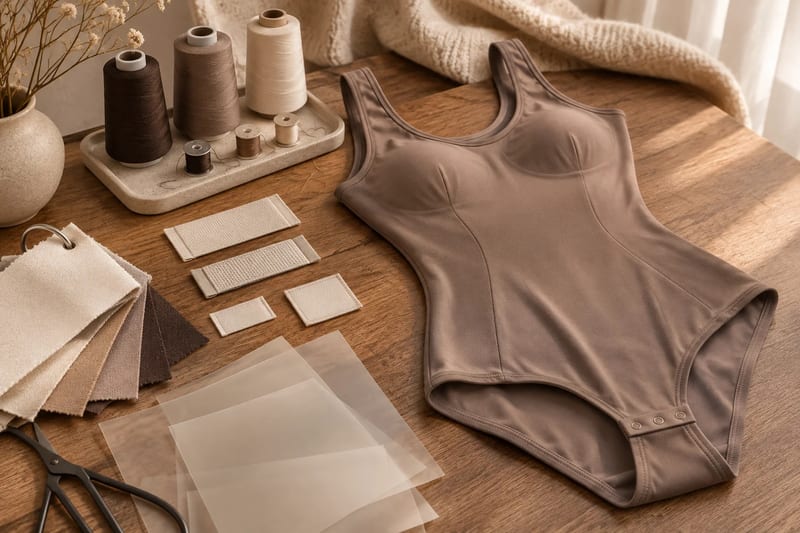
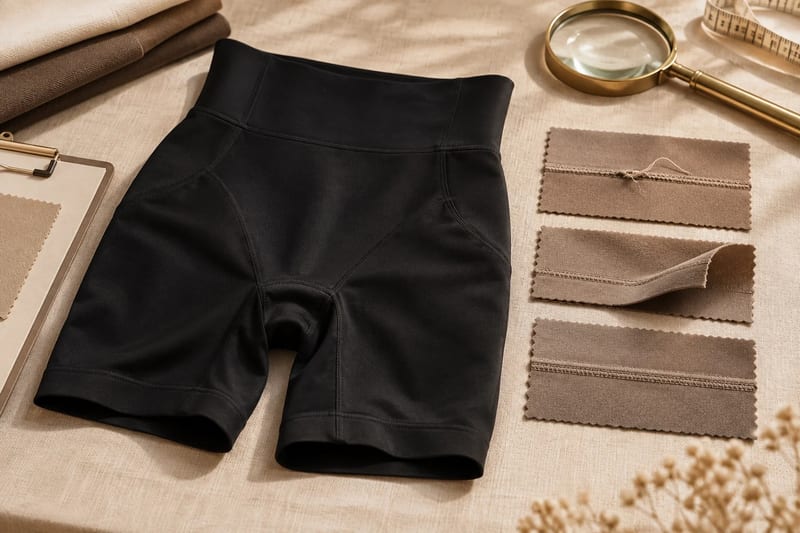
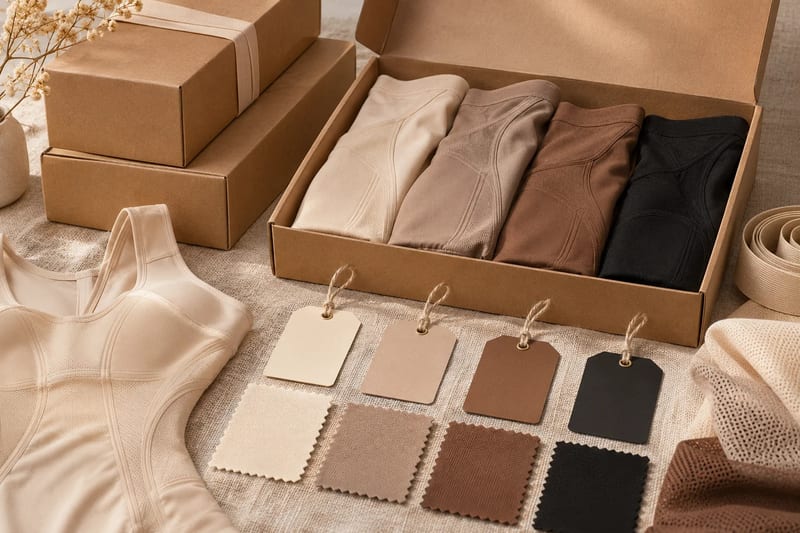
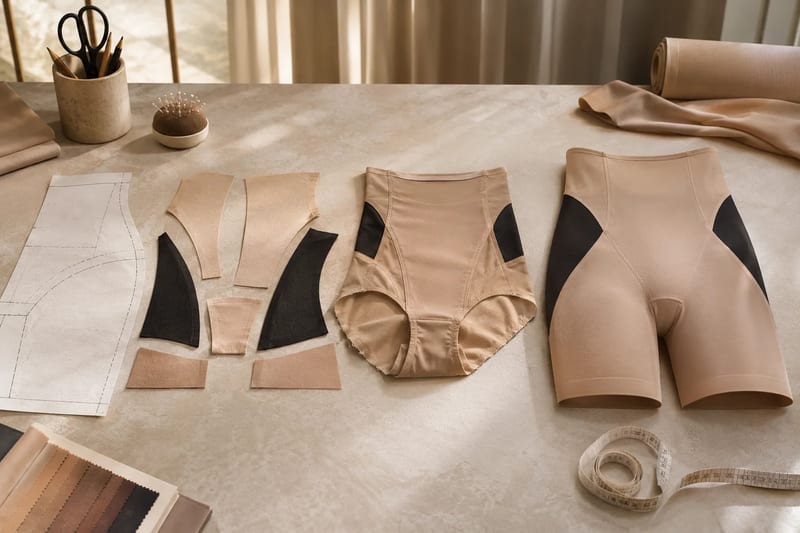
Illustrative sourcing and product-development scene. Click to continue the related buyer guidance.
What Happens During Fit Trials and Sample Revisions?
Use trial participants and tasks that reflect the intended product claim. For shaping shorts, sitting, walking and checking leg openings can reveal issues a standing photograph misses. For bodysuits, torso proportions, dressing, closure use and coverage deserve specific attention. The relevant tests follow the use case rather than a generic approval ritual.
Record body measurements and finished-garment observations separately, with the size and version tested. An unclear comment about tightness is difficult to convert into a technical change. Describe where the issue occurs, when it happens and which result the founder needs improved.
Consolidate feedback through one current list. Ask the supplier to respond point by point, identify the proposed solution and flag consequences elsewhere in the garment. A waistband adjustment may affect another dimension or component; a material change can alter the original fit. Evaluate the revision as a whole product.
Ask which sizes need physical verification before the range is approved. One mid-size fitting does not establish every proportion, and copying an alteration across all sizes is not automatically a sound grading decision. Discuss the evidence needed for the size coverage the brand intends to offer.
Use S-Shaper’s quality-assurance overview to define appropriate checks and records. A revision closes when the relevant evidence supports an approval, another defined change or rejection of the platform. Repeated sampling without a clearer requirement is a reason to revisit the brief or technical support, not proof that development is progressing.
At Which Development Stage Can Four-Channel Prices Become Useful Inputs?
Channel research can begin while a concept is being clarified, but the manufacturing budget should become firmer only as the product and scope stabilize. These retail construction mixes and two different B2B fabrication scopes are context, not comparable development milestones. A basic seamless platform cannot price a structured faja or turn an early sketch into a finished-product quotation.
| Channel / buying model | Observed USD per garment | Product and order basis |
|---|---|---|
| Amazon US retail bodies | $12.38–$35.14 | Seamless/lighter bodies $12.38–$19.99; Structured bodies $35.14–$35.14. |
| Brand DTC bodies | $29.99–$148.00 | Seamless/lighter bodies $29.99–$78.00; Structured bodies $69.00–$148.00. |
| TikTok Shop US bodies | $21.99–$54.99 | Seamless/lighter bodies $21.99–$46.99; Structured bodies $39.99–$54.99. |
| B2B advertised OEM bodies | $4.25–$8.30 | Rihope/Shangyou garment offers; listing MOQ 600/100; own-design terms reconfirmed |
| B2B custom shiny-fabric example | $22.00–$23.00 | Hucai FOB garment example, MOQ 200; a different fabrication; development fees unconfirmed |
B2B finished-garment bands generally show lower acquisition prices than consumer channels, while technical development, materials and brand components may require separate commitments. Consumer tickets also differ through Amazon and TikTok Shop promotions, B2C positioning and service. Those differences cannot all be interpreted as available margin or the cost of moving between development stages.
Reconcile the quote after significant sample changes. Identify the material, construction, matrix and deliverables represented by each amount, then ask what the next payment authorizes. A lower public bulk price should not silently replace a current pilot proposal. The accepted version, rather than the earliest marketplace comparison, is the basis for production release.
US-facing USD per single garment, reviewed November 10, 2026. Amazon uses dated May–October 2026 third-party PriceHistory snapshots, not live November checkout. These selected-seller observations are not industry averages or matched-quality comparisons. Variants and promotions change; shipping and tax are not normalized. B2B bands describe advertised garments, not landed costs or a final custom-development quote. Sources: dated PriceHistory Amazon records, official brand/TikTok Shop pages and Made-in-China supplier listings.
Which Shapewear Manufacturers Can Support the Concept-to-Production Process?
Compare how the proposed partner controls the development handoffs. Different routes may contribute direct factory coordination, material research or a local technical bridge; none removes the founder’s need to approve the actual product and commercial commitment.
China Shapewear Manufacturer: Link Development to Release
China shapewear manufacturers combining development and production should show how a wearer brief becomes an identified sample, technical record and manufacturing release rather than disconnected service promises.
S-Shaper
S-Shaper describes design, material and function recommendations, QA and export expertise for international brands. Ask the development team to map the stages and name the approvals that move the project forward. Item-specific small-order references and project-specific factory quotes help frame the first commitment, but do not define every developed style’s conditions. Confirm material availability, included revisions and dispatch dependencies before planning from the shortest public lead-time statement.
Portugal Shapewear Manufacturer: Scope Technical Validation
Research-led Portugal shapewear manufacturer proposals can add technical depth when a development stage must resolve material or construction uncertainty that an existing platform cannot answer for the brand.
Impetus
Impetus describes research partnerships, seamless and cut-and-sew development, and testing across materials and finished parts. That provides substantive subjects for a staged proposal. Ask which samples and relevant tests establish the next decision, then quote their scope and material commitments. No verified startup minimum is available here. The route is useful when the product needs research-led differentiation, rather than assuming a European address guarantees a better result or a particular cost premium.
Turkey Shapewear Manufacturer: Follow Connected Seamless Stages
For Turkey shapewear manufacturers with integrated seamless operations, compare how yarn, knitting, dyeing and finishing decisions connect to the approved product before treating integration as process control evidence.
SML Seamless
SML identifies private-label shapewear production from yarn through packing. A compatible platform can make the stage map easier to discuss with one supplier. Confirm grading, material identity, custom-color conditions and how the final sample reaches production instructions. Integration does not establish a universal minimum or the quality of your order. Request the actual sample, quote and release records, especially when simplifying a feature could change the wearer benefit.
Canada Shapewear Manufacturer: Define the Cross-Border Handoff
A Canada-based shapewear manufacturer or technical partner should clarify how locally approved pattern and grading decisions become current instructions for overseas production and subsequent quality review before dispatch.
Hertex Lingerie
Hertex describes Montreal development and QC functions with production in China. That hybrid arrangement can suit a founder whose main gap is technical interpretation of fit feedback. Ask who consolidates revisions, preserves the final specification and approves changes at the manufacturing handoff. Confirm startup acceptance and the quoted coordination scope. A local technical office does not imply local fabrication or stock, so production and replenishment timing need their own confirmation.
Choose a route that can name the evidence and owner at each critical handoff, then maintain one current record through the final release.
What Must Be Closed Before Bulk Production Starts?
Confirm the approved product version, material, construction, measurement chart, size-color allocation and brand components. Identify the reference sample and the checks the order must meet. The final record should be understandable to another qualified person without a verbal reconstruction of the development history.
Reconcile the technical release with the quotation and payment conditions. Confirm what remains included and what has changed since the early proposal. Ask the supplier to acknowledge the current records. Do not allow an old material note or provisional size chart to remain in the live production instructions.
Set the process for proposed changes after release. A substitute material, component or construction needs review against the approved requirement before use. Identify who can approve it, what sample or evidence is required and whether the commercial or schedule scope changes.
Review the production-to-dispatch handoff with the final variant identifiers and receiving requirements. Factory completion, shipment release and warehouse readiness are different events. Agree the packing information and inspection closure evidence needed before the next party can act.
End development with a written approval that says what work is authorized. If a critical question remains unresolved, make the condition explicit and avoid an ambiguous blanket approval. The process is complete when a defined product and order can be reproduced and checked, while later customer feedback remains a separate input to the next revision or reorder.
How Can S-Shaper Help Organize a Product-Specific Development Process?
S-Shaper presents OEM/ODM, customization, quality and supply-support services that can be connected into a product-specific workflow. A startup should use those descriptions to ask for actual deliverables, decision owners and approval stages rather than assuming one service-page promise defines the whole project.
Share the wearer requirement, references, target market, essential changes and first-order assumptions. Ask the team to recommend a platform and identify the sample purpose, technical records and work needed before production. The order FAQ provides preliminary timing and testing context; confirm the conditions for the selected garment.
To begin, request a development-stage proposal from S-Shaper. Compare its process with the evidence your brand needs to approve the product responsibly. The useful result is a series of concrete, reviewable decisions that connects the first concept with a current manufacturing and receiving record.
FAQ: The Shapewear Product Development Process Explained
What happens between sending a concept and starting bulk production?
The brief and route are confirmed, materials and construction are proposed, samples are reviewed, fit revisions are closed and the accepted version becomes a production specification. The current quote, variant matrix and release responsibilities must align with that product before bulk work is authorized.
Is every sample a production sample?
No. A sample may test one feature or use provisional material and components. Ask what it represents and what remains unfinished. The final production reference should identify the accepted combination rather than rely on an attractive early development garment.
How many sample rounds are required?
There is no universal number established by the sources. Agree the scope and charges where applicable, then use each round to resolve a defined question. Another sample is justified by a specific decision, not by an assumption that more rounds automatically mean better development.
When should the manufacturing quote be updated?
Reconfirm it when material, construction, quantities, branded components or other scope changes. A public listing or preliminary estimate cannot automatically price the developed product. Keep the current technical version linked to the quotation and payment triggers.
What shows that development is ready for release?
An approved reference and specification, appropriate size evidence, final components, accepted quantities and clear order checks, with the supplier acknowledging the same current files. Important open conditions should remain explicit rather than hidden inside a broad production approval.