 EN
Quick Answer
Full-package shapewear manufacturing should identify who coordinates product preparation, materials, samples, production, quality checks, brand components and the delivery handoff. The term is useful only when the proposal lists the work included, work excluded and approvals the founder must provide. One contact does not mean every service, fee or responsibility is automatically included.
Ask for a product-specific responsibility matrix and a quote linked to the same specification. Confirm which stages the supplier performs, which involve other providers and who closes each handoff. A startup can benefit from coordinated supply while still owning the wearer requirement, final product approval and customer-facing promise.
What Should a Full-Package Shapewear Proposal Actually Include?
Start with the garment and the work needed to make it ready for your brand. Use S-Shaper’s product catalogue to identify a platform or explain the developed design you need. An existing shaping brief with new labels and a new bodysuit concept require different preparation even if both offers are called full package.
List each stage explicitly: requirements, technical preparation, material sourcing, sample work, manufacturing, components, checks and dispatch coordination. Ask what deliverable closes each stage. A broad claim of end-to-end service does not tell the founder whether a specification, physical proof or particular receiving document will be supplied.
Identify the buyer’s inputs. The founder may need to supply artwork, target measurements, a product brief or decisions on proposed options. If those inputs are missing, ask whether the supplier can help prepare them and on what scope. Full package should not conceal an expectation that your team already has all technical information.
Ask which providers perform the work. Coordinating an external specialist can be a legitimate part of the arrangement. The relevant question is how responsibility, approval and records are managed at the handoff, not whether every activity is physically in one room.
Keep exclusions visible. Brand strategy, customer demand validation, independent specialist advice or destination services may sit outside the manufacturing proposal. Do not assume those tasks disappear because one sales contact handles the garment. The value of the package comes from clearer coordination of the defined work, not an unlimited promise to run the whole business.
| Stage | Defined output | Scope question |
|---|---|---|
| Requirements | Acknowledged product brief | Who prepares missing technical inputs? |
| Materials | Identified proposed and approved options | Who purchases and approves substitutions? |
| Samples | Versioned garment and comments | Which work and revisions are included? |
| Production and checks | Goods against an accepted specification | Which records support release? |
| Components and handoff | Approved presentation and packing information | Which delivery responsibilities remain external? |
Full Package vs Garment-Only Manufacturing: Which Work Remains with the Brand?
A garment-only offer may expect the buyer to provide finished specifications, approved materials or components and separate coordination. A full-package offer may prepare or coordinate more of those tasks. Compare the actual assumptions rather than choosing by the length of the service description.
Review the S-Shaper OEM/ODM scope to distinguish manufacturing from a client’s defined design and supplier-assisted development. Neither label alone defines every procurement or logistics responsibility. Ask what the provider will deliver and what the founder must obtain elsewhere.
A lower garment-only quote can be suitable when your team already has the technical resources and provider relationships. If it does not, obtain the missing support proposals before interpreting the difference as a saving. Equally, do not pay for a broader package whose services the project does not need.
One contact can simplify communication, but the buyer should still know where technical decisions go. Identify who interprets fit comments, confirms materials and authorizes dispatch. A convenient contact structure is valuable when it preserves clear records rather than becoming a barrier between the founder and the people making product decisions.
| Buying area | Garment-only arrangement may expect | Full-package proposal should clarify |
|---|---|---|
| Technical records | Completed buyer specification | Preparation and approval responsibility |
| Materials | Buyer-selected or supplied inputs | Sourcing, purchase and substitution scope |
| Brand components | Approved or supplied components | Proof, production and application work |
| Quality | Buyer-defined checks and inspection | Applicable method, record and closure |
| Delivery | Defined factory handover | Packing and logistics coordination boundaries |
How Do You Build a Responsibility Matrix Before Committing?
For each stage, name the person or organization preparing the work, the party approving it and the record that closes the decision. The same organization can fill several roles, but the roles should remain visible. A sample being produced is not the same as the founder accepting its fit.
Use the matrix to expose gaps rather than assign blame. If nobody is named to check label text or provide the size identifiers, the package remains incomplete for a branded order. If two parties both assume the other will arrange inspection, resolve the issue before the order reaches that stage.
Ask the supplier to acknowledge the matrix against the quotation. If a task is excluded, identify how it will be handled and what information the supplier needs from that provider. A technically acceptable arrangement can still fail operationally when an external handoff is not prepared.
Keep change authority clear. The production team may identify an unavailable material or a component problem, but that does not necessarily authorize it to substitute another option. Define who evaluates the proposal, what evidence is required and who approves it before use.
Add timing dependencies without inventing durations. State which input must be ready before sampling, procurement or production can start. Request the actual schedule from the responsible provider. A full-package coordinator should make those dependencies easier to understand rather than blend them into one optimistic launch date.
| Illustrative task | Prepared by | Approved by | Closing record |
|---|---|---|---|
| Product requirement | Brand with agreed technical help | Brand decision owner | Current acknowledged brief |
| Material option | Supplier or named sourcing provider | Defined product approver | Identified accepted option |
| Sample revision | Development team | Brand fit approver | Versioned comments and acceptance |
| Artwork/component | Assigned brand or provider | Named brand approver | Final proof and file |
| Shipment release | Defined inspection/operations roles | Agreed release authority | Conformity and packing evidence |
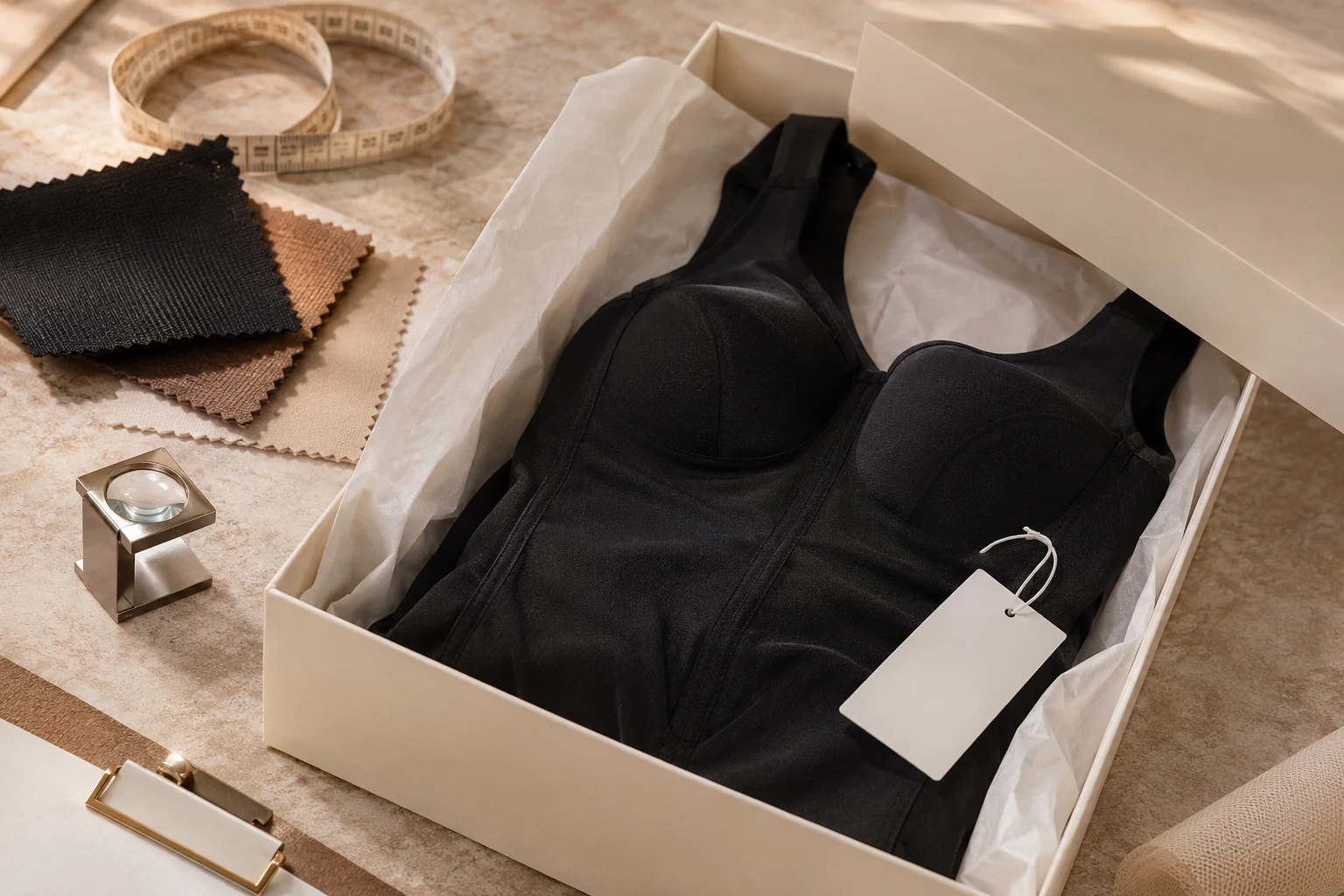
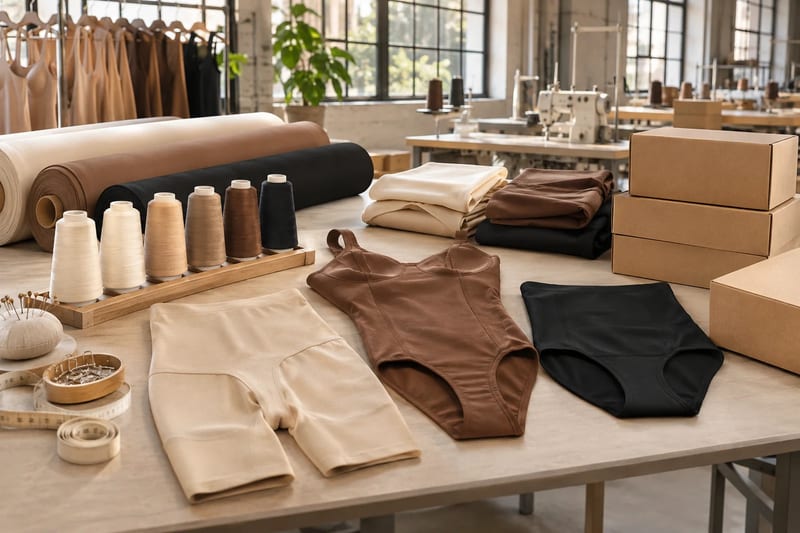
Illustrative sourcing and product-development scene. Click to continue the related buyer guidance.
What Should You Ask About Materials, External Stages and Quality?
Ask how the material used in the sample is identified and how production supply is connected to that reference. The phrase quality fabric does not establish the specific textile or acceptance requirements. Discuss the options through S-Shaper’s customization service and record the approved material and construction together.
If work is performed by another provider, ask how the coordinator preserves product identity and communicates changes. This can apply to components, finishing or other relevant stages. The founder needs a coherent explanation of the route, not unrelated assurances from several contacts.
Define the checks for your garment using the quality-assurance overview as a discussion starting point. Measurements, seams, openings, appearance, labeling and quantities may all need attention depending on construction. A generic inspection statement cannot establish the result for the specific order.
Confirm how findings are addressed. Ask who records the discrepancy, who proposes corrective work and what evidence closes it before dispatch. If independent inspection is arranged, clarify access, stage and responsibility for providing the reference records. Do not assume the package automatically includes a separate inspector’s services.
Retain a current sample and specification for comparison. Coordinated supply is easier to evaluate when the founder knows whether feedback concerns a deviation from approval or a correctly made garment that needs design improvement. Those issues call for different actions and should not disappear into a general complaint about the package.
How Should a Full-Package Quote Be Compared with Four-Channel Prices?
A full-package proposal may coordinate technical preparation, procurement, components and dispatch beyond the garment itself. The retail rows below span different constructions; the B2B rows identify two different fabrication scopes, not interchangeable package prices. Compare a basic seamless garment separately from a structured faja. None establishes that every launch service is included in finished goods.
| Channel / buying model | Observed USD per garment | Product and order basis |
|---|---|---|
| Amazon US retail bodies | $12.38–$35.14 | Seamless/lighter bodies $12.38–$19.99; Structured bodies $35.14–$35.14. |
| Brand DTC bodies | $29.99–$148.00 | Seamless/lighter bodies $29.99–$78.00; Structured bodies $69.00–$148.00. |
| TikTok Shop US bodies | $21.99–$54.99 | Seamless/lighter bodies $21.99–$46.99; Structured bodies $39.99–$54.99. |
| B2B advertised OEM bodies | $4.25–$8.30 | Rihope/Shangyou garment offers; listing MOQ 600/100; own-design terms reconfirmed |
| B2B custom shiny-fabric example | $22.00–$23.00 | Hucai FOB garment example, MOQ 200; a different fabrication; development fees unconfirmed |
B2B acquisition is generally below consumer tickets because the buyer assumes quantities and downstream responsibilities, but the exact scope matters. Amazon and TikTok Shop promotions, B2C brand positioning and physical product differences also affect the spread. It is not all brand premium, and a complete-package supplier cannot fairly be compared with an offer that omits needed work.
Use the responsibility matrix to normalize what is prepared, supplied and approved. Request current amounts for missing services and identify every payment trigger. The useful comparison is the complete route to the agreed receiving endpoint, followed by a separate consumer-offer model; a retail ticket alone cannot price the coordination your startup still needs.
US-facing USD per single garment, reviewed November 10, 2026. Amazon uses dated May–October 2026 third-party PriceHistory snapshots, not live November checkout. These selected-seller observations are not industry averages or matched-quality comparisons. Variants and promotions change; shipping and tax are not normalized. B2B bands describe advertised garments, not landed costs or a final custom-development quote. Sources: dated PriceHistory Amazon records, official brand/TikTok Shop pages and Made-in-China supplier listings.
Which Shapewear Manufacturers Should You Compare for Full-Package Coordination?
Compare where coordination sits and what technical capability the product needs. Integrated manufacture, research-led development and wholesale distribution are different routes; only a defined proposal shows whether a candidate can cover your complete order scope.
China Shapewear Manufacturer: Connect Development, QA and Export
China shapewear manufacturers offering development and production should explain how material selection, sample approval and export handoffs connect, rather than relying on the phrase one-stop supply alone.
S-Shaper
S-Shaper describes design, material and function recommendations, QA and export specialists serving international brands. Its service scope can therefore frame a responsibility matrix for an emerging brand. Confirm which records and component work are included, where external services remain and which item-specific minimum applies. Factory price tiers provide a goods reference, not a complete-package guarantee. Ask about current availability, approval dependencies and dispatch responsibilities before turning the proposal into a launch schedule.
Turkey Shapewear Manufacturer: Review the Integrated Production Boundary
For Turkey shapewear manufacturers with integrated seamless operations, investigate which yarn-to-packed stages are coordinated and what brand, technical or delivery work still needs an explicitly assigned owner.
SML Seamless
SML describes private-label shapewear across integrated facilities. A compatible product can make the manufacturing stage map easier to discuss with one provider. Confirm the material, color, grading and finishing scope, alongside component and packing responsibilities. Integration is not evidence that every service is included or every order size accepted. This option suits a seamless brief whose actual requirements match the platform, with relevant samples and a quote clarifying the remaining handoffs.
Portugal Shapewear Manufacturer: Identify Research and Test Deliverables
Research-oriented Portugal shapewear manufacturer proposals may address technical gaps inside a package, but the founder should separate the development work from garment supply and independently confirm its acceptance criteria.
Impetus
Impetus describes research partnerships, development and physical or chemical testing functions. Those capabilities are relevant when materials or construction require investigation beyond an existing style. Ask which deliverables and test work the proposal covers and how they connect with final manufacturing approval. Startup suitability and MOQ remain unverified here. Consider this route when the technical work is necessary, rather than assuming a country-level quality advantage or an automatic complete-package service.
USA Shapewear Manufacturer: Separate Wholesale Service from Production
A USA shapewear manufacturer comparison may include wholesalers whose catalogue, stock and replenishment support solve a different need from full-package development and fabrication for an own-label product.
Vedette
Vedette’s US-facing wholesale program offers style and size selection, dedicated B2B support and delivery coordination. That can simplify a resale-led launch when an established assortment is suitable. Confirm where goods are held, actual availability and the commercial conditions. The program does not establish US manufacture, custom development or relabeling permission. Evaluate it as an available-supply service unless a separate supported arrangement covers the additional work your brand requires.
Choose the proposal that names the missing work and responsible parties, rather than the supplier using the broadest package description.
What Should Be Confirmed Before the Coordinator Releases the Shipment?
Reconcile the accepted product, quote, variant matrix and component records. Ask which quality findings remain open and what evidence is required to close them. The package coordinator should identify the current release status instead of treating a scheduled collection as approval to ship anything ready.
Review the S-Shaper logistics scope against the actual destination. Confirm the handover point, transport responsibilities, packing list and receiving information. Factory completion, dispatch and customer-ready stock are different milestones, even if one contact helps coordinate them.
Give your receiving provider consistent identifiers. Size labels, store variants, carton records and the purchase order should describe the same combinations. If any final substitution or component change has been approved, make it visible in the relevant records before arrival.
Keep the escalation route clear after receiving. A quantity mismatch, manufacturing discrepancy and product-fit concern need different evidence and responses. Ask who receives the report and which records the founder should supply. Coordinated manufacturing should simplify resolution, not obscure responsibility when a real issue appears.
Preserve the final responsibility matrix for reorders. Review what worked and which unassigned tasks created extra effort. Update the next proposal rather than assuming the first package definition remains suitable as the brand changes material, range or delivery needs.
How Can S-Shaper Help Define a Reviewable Full-Package Proposal?
S-Shaper presents product, OEM/ODM, customization, quality and supply-support services that a startup can discuss as a coordinated scope. The useful request connects these services to one identified garment and the missing capabilities the founder needs, with explicit boundaries and approvals.
Share the brief, references, current technical materials, intended market and quantity matrix. Ask the team to identify preparation, procurement, sample, component and dispatch responsibilities, including work requiring separate quotation. Review the supplier FAQ for initial context and confirm the selected product’s actual conditions.
To start, send S-Shaper a responsibility-based manufacturing inquiry. Compare the response with what your team can provide and what must be obtained elsewhere. A suitable package should make the complete order easier to understand and manage, while the brand retains control of its final product and customer commitments.
FAQ: What Full-Package Shapewear Manufacturing Should Include
Can one supplier manage materials, samples, production and packaging?
Potentially, when its proposal defines and accepts that scope. Ask which stages it performs, which it coordinates and what the buyer must supply. A full-package label alone does not establish every deliverable, fee or delivery responsibility.
Is full-package manufacturing always more expensive?
The sources establish no universal relationship. Compare the same garment and the work included. A broader proposal may cover services a garment-only offer expects the buyer to arrange. Obtain those missing service costs before treating the lower visible number as a saving.
Does full package include independent inspection?
Only the agreed proposal can confirm that. Factory checks, buyer acceptance and a separate inspector are different roles. Define the method, records, access and corrective-action process, and request any external service quotation rather than assuming it is included.
Who approves product changes in a coordinated order?
Assign that authority explicitly. The team proposing a substitution or revision should provide the relevant evidence and commercial effect, while the designated product approver decides before use. One coordinator does not remove the need for a current reference and clear change control.
What should a full-package quote show?
The product version, quantities, technical and component work, applicable checks, responsibilities, exclusions, payment triggers and delivery handoff. Link it to a responsibility matrix and approved files. The founder should understand what the next authorization enables and which decisions remain open.