 EN
Quick Answer
You can use an appropriately obtained reference sample to explain a wearing problem, coverage preference or material experience when developing original shapewear. Identify which features are informative, which must be different and what product result your brand needs. Ask the manufacturer to turn those requirements into its own proposed specification and samples rather than treating the reference as automatic permission to reproduce it.
Confirm your ability to share and use the reference, distinguish brand identifiers from product observations and obtain suitable review where design rights are material to the project. A physical sample improves communication, but the production order still needs an approved original product version, technical records and clear arrangements for the resulting files and patterns.
What Should You Record About the Reference Before Sending It?
Identify where the sample came from, its condition and its role in the project. A garment you own, a sample supplied under restricted terms and an image from another business may have different use considerations. Do not assume physical possession settles the right to share, reproduce or market the design.
Explain the purpose in a short reference record. The sample may demonstrate a coverage area, a closure experience or a fit problem. State that purpose and label the observations clearly. A factory should not have to infer whether the founder wants inspiration, a performance comparison or manufacture under an existing authorized design.
Photograph and identify the relevant areas while keeping customer or third-party confidential information appropriately controlled. If identifying marks are present, clarify that they are not part of your brand artwork. Do not ask a supplier to place another company’s logo or distinctive branding on your product.
Note whether the sample is new, worn, washed or altered. Its current measurements and material behavior may not represent its original specification. A developer can use observations more carefully when the condition is known. Avoid treating a stretched or modified garment as an unquestionable technical standard.
Keep the original reference separate from the product record you will approve. The reference describes why the project began; the developed specification describes what the brand will manufacture. Maintaining that distinction prevents a later conversation from returning to “make it exactly like this” when the actual requirement was supposed to be an improved, independently defined product.
Learning from a Reference vs Reproducing a Design: What Is the Buying Difference?
Learning starts with observations and desired outcomes. Reproduction starts with an instruction to make an identified design. The founder should be clear about which arrangement is intended and what permissions or rights support it. A supplier’s willingness to accept a sample does not resolve that question on the brand’s behalf.
WIPO’s industrial-design FAQ distinguishes protection of appearance from technical or functional features and notes that different forms of protection can apply depending on the design and national law. That distinction does not mean a functional-looking garment is automatically free to reproduce. Use appropriate specialist review for a proposed design where rights questions matter.
The S-Shaper OEM/ODM scope can help distinguish manufacturing from a client-defined design and supplier-assisted development of an idea. For an original-development request, explain the wearer requirement and ask for a proposed route that does not rely on unexamined reproduction rights.
Clarify the desired deliverables and their permitted use. A new specification, pattern or sample may involve existing supplier platforms as well as project-specific work. Paying for development should not be assumed to transfer every underlying file or exclusive right. Discuss those matters explicitly and preserve the agreed record.
| Approach | Useful input | Decision still required |
|---|---|---|
| Feature observation | Coverage, comfort or use problem | What independently proposed product should achieve |
| Material comparison | Desired feel or observed limitation | Which identified textile will be approved |
| Authorized reproduction | Defined design and appropriate permission | Manufacturing scope and right to use inputs |
| Original development | Wearer brief and reference notes | New specification, validation and deliverable arrangements |
How Do You Translate Sample Observations into an Original Product Brief?
Describe behavior before prescribing a construction. If the waistband folds when the tester sits, record where and when it happens, the sample size and the relevant measurements. Ask the developer to propose solutions. A requirement tied to an observed problem gives more room for an appropriate original solution than an instruction to duplicate a panel layout.
Separate the features worth retaining from the limitations that need improvement. The reference may have useful coverage but an inconvenient closure, or a suitable appearance but insufficient torso length for the audience. Give each essential change a reason linked to the intended wearer and use context.
Use S-Shaper’s product catalogue to compare available platforms that might address the requirement. An established supplier style could provide a lawful and manageable starting route when it genuinely fits the brief. Identify any further development needed rather than assuming the third-party reference is the only possible solution.
Specify the measurement and material questions the next sample should answer. If you lack technical terminology, use clear descriptions and request proposed options with explanations. Do not invent fabric composition or pressure values from how the reference feels. Those details need appropriate evidence for the actual product.
Create a numbered requirement sheet and keep the reference notes as supporting material. The factory’s proposed specification should be understandable without having to copy undocumented assumptions from the garment. This is how a useful reference becomes an original product conversation rather than a shortcut around the design decisions the brand needs to make.
| Reference observation | Original requirement | Evidence to request |
|---|---|---|
| Coverage is useful | Preserve the required coverage under the intended outfit | Proposed silhouette and wearing trial |
| Waistband folds while seated | Improve behavior in the seated use case | Construction proposal and repeatable trial |
| Closure is inconvenient | Provide suitable access and dressing experience | Proposed closure sample and use review |
| Some proportions do not fit | Serve the intended measurement range | Current chart and relevant physical samples |
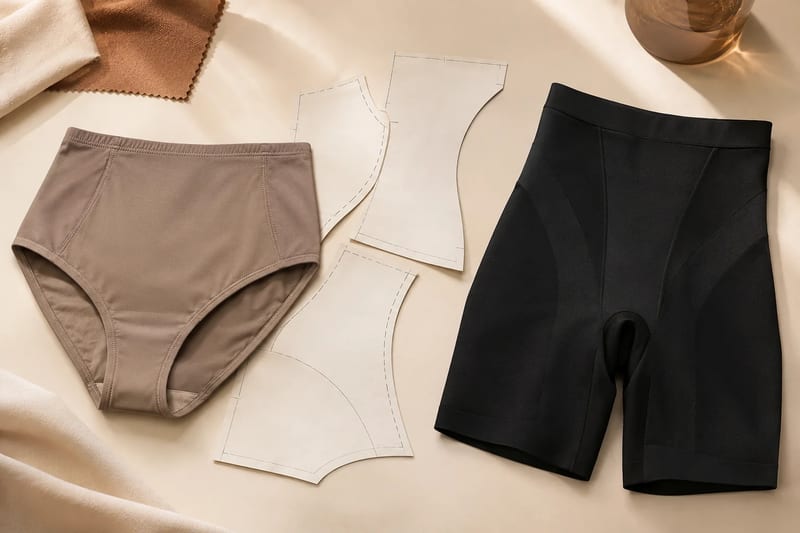
Illustrative sourcing and product-development scene. Click to continue the related buyer guidance.
How Should the Developed Sample Be Compared with the Reference?
Use the same relevant tasks, not a visual similarity score. If the project concerns seated comfort, compare that use. If it concerns coverage under an outfit, use appropriate outer clothing. The developed product may look different while delivering a better result, or look similar while failing the essential requirement.
Identify the proposed sample’s size, material and version. Record any difference from the intended production inputs. The reference and new sample may not have the same size labeling or measurement method, so compare through the product’s actual guidance and suitable wearer measurements rather than matching labels alone.
Ask testers to describe the experience before telling them which design should be preferred. Record both advantages and trade-offs. A sample that solves one problem may introduce another, such as harder dressing or a different edge appearance. Keep those observations connected to the original requirement.
Discuss material and construction alternatives through S-Shaper’s customization service. If a new option is proposed, identify it and review the relevant fit and care behavior. A material change should not be approved only because it resembles the reference photograph.
Use the quality-assurance overview to frame order-specific checks, then preserve the accepted specification and physical reference. The new product should be approved for what it is intended to do, with the evidence and limitations documented. The old sample can remain a comparison, but should not silently override the developed version after approval.
How Do Four-Channel Prices Relate to Reference-Led Product Development?
A reference garment can clarify a wearing requirement, while its retail ticket cannot establish the price or permitted use of a new design. Compare channel samples by product family first, separating basic seamless garments from structured shaping products. The manufacturing proposal still needs your independently defined material, construction and quantity scope.
| Channel / buying model | Observed USD per garment | Product and order basis |
|---|---|---|
| Amazon US retail bodies | $12.38–$35.14 | Seamless/lighter bodies $12.38–$19.99; Structured bodies $35.14–$35.14. |
| Brand DTC bodies | $29.99–$148.00 | Seamless/lighter bodies $29.99–$78.00; Structured bodies $69.00–$148.00. |
| TikTok Shop US bodies | $21.99–$54.99 | Seamless/lighter bodies $21.99–$46.99; Structured bodies $39.99–$54.99. |
| B2B advertised OEM bodies | $4.25–$8.30 | Rihope/Shangyou garment offers; listing MOQ 600/100; own-design terms reconfirmed |
| B2B custom shiny-fabric example | $22.00–$23.00 | Hucai FOB garment example, MOQ 200; a different fabrication; development fees unconfirmed |
B2B finished-garment offers generally appear below consumer tickets because procurement and retail assign different work and risk. Their bands do not price original patterns, revisions or design permissions. Amazon and TikTok Shop promotions and B2C brand propositions can widen or narrow the visible spread without revealing an original-development fee or a legally transferable product identity.
Ask the supplier to quote the actual development deliverables and proposed finished version, then identify the reference only as background. Keep technical ownership and permitted use separately reviewed. Use consumer observations to understand alternatives your customer can buy, not to justify reproducing a garment or promise the same commercial outcome after changing its branding.
US-facing USD per single garment, reviewed November 10, 2026. Amazon uses dated May–October 2026 third-party PriceHistory snapshots, not live November checkout. These selected-seller observations are not industry averages or matched-quality comparisons. Variants and promotions change; shipping and tax are not normalized. B2B bands describe advertised garments, not landed costs or a final custom-development quote. Sources: dated PriceHistory Amazon records, official brand/TikTok Shop pages and Made-in-China supplier listings.
Which Shapewear Manufacturers Can Help Develop from a Reference Responsibly?
Compare partners by how they interpret the wearer requirement and preserve an original approval record. The relevant route may involve direct manufacturing expertise, research-led material work or technical coordination; none substitutes for clarifying the permitted use of reference inputs.
China Shapewear Manufacturer: Turn Observations into a Defined Brief
China shapewear manufacturers offering design and production support should distinguish reference observations from reproduction instructions, then identify the platform and sample work needed to test an original requirement.
S-Shaper
S-Shaper describes material, function and trend recommendations with design, QA and export specialists serving international brands. Ask the ODM team to explain what can start from an existing platform and what needs development. Item-specific small-order references and price tiers help scope the first commitment, but do not establish permission to copy another design or ownership of new files. Confirm sample deliverables, current material availability and the approvals required before production and dispatch.
Portugal Shapewear Manufacturer: Investigate the Technical Requirement
Research-oriented Portugal shapewear manufacturer proposals can evaluate the material or construction problem revealed by a sample, rather than treating visual similarity as the only measure of development success.
Impetus
Impetus describes an internal research team, technical collaborations and seamless or cut-and-sew development with quality-testing functions. Those capabilities are relevant when the reference exposes a technical gap that an available style cannot address. Ask for a defined investigation, sample output and relevant testing scope. No verified startup MOQ or automatic exclusivity is established here. It suits a requirement that justifies development work, with timing and material commitments quoted rather than inferred from the country.
France Shapewear Manufacturer: Develop Around the Outfit Result
France shapewear manufacturer and development comparisons can focus on the occasion or neckline problem a reference illustrates, separating the desired wearing result from the exact existing appearance before adaptation.
Gilsa Paris
Gilsa’s invisible-lingerie work includes bridal, backless and deep-neckline applications, with own-label adaptation and specific development alongside resale. That context can help a founder find a suitable solution without assuming the reference must be replicated. Confirm product-dependent minimums, the development and component scope, and actual supply arrangements. A French service relationship does not establish the origin of every garment or a right to use someone else’s design.
Canada Shapewear Manufacturer: Preserve the Fit-Interpretation Record
A Canada-based shapewear manufacturer or technical partner should document how reference feedback becomes pattern and grading decisions, then show how those decisions reach the actual manufacturing team before approval.
Hertex Lingerie
Hertex describes Montreal design, pattern, grading and QC work with production in China. That hybrid model can be relevant when interpreting sample fit is the founder’s main gap. Confirm who maintains the new specification, which technical services are quoted and what product records can be used later. Startup suitability remains to be confirmed. The local technical role does not imply local fabrication, immediate stock or an automatic transfer of underlying design rights.
Select the route that can develop and verify the required result while keeping reference permissions, technical ownership and the approved product version explicit.
What Should the Final Original Product Record Contain?
Identify the developed garment independently of the reference. Record the material, construction, measurement chart, variants, brand components and approved sample version. Keep the requirements and revision history so the reason for key decisions remains understandable after production begins.
Clarify deliverable access and use. Ask which files, patterns, samples and records are supplied and which remain the provider’s existing resources. If the brand expects future transfer, restricted use or exclusivity, put those expectations into the appropriately reviewed agreement rather than assuming the word original resolves them.
Reconcile the final product with the current quotation. Any retained assumptions from the reference-led estimate should be confirmed or replaced. Do not approve a product with one material while authorizing a quote based on another because the reference image looks similar.
Review the production and dispatch handoff with the new identifiers and packing instructions. The order should not be described only by a third-party reference name. Your receiving partner and quality reviewer need to recognize the actual product the brand has approved.
Preserve the distinction in customer content as well. Photographs, descriptions and size guidance should represent your supplied version, with claims supported by its own review. A reference can inform learning, while the customer promise must rest on the product your business is prepared to deliver and repeat.
How Can S-Shaper Help Turn a Reference into a Reviewable Development Request?
S-Shaper presents concept-led development and client-design manufacturing alongside a catalogue and customization services. A founder can use those routes to discuss the wearer problem illustrated by a reference and ask for an appropriate original product proposal, with the required permissions and project inputs clarified.
Share the intended market, use case, annotated reference, essential changes and first-order assumptions. Ask the team to identify an available platform or development route, the sample purpose, deliverables and approval process. Use the order FAQ for preliminary questions, then confirm the selected scope.
To begin, send S-Shaper a reference-led development brief. A useful response should make the technical choices and responsibilities concrete. The reference can improve communication, while the brand remains responsible for its intended design use, final approval and customer claims.
FAQ: How to Develop Original Shapewear from a Reference Sample
Can I send a reference garment to a shapewear manufacturer?
You can discuss an appropriately obtained and permitted reference as a communication aid. Explain whether it illustrates a feature, problem or authorized design. Do not assume physical ownership of the garment automatically permits reproduction or settles the rights needed for the proposed product.
How do I request an original result rather than a copy?
Describe the wearer problem, retained outcomes and required improvements, then ask for a proposed specification and sample route. Evaluate the developed garment by the intended use rather than similarity alone. Clarify which resources and deliverables are existing versus project-specific.
Does changing a few details automatically resolve design-rights questions?
No universal rule is established by the sources. The rights and facts of the proposed design need appropriate review. A development workflow should not treat cosmetic changes or a functional description as automatic permission to reproduce protected work.
Can the reference determine the sample price?
It can help define the requirement, but the manufacturer still needs material, construction, quantity and service scope. Public prices for other items are budget references, not a quote for your project. Obtain the actual sample and development proposal.
What should become the production reference?
The independently identified version your brand approves, with material, measurements, construction, components and relevant checks. Retain the original reference as background where useful, but ensure it cannot override the current specification or become an ambiguous instruction after production release.