 EN
Quick Answer
Start with ready-stock shapewear when an available garment can test the customer problem without changing the product itself. Choose custom production when the existing fit, material or construction cannot deliver the benefit your brand needs. Compare the learning each route can produce, the approval work and the complete commitment rather than assuming stock is always faster or custom is always better.
Ready stock still needs sample validation, permitted branding and an accurate size chart. Custom production still needs evidence of demand and a controlled specification. A useful market test should resemble the product you could responsibly reorder, with any temporary compromises clearly recorded.
What Is Ready Stock, and How Is It Different from Made-to-Order Shapewear?
Ready stock means an existing finished product is available for supply, subject to confirmation of the actual quantities and variants. It does not necessarily mean the garment carries your brand or can be altered freely. Ask which style, material, sizes and colors are physically available and how the supplier verifies that availability before you order.
Made-to-order production means the garments will be produced against an agreed scope. That scope can be an existing platform without major changes or a developed design with new requirements. Custom production is therefore not one uniform service. Identify what is being made specifically for your order and what comes from established patterns, materials or components.
For a founder, the distinction matters because the product questions arise at different stages. Stock selection starts with whether the available garment is suitable. Development starts with how the proposed garment will become suitable. Neither route should begin with an undefined request for the cheapest product that can carry a logo.
Use S-SHAPER’s product catalogue to identify the reference you want to discuss. A listed item is a starting point, not confirmation that every size and color is in stock. Request current availability and ask whether a future reorder will use the same specification or require a new production run.
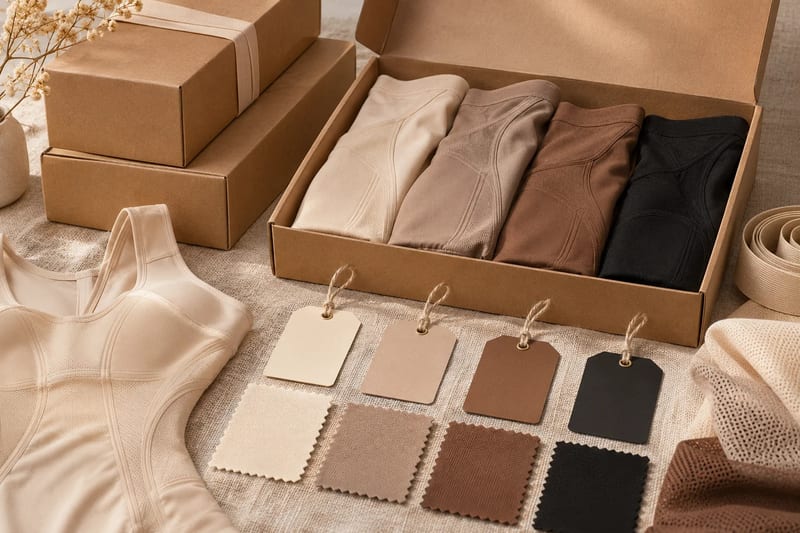
Keep branding separate from stock status. If you need sewn labels, hangtags or custom packaging, ask whether the available goods can accept the proposed method and which component work remains. A garment may be ready while the branded presentation is not. Your receiving and launch plan should reflect both.
| Buying term | What to verify | What the term does not establish |
|---|---|---|
| Ready stock | Actual finished quantities by variant | Automatic fit or relabeling permission |
| Existing-platform production | Current specification and production scope | Immediate dispatch |
| Custom development | Changes, samples and final approvals | Guaranteed uniqueness or demand |
| Private label | Branding arrangement and components | Factory stock status |
Which Customer Question Can a Stock Product Validly Test?
A stock product can help test the relevance of a wearer problem, the clarity of an offer or the usefulness of your buying guidance when it represents the intended experience. The closer it is to the product you plan to sell, the easier the feedback is to interpret. Write the assumption being tested before choosing the sample.
If the proposed brand depends on an unusual torso proportion that the stock bodysuit does not provide, that bodysuit cannot validate the fit promise. It may still teach you about dressing convenience or customer language, but those are narrower findings. Do not label the whole concept validated because a different garment received a positive reaction.
Separate the platform’s performance from your service. A carefully written size guide may improve customer understanding without changing the garment. A distinctive package may improve presentation without improving waistband behavior. Record which part of the proposition people responded to so you know whether product development is necessary.
Use real wearing tasks under the relevant outer clothing. Ask participants to compare the sample with what they currently use, and record the trade-offs. Stock availability should make the test easier to run, not justify a less rigorous review. If the garment fails the essential requirement, consider another platform or development before purchasing more.
Preserve the boundary of the result. An initial trial can support a next decision while leaving demand, size coverage or reorder consistency unresolved. The test is useful when its conclusion is specific enough to guide a purchase. An unsupported general success claim can encourage the wrong order size.
Ready Stock vs Custom Shapewear: What Are the Practical Trade-Offs?
Ready stock may remove a production stage for the finished variants that are genuinely available. It can also constrain the size range, colors, materials and permitted presentation. Custom work can address requirements that stock cannot, while adding sampling, sourcing and approval dependencies. Compare those actual differences for the chosen product.
The S-SHAPER FAQ describes 2–5 working days for stocked goods after payment and 20–40 days for bulk after details and deposit, depending on order conditions. These are published service statements, not complete launch schedules or a guarantee that your item qualifies. Ask which stage each duration covers and confirm current availability.
For custom work, discuss the OEM/ODM development scope and identify which changes create additional sample rounds. An existing garment with a new label is a different project from a changed pattern and fabric. Avoid comparing their schedules as if both were simply two ways to order the same finished stock.
Include the transition cost in your decision. A later move from stock to a custom version may require new fit evidence, photographs, measurements and customer explanations. That work can be worthwhile when it follows a demonstrated need. Plan it deliberately rather than assuming a look-alike replacement will preserve the first product’s performance.
| Decision area | Ready-stock route | Custom-production route |
|---|---|---|
| Product flexibility | Limited by confirmed inventory | Defined through approved changes |
| Schedule dependency | Availability, payment and dispatch scope | Materials, samples, approval and production |
| Testing value | Strong when platform matches the promise | Strong when the developed version is actually tested |
| Future challenge | Stock continuity or version changes | Repeatable specification and change control |
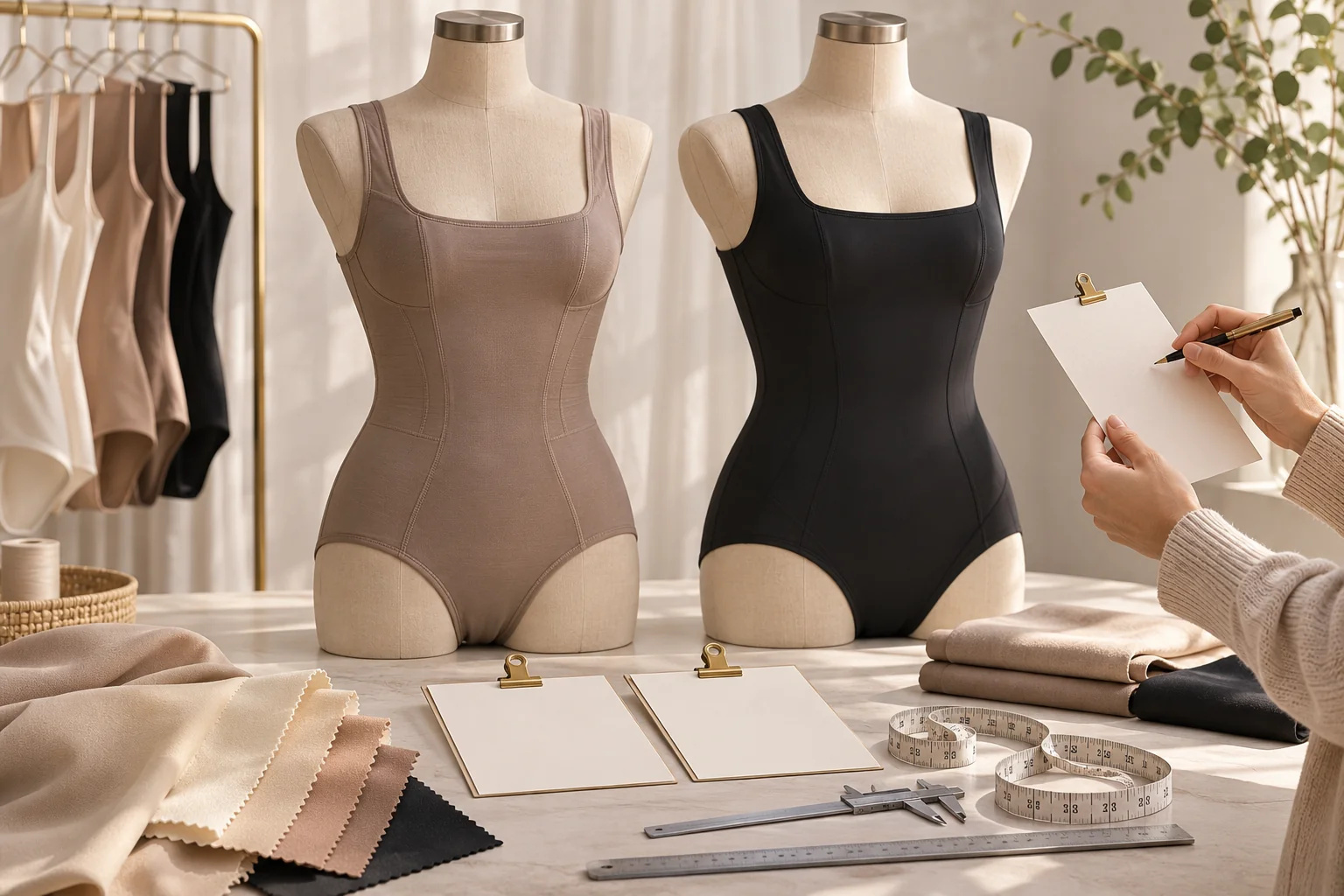
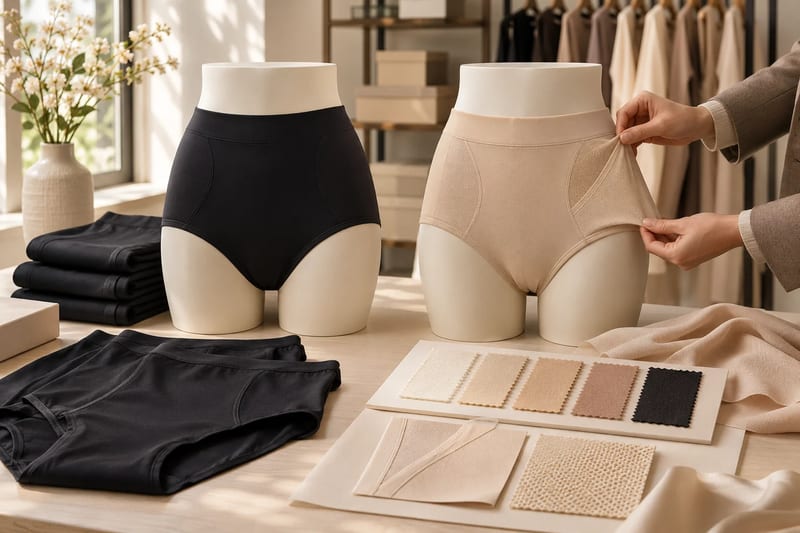
Illustrative sourcing and product-development scene. Click to continue the related buyer guidance.
Ready Stock vs Custom Work: Which Channel Prices Support a Market Test?
A consumer sample, a wholesale stock order and a custom development proposal can each support a different stage of testing. The four-channel observations below help position those purchases, without turning an observed ready-goods price into a quote for new materials or patterns. Keep the intended test and garment category visible.
| Channel / buying model | Observed USD per garment | Product and order basis |
|---|---|---|
| Amazon US retail bodies | $12.38–$35.14 | Seamless/lighter bodies $12.38–$19.99; Structured bodies $35.14–$35.14. |
| Brand DTC bodies | $29.99–$148.00 | Seamless/lighter bodies $29.99–$78.00; Structured bodies $69.00–$148.00. |
| TikTok Shop US bodies | $21.99–$54.99 | Seamless/lighter bodies $21.99–$46.99; Structured bodies $39.99–$54.99. |
| B2B advertised OEM bodies | $4.25–$8.30 | Rihope/Shangyou garment offers; listing MOQ 600/100; own-design terms reconfirmed |
| B2B custom shiny-fabric example | $22.00–$23.00 | Hucai FOB garment example, MOQ 200; a different fabrication; development fees unconfirmed |
US-facing USD single-garment observations reviewed November 10, 2026; variants, retail promotions and shipping/tax differ. Amazon uses May–October 2026 tracker snapshots, not live November checkout. These selected samples are not industry averages or matched constructions. B2B advertisements are not landed costs or final custom quotes. Deeper development needs separate specifications, deliverables and an itemized quotation.
Standard B2B supply is generally cheaper per piece than consumer retail because quantity and downstream selling responsibilities differ. Deeper customization adds another scope question rather than a predictable universal surcharge. Brand-store premiums may reflect product differentiation and service, while Amazon and TikTok Shop offers can depend on variants and promotions. Ask S-Shaper to compare the available platform with your essential changes on current terms. Choose stock when it can test the central customer hypothesis; choose development when the necessary benefit is absent. Do not claim that a cheap trial validates a later garment the participants never evaluated.
The advertised OEM and shiny-fabric garments are different specifications, not development packages. Seamless stock, structured fajas and deep customization require separate scope confirmation.
Which Product Checks Are Necessary Even for Ready Stock?
Confirm the sample and available stock share the same product specification. Ask about material, measurements and construction differences between the reference and the lot you would receive. If the stock has been produced in several batches, discuss how the supplier identifies the relevant version. A familiar product name is not always enough to establish equivalence.
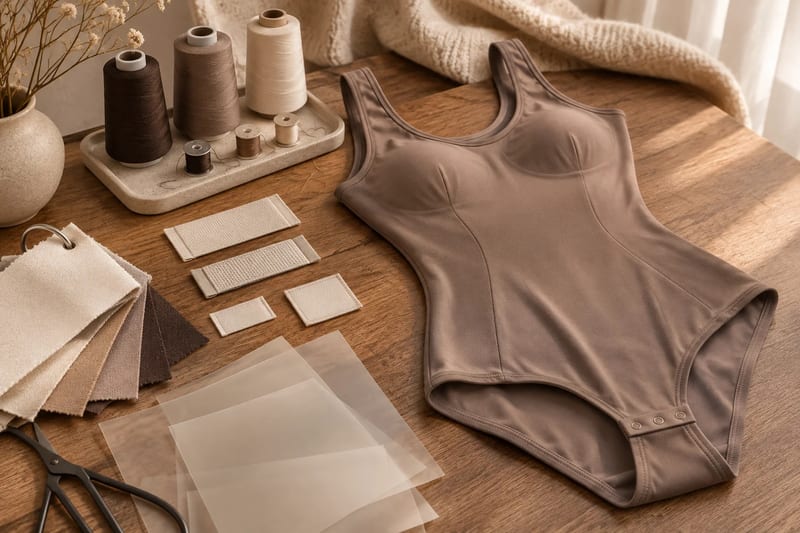
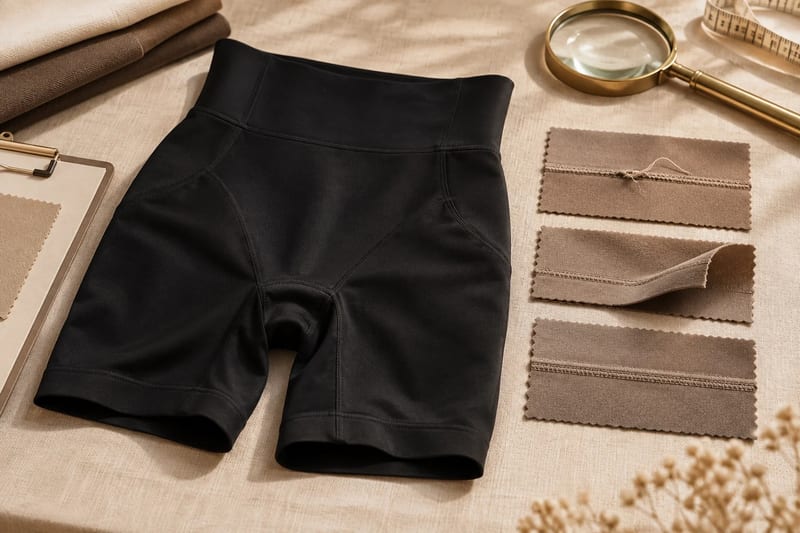
Measure the garment using an agreed method and trial it with the intended audience. For shorts, evaluate seated comfort, movement and leg-opening behavior. For bodysuits, evaluate torso proportions, coverage, straps and closure access. Ask how the size chart was established and which sizes require your own physical review.
Check appearance under the clothing the product is intended to accompany. A garment that seems attractive on a table may not deliver the intended neckline, edge visibility or coverage result. Document the outer garment context so feedback can be translated into a useful selection or development decision.
Review the intended care routine and inspect the sample afterward. Record shape, measurements and visible changes using the agreed criteria. Do not invent universal recovery or shrinkage limits; discuss the appropriate requirements for the material and construction with the supplier.
Use S-SHAPER’s quality-assurance overview to frame inspection questions, then agree the specific checks for your supply. If branding is added, validate that work too. Existing stock reduces some production uncertainty, but the finished product still needs to match the order, its identifiers and your customer promise.
Which Shapewear Manufacturers Should You Consider for Ready Stock or Custom Production?
Compare shapewear manufacturers in China, the USA, Colombia and Portugal for ready stock versus custom development. The recommendations below connect country-level capabilities with specific suppliers and the work your brand needs.
China Shapewear Manufacturer: Compare available platforms with an ODM path
China shapewear manufacturers offering stock and development routes should identify which physical version the first trial represents and what changes before a later own-label production order.
Recommended China Supplier: S-Shaper
S-SHAPER’s product-development and export specialists can assess whether an existing garment is sufficient or whether material, function or construction changes require ODM support. Its international-brand experience can help frame recommendations around the intended customer market rather than the product photograph alone.
The FAQ separates stocked-goods timing from bulk-production conditions, but current availability and the applicable item-testing scope still need confirmation. A defined factory proposal can clarify the budget, without implying that an altered garment qualifies under the same scope. This route suits founders who want a planned transition from a suitable first platform to a better-supported own-label version. See S-SHAPER OEM/ODM and global-brand support, S-SHAPER item-testing MOQ and stock/bulk conditions.
USA Shapewear Manufacturer: Investigate wholesale availability and replenishment
Separate local stock distribution from fabrication in a USA shapewear manufacturer comparison; confirmed wholesale availability can support an assortment test without establishing a custom-manufacturing service.
Recommended USA Supply Partner: Vedette
Vedette’s catalogue style and size selection, B2B support and delivery coordination can help a reseller test a ready assortment. When the required goods are confirmed within a useful local supply route, replenishment and service access may matter more than new-pattern control for the first commercial experiment.
Ask where stock is held and which variants are available; advertised delivery support is not a national manufacturing lead-time guarantee. US-facing wholesale does not establish US fabrication or private-label permission. It is a relevant option for selling an established assortment, while an own-label transition requires a separately confirmed arrangement. See Vedette US-facing wholesale program.
Colombia Shapewear Manufacturer: Evaluate specialist finished shaping platforms
Colombia shapewear manufacturers supplying established shaping ranges offer a finished-platform comparison, but a resale test validates that product rather than an unconfirmed private-label replacement or revised pattern.
Recommended Colombia Supplier: Leonisa
Leonisa identifies Colombian manufacture and an extensive shaping range, with international wholesale contacts. That provides a finished-product comparison for a buyer exploring whether an established shaping platform already meets the audience’s coverage and support preferences. Relevant available goods can avoid developing every feature before the initial assortment test.
The strength is a specialist product base, not automatic compatibility with every wearer or sales model. Trial sizing, material feel and control level on the intended customers, then confirm stock and resale terms. The reviewed wholesale route does not establish OEM or own-label development. Do not assume that a visually similar custom replacement would reproduce the tested experience. See Leonisa Colombian manufacturing and shaping product range, Leonisa international wholesale program.
Portugal Shapewear Manufacturer: Develop when available stock cannot test the promise
Approach development-led Portugal shapewear manufacturers when available garments cannot represent the promised material or construction benefit, and define the validation work before comparing ready-stock alternatives.
Recommended Portugal Supplier: Impetus
Impetus’s research and seamless or cut-and-sew development capabilities offer a different route when the proposed benefit depends on a material or construction that available garments do not provide. Its quality-testing scope can inform the validation work needed before the founder treats a developed version as ready supply.
There is no verified startup MOQ or ready-stock program to assume here. Request the development stages, material commitments and relevant laboratory work as a scoped proposal. This is a technically oriented comparison, with a potentially broader preparation budget than selecting finished goods, rather than proof that European production is always a better or more expensive answer. See Impetus research and development, Impetus quality control.
Use ready goods when they genuinely represent the test; commission development when the product promise requires a different physical result.
How Do You Move from a Stock Test to a Custom Product Responsibly?
Write a transition brief around the evidence from the stock test. Identify what customers valued, what failed and which changes are necessary. Separate a fit improvement from a branding preference. Ask the development team to explain how the proposed custom version addresses each substantive issue.
Review the S-SHAPER customization options against that change list. Confirm which materials, measurements and components can be altered, what new samples are required and which minimums change. Do not approve a collection of optional changes simply because development is now available.
Treat the developed garment as a new version requiring validation. Keep the tasks and recording method consistent with the earlier trial so you can compare the results. If the material changes, revisit relevant fit and care observations rather than assuming they remain valid because the silhouette looks similar.
Update the customer-facing data and inventory records before transition. Measurements, care guidance, photographs and product identifiers should describe the version being sold. Repeat buyers deserve clear information if the fit changes. Avoid silently mixing materially different garments under an identical record.
Discuss dispatch and receiving through the S-SHAPER logistics overview and confirm the actual handoff for the new order. The transition is ready when the product, commercial scope and customer information form one coherent set, not merely when the new brand package looks finished.
How Can S-SHAPER Help You Choose Between Stock and Development?
S-SHAPER’s catalogue, manufacturing and customization services give a startup several product routes to investigate. Its public FAQ distinguishes stocked goods from bulk production, while its OEM/ODM pages explain development support. The useful next step is determining which route applies to the exact garment and changes your business requires.
Share the wearer problem, intended market, product reference and what the first test must establish. Ask the team to identify any suitable available platform and explain what would require development. Request current variant availability, sample information and a written quotation scope rather than relying on the shortest public timing statement.
Then contact S-SHAPER with a stock-versus-custom brief. Compare its proposal with the result you need to validate. A suitable manufacturing discussion makes the trade-offs clear while leaving your startup responsible for customer demand, final approval and the promises attached to its own brand.
FAQ: Ready Stock vs Custom Shapewear for Market Testing
Should I start with ready-stock shapewear?
It can be appropriate when the available garment genuinely represents the customer benefit you need to test. Confirm the product, variants and permitted branding, then validate a sample. If the platform cannot meet the essential fit requirement, development or another product may be necessary.
Is ready stock always faster than custom production?
Only current availability and a confirmed service scope can establish your timing. Stock may remove a production stage, but branding, dispatch and receiving can still need work. Public lead-time ranges are not complete customer delivery promises.
Can I put my brand on ready stock?
Ask whether the supplier offers that arrangement for the item. Confirm the label method, component quantities, artwork and any effect on the garment. Do not assume permission to remove existing labels or present another brand’s stock as your own.
Does a successful stock test validate a different custom garment?
It provides useful evidence about the problem and offer, but a changed fit, fabric or construction needs its own review. Preserve what was learned and test the developed version against the same relevant tasks before ordering production stock.
What should change when I replace the tested product?
Review specifications, measurements, care information, photography, identifiers and customer explanations. Confirm the new quote and supply conditions. A product transition should remain understandable to the customer and traceable in the business’s inventory and approval records.