 EN
Quick Answer
Agree an AQL inspection plan by defining the lot, product requirements, defect classifications, applicable standard and edition, inspection conditions, sample-selection method and decision rules with a competent inspector. AQL is one part of a sampling system, not an instruction to allow that percentage of defective garments in every shipment.
ISO 2859-1:2026 is the current third edition for AQL-indexed lot-by-lot attribute sampling and replaces the earlier 1999 edition. Use the appropriate current scheme and its rules; this guide does not reproduce protected tables or invent sample code letters and acceptance counts.
For a startup, keep the accepted sample and specification separate from the sampling decision. An accepted lot can still contain defects, and a sample result does not reveal every unit’s condition. Define who records findings, authorizes correction and releases the actual lot before production and inspection begin.
What Does AQL Mean in a Shapewear Inspection Agreement?
AQL means acceptance quality limit in the current ISO standard’s title. It indexes sampling schemes rather than functioning as a standalone product specification. The actual decision depends on the selected scheme, lot context and agreed inspection rules.
The buyer still needs to define what constitutes a nonconforming garment or finding. A disconnected strap, an incorrect size label and a small appearance issue do not become interpretable merely because an AQL value appears on a purchase order. Product requirements and classification must exist before counting starts.
Acceptance sampling balances risks. NIST’s handbook explains that a sampling decision can reject a good-quality lot or accept a poor-quality one. Those concepts are reasons to select and apply the plan competently, not reasons to claim that every accepted lot has been proven defect-free.
Keep AQL separate from a supplier’s advertised quality percentage. A company-wide statement does not define the sampling scheme for your article or establish the actual condition of this lot. Ask which order-specific records and inspection results support the decision.
Avoid using a common garment-industry number by habit. The appropriate requirements depend on the product, consequences and commercial agreement. A new brand should ask the inspector to explain the proposed plan and its limitations instead of copying a value whose meaning no one in the project can describe.
| Term or record | Role in the agreement | What it is not |
|---|---|---|
| Product specification | Defines the intended garment | Replaced by an AQL value |
| Defect classification | Defines how findings are categorized | Automatically supplied by a size label |
| AQL-indexed scheme | Provides defined sampling decisions | A guarantee of lot defect percentage |
| Inspection result | Reports the actual sample and findings | Knowledge of every unsampled unit |
| Release authorization | States who may ship the lot | Automatically identical to a report headline |
How Should You Define the Lot Before Selecting a Sampling Plan?
Identify the goods being submitted for one decision. Record order, style, material or production references, quantities and relevant variants. Ask the inspector how the proposed lot structure fits the actual manufacturing and packing situation.
Do not quietly combine materially different work merely to produce a convenient total. Another style, component, material lot or process change can create a question about the appropriate inspection grouping. A competent provider should explain the proposed treatment rather than leaving the brand to guess.
State what is complete and accessible. Goods that are unfinished, unavailable or not identifiable may not support the intended inspection. Factory access, cartons and sample-selection conditions should be arranged before the visit so the plan can actually be applied.
Ask S-Shaper’s quality-assurance team how the order’s production and packing records identify the submitted scope. Keep the approved sample and current specification available to the inspector, with unresolved development items clearly marked.
For a first order or an unusual lot structure, request confirmation that the proposed sampling approach is suitable. Do not assume that naming ISO 2859-1 resolves every context question. The brand needs the provider’s actual plan, stated basis and limitations before it relies on the outcome.
Specify the inspection unit as well as the lot quantity. One garment, a retail pack and a shipping carton are different units of handling. If a pack contains several pieces, ask the inspector how the selected plan treats the pack and the garments inside it. The order quantity must not switch between packs and pieces while the report uses only the word units. Keep carton references and the variant map available so the provider can understand the physical presentation of the submitted goods. This is an access and definition task, not a substitute for the selected scheme’s actual sampling rules.
Also distinguish the quantity declared by the supplier from the quantity verified during the agreed work. A sampling decision on appearance does not automatically reconcile every carton count or confirm a warehouse receipt. Identify which quantity checks are in scope and retain any limitation in the report. That prevents a startup from reading one acceptance result as simultaneous proof of product quality, complete packing and successful delivery when those are separate activities with separate evidence.
AQL Sampling vs Checking Every Unit: What Does Each Decision Establish?
A sample inspection evaluates selected units under a defined system and uses their findings for the agreed lot decision. Checking every unit reviews a broader set of goods for the specified characteristics. Neither phrase alone describes the full scope, method or reliability of the work.
An every-unit visual check does not automatically include destructive tests, extended care evaluation or every hidden characteristic. Human inspection can also miss a finding. Specify what is checked and retain the evidence instead of treating the words 100% checked as a universal guarantee.
Sampling does not mean selecting only the easiest carton or accepting samples chosen for their appearance. Agree how units will be selected and how the actual procedure is recorded. If access prevents the intended selection, the report should identify the limitation rather than pretend the plan was completed.
Some characteristics may need another check or separate evidence because their consequences or test conditions differ. A laboratory durability report and a pre-shipment appearance inspection answer different questions. Keep those workstreams connected without calling one a substitute for everything else.
The startup’s commercial decision should consider product risk, cost, timing and the evidence needed. Ask a competent inspector to propose the relevant scope. This article does not prescribe an automatic sampling or every-unit rule for every garment, nor a universal critical-defect count.
| Question | Defined sample inspection | Specified every-unit check |
|---|---|---|
| Coverage | Selected units under the plan | All units for the stated characteristics |
| Limit | Unsampled units remain uncertain | Scope and detection limitations remain |
| Selection | Agreed and documented procedure | Complete accessible population required |
| Additional work | May need separate lab or function evidence | Still may need separate lab evidence |
| Claim to avoid | Accepted means defect-free | Every conceivable property guaranteed |

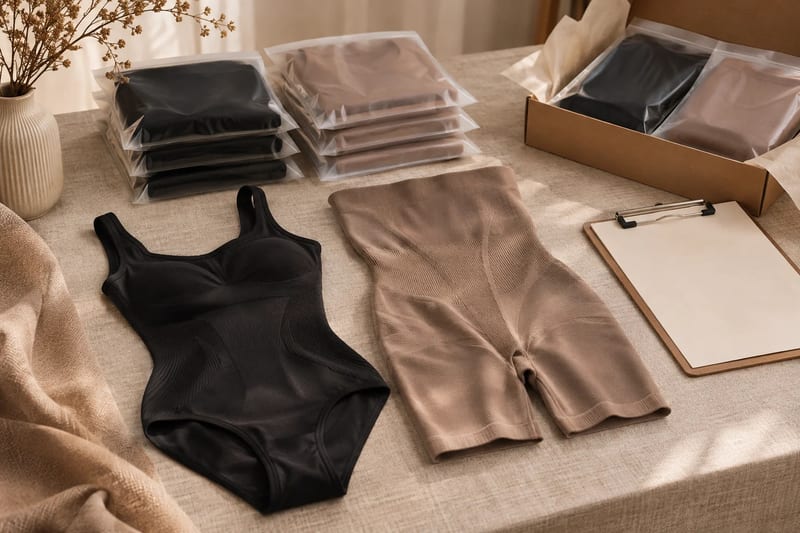
Illustrative sourcing and product-development scene. Click to continue the related buyer guidance.
How Do Nonconforming Units Differ from Multiple Findings on One Unit?
Agree the counting basis before inspection. A nonconforming-unit count records how many inspected garments meet the defined nonconforming condition. A finding count can record several nonconformities on one garment. These are different quantities and must not be mixed.
For a deliberately hypothetical record, imagine 40 inspected garments with three affected garments. One has two agreed findings, another has two and the third has one. The total is five findings across three garments.
The affected-unit proportion in that invented sample is three divided by 40, or 7.5%. The finding frequency is five divided by 40 times 100, or 12.5 findings per 100 inspected units. Calling the latter a 12.5% defective-garment rate would confuse events with units.
These values are descriptive arithmetic only. Forty is not a sample size selected from ISO tables here, and no acceptance or rejection count is being proposed. The observations do not establish the entire lot’s condition, a recommended AQL or actual supplier performance.
Ask the inspector how multiple classifications and findings are handled under the actual chosen plan. Retain individual unit references and photographs where relevant so the totals can be reconstructed. A report should make clear what was counted and why the decision follows from the agreed scheme.
| Hypothetical record | Calculation | Result |
|---|---|---|
| Inspected garments | Chosen illustration | 40 |
| Affected garments | 3 ÷ 40 | 7.5% in the invented sample |
| Total findings | 2 + 2 + 1 | 5 |
| Finding frequency | 5 ÷ 40 × 100 | 12.5 findings per 100 units |
| Limit | No ISO plan or threshold selected | No lot or supplier-quality conclusion |
Which Defect and Measurement Rules Must Be Agreed Alongside AQL?
Create product-specific examples and decision criteria. Identify what makes a seam, closure, label, stain or dimensional finding relevant to the garment’s intended use. Severity can depend on location and consequence, so do not rely on the defect name alone.
Keep measurement targets, methods and tolerances explicit. A sampling system does not tell the inspector where to place the tape or what relaxed garment dimension is correct. Agree the current schedule before the visit and preserve the accepted sample for reference.
Use S-Shaper garment references to identify the platform and relevant functions. A shaping short and integrated-bust body have different openings, components and usage questions. Generic apparel examples can inform discussion but should not replace the article-specific checklist.
Discuss changes through the OEM/ODM development and production route and customization scope. A new component or material can affect both the specification and the examples used for classification. Keep the plan aligned with the version actually being produced.
Assign unresolved findings a clear path. If the inspector encounters an unanticipated issue, the report should describe it and seek a defined disposition rather than improvise a private acceptance rule. The buyer and supplier need an agreed escalation and release process.
What Should an AQL-Based Inspection Report and Release Record Include?
The report should identify the lot and accessible goods, applicable plan, actual selection, inspected units, findings and decision basis. Keep product identity, photographs, dimensions and quantity information connected so the result can be audited internally.
Record deviations from the planned inspection. Missing access, unavailable references or unfinished goods can limit what was completed. An incomplete check is not the same as a pass and should not disappear inside a summary paragraph.
Distinguish the sample decision from corrective action. If a lot is not accepted under the plan, agree containment, sorting, rework or another appropriate next step with qualified input. Do not repeatedly draw new samples merely to search for a favorable result while leaving the original findings unresolved.
If the lot is accepted, retain any recorded findings and conditions. Acceptance is not proof that the product has no defects or that untested claims have been validated. The brand should understand the inspection’s scope before authorizing shipment.
Preserve the history for later lots and ask the provider how the applicable scheme’s rules are maintained. Do not invent switching or reduced-inspection conditions from a few positive conversations. A current standard needs competent application, not only a current edition number typed on the report.
Which Shapewear Manufacturers Can Support an Agreed AQL Inspection Scope?
Compare whether goods, records and technical contacts will be available for the agreed inspection. A supplier’s location does not set the AQL or replace product-specific requirements, and a ready-stock route offers different access from original production.
China Shapewear Manufacturer: Make the Submitted Lot and Reference Clear
China shapewear manufacturers coordinating production and export can support a workable inspection arrangement when the actual lot, available goods, live specification and access responsibilities are confirmed before the inspector is booked.
Recommended China Supplier: S-Shaper
S-Shaper’s design, production, QA and export roles offer relevant contacts for connecting product development with order inspection. Ask the quality team which records and accepted samples will identify the lot and who handles findings. Its international-brand experience can help the technical discussion, but does not establish the lot’s acceptance or an audited defect percentage. Item-specific low-quantity programs still need an agreed plan. Confirm material and completion status, inspector access and release conditions before dispatch. It suits a founder who needs direct coordination, while the actual scheme and decision remain explicit rather than inferred from a general company claim.
Portugal Shapewear Manufacturer: Separate Lab Evidence from Lot Sampling
Portugal shapewear manufacturer candidates with research and quality functions can be relevant when the inspection agreement must distinguish material or finished-part laboratory work from an attribute-sampling decision on the submitted garments.
Recommended Portugal Supplier: Impetus
Impetus describes physical and chemical checks across materials, elastics, accessories and finished parts. Ask which reports connect to the order and what separate access or records an external inspector will receive. Technical capability does not imply automatic lot acceptance or an AQL suitable for every product. Material, development and laboratory work need a scoped proposal and startup eligibility confirmation. This route can suit a defined technical program, provided the sample and inspection plan remain distinct and procurement or completion timing is confirmed before the inspection appointment.
USA Shapewear Manufacturer: Clarify the Inspectable Wholesale Scope
A USA shapewear manufacturer shortlist should distinguish US-facing wholesale distribution from domestic fabrication when the buyer needs to identify which finished goods and order records can actually be inspected before receipt or replenishment.
Recommended USA Supply Partner: Vedette
Vedette describes wholesale catalogue selection and B2B delivery support. Ask where the proposed stock is held, what access or product information can be provided and how the actual wholesale order is identified. US-facing service is not proof of US manufacture, private-label permission or access to another factory’s internal process records. This route suits an existing-assortment resale model if the agreed inspection scope is feasible. Confirm size availability, replenishment and handling of findings rather than assuming a local sales relationship supplies an original-production sampling program.
Choose the route that can make the agreed lot inspectable and its evidence available; then apply the selected current plan through a competent provider and an explicit release decision.
How Can S-Shaper Help Prepare an Inspection-Ready Shapewear Order?
S-Shaper’s OEM/ODM, customization, quality and supply services provide a starting point for connecting a product’s approved definition with its production order. A startup can ask the team to identify available records, access arrangements and the roles responsible for closing findings. The agreement should state what the inspection will actually cover.
Send the live specification, approved sample, variant quantities and proposed inspector’s requirements. Ask what must be completed before the visit and how the result affects release. Review the S-Shaper order FAQ for preliminary conditions and confirm the actual supply and dispatch handoff.
To begin, request an inspection-scope and production-record discussion. Seek clear evidence and responsibilities, while keeping AQL selection and interpretation with a competent inspection professional rather than treating the acronym as a defect-free guarantee.
FAQ: Understanding AQL in a Shapewear Inspection Plan
Does AQL mean I may accept that percentage of defective garments?
Do not interpret it as a simple allowance in each shipment. AQL indexes a sampling system with defined rules and risks. Agree the applicable plan, defect basis and decision criteria with a competent inspector for the actual lot.
Which ISO 2859-1 edition is current?
The official ISO page identifies ISO 2859-1:2026 as the third edition replacing the earlier 1999 edition and related amendments. Confirm the actual agreed scheme and current application rather than merely changing a date on an old inspection template.
Can I calculate the acceptance count by multiplying AQL by the order quantity?
No. That does not select or apply the required sampling plan. Use the appropriate scheme and its decision rules through a competent provider. This guide deliberately supplies no invented code letters, sample tables or acceptance counts.
Does an accepted lot contain no defects?
No. Sampling involves uncertainty and acceptance does not establish the condition of every unsampled unit or validate untested claims. Preserve the report scope, recorded findings and release conditions.
Can several defects on one garment be counted as several defective garments?
No. Findings and affected units are different quantities. Agree the counting basis and preserve unit-level records. The hypothetical example has five findings across three of 40 garments and does not establish an ISO acceptance decision.