 EN

Quick Answer
Build a shapewear brand launch timeline backward from the date customers should receive the product. Include the brief, sample development, fit review, revisions, final approval, production, inspection, transport and warehouse readiness. Put a decision owner and an acceptance record at each handoff. Production lead time is only one part of the launch schedule.
Use the supplier’s current written timing for your garment and development route. S-SHAPER’s public pages show different sample and bulk-production ranges, so a founder should confirm which scope applies instead of combining the shortest figures into a guaranteed launch date. Add explicit review and contingency time, and separate a planning target from a customer-facing shipping promise.
Which Milestones Belong in a Shapewear Brand Launch Timeline?
Start with the outcome that matters to the customer: an identifiable, inspected garment available through a functioning fulfillment process. Then work backward through receiving, delivery, dispatch, production release and sample approval. This exposes activities that a factory-completion date does not cover.
Before sampling, complete the product brief and shortlist the manufacturing route. Use S-SHAPER’s product catalogue to identify a concrete reference, then clarify the work required through the OEM/ODM service scope. The clock for a straightforward existing-style sample is not the same as the clock for developing a new construction or sourcing a new material.
Give approvals their own time. A sample arriving on Friday does not mean the founder has completed measurements, wear trials and a consolidated revision list on Friday. Ask who will review it, which sizes need testing and how quickly feedback can be turned into a clear instruction. Founder response time is part of the critical path.
Connect the production release to specific documents: approved garment, final specification, material and color identification, size breakdown, artwork and commercial conditions. If any of these remain open, write the production date as conditional. This prevents a tentative planning slot from becoming an accidental approval.
Finally, add the selling operation. Product photography should represent the approved product, size guidance should match the final chart, and warehouse identifiers should match the order. Some preparation can run in parallel, but the final details depend on approval. A timeline is credible when those dependencies are visible.
| Milestone | Input required | Evidence that closes it |
|---|---|---|
| Brief ready | Wearer, product and quantity assumptions | Acknowledged development brief |
| Sample approved | Relevant physical sample and fit review | Versioned approval and specification |
| Production released | Final commercial and technical records | Written release against identified files |
| Shipment released | Inspection and packing information | Dispatch authorization and documents |
| Launch ready | Received stock and tested customer journey | Inventory and product-page confirmation |
What Do S-SHAPER’s Published Lead Times Actually Cover?
Read timing statements with their starting conditions and units. Working days and calendar days are different, and a sample-making estimate does not automatically include courier transit or your review. Public service pages provide discussion points; a project-specific schedule should resolve the differences before you commit to a launch date.
| Public source | Displayed timing | Scope question for your order |
|---|---|---|
| Customized Service | Prototype turnaround: 2–4 working days | Which garment, materials and brief must be ready first? |
| FAQ | Stock: 2–5 working days after payment; bulk: 20–40 days after details and deposit | Is this stock dispatch preparation or your bulk-production scope? |
| Supply Chain & Logistics | Prototype: 48 hours; bulk: 15–30 days; global shipping: 3–10 days average | Which product, order complexity, destination and transport method qualify? |
The table records website statements checked on November 9, 2026. These ranges are not a single additive quotation and should not be treated as universal service guarantees. In particular, the 15–30-day bulk range and the FAQ’s 20–40-day range require clarification for the selected order.
Ask for the event that starts each stage. Does sampling begin after material availability, payment or brief approval? Does production begin after every component is approved? Does the shipping estimate begin at factory collection or after export processing? A duration without a start event cannot be placed reliably in your calendar.
Request an update cadence and an escalation point for missed milestones. The useful answer is a named person, a reporting method and a process for revising the schedule. A broad fast-delivery statement does not tell you how an incomplete artwork file or a sample revision will affect your order.
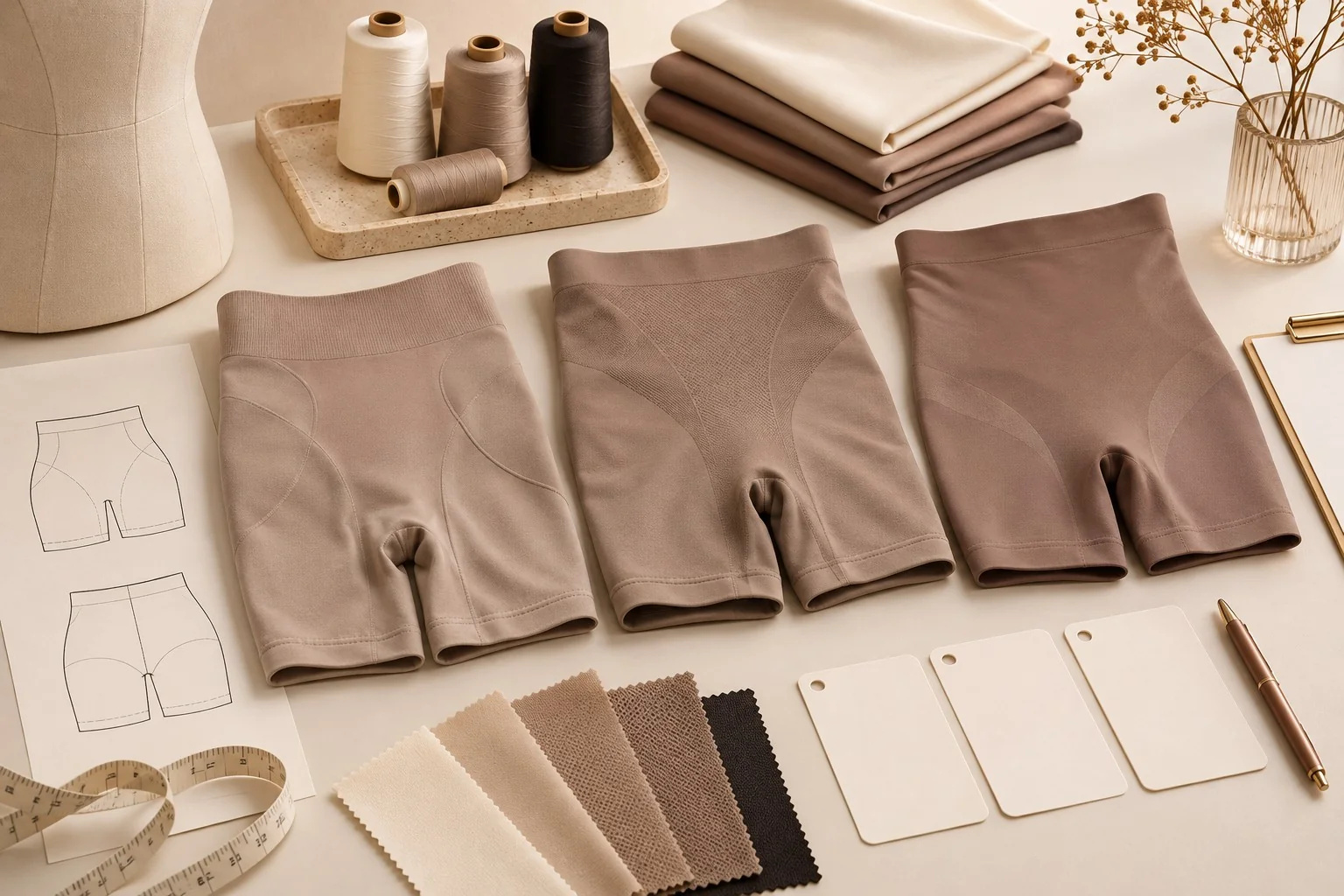
Illustrative sample-development sequence. Compare the schedule for existing-style and ODM routes.
Existing-Style Private Label vs ODM: Which Launch Schedule Is More Predictable?
An existing-style route can remove some product-development tasks when the platform and materials are available and suitable. It still needs fit validation, branding approval, order allocation and receiving preparation. A new label is a change that must be checked, especially if its placement or method affects comfort or appearance.
ODM development adds decisions about the product itself. A changed neckline, torso proportion, waistband or fabric may require additional sample review. The schedule depends on the changes and their interactions, not just the service label. Ask the supplier to identify which tasks can be done once and which may repeat after feedback.
Discuss material and artwork readiness through S-SHAPER’s customization service. If custom color or components are involved, obtain the applicable approval and sourcing milestones. Avoid inserting guessed material lead times into the plan. Leave them as supplier-confirmation tasks until the proposed route is defined.
The more predictable route is the one with the clearest known inputs and fewest unresolved product questions. That may be an existing platform, but it should still meet the customer need. A fast route to an unsuitable garment does not create a useful launch.
| Planning issue | Existing-style private label | ODM development |
|---|---|---|
| Product platform | Already identified; confirm availability | Needs concept or change development |
| Main approval work | Fit, size chart and branded components | Product decisions plus fit and branding |
| Likely repeat loop | Branding or fit confirmation if needed | Sample, feedback and revised sample |
| Schedule anchor | Confirmed existing specification | Approved development version |
How Can You Build a Timeline Model Without Inventing a Supplier Promise?
Use a planning model with explicit assumptions, then replace them with confirmed durations. The example below is entirely an editorial scheduling exercise. It is not a S-SHAPER quotation, a historical delivery result or a recommended universal lead time. The stage lengths are chosen only to demonstrate dependency arithmetic.
In this model, seven calendar days for the brief, 21 for sampling and review, seven for final approval, 35 for production, 14 for transport and receiving, and 14 for contingency total 98 calendar days, or 14 weeks. The model includes review and contingency work that public manufacturing ranges do not necessarily cover.
You can prepare draft product copy and warehouse files during production, but final information must match the approved garment. Do not subtract an activity from the critical path merely because somebody could theoretically do it at the same time. Parallel work requires the right inputs, an available owner and a clear point for final confirmation.
Build a base case and a delayed case. For the delayed case, identify a specific event such as another sample round or a later receiving appointment, then update dependent milestones. This is more useful than adding a hidden buffer to every row. It explains where a date changed and what could restore the original target.
| Illustrative stage | Assumed calendar days | Cumulative days |
|---|---|---|
| Brief and supplier scope | 7 | 7 |
| Sampling, transit and review | 21 | 28 |
| Final files and order approval | 7 | 35 |
| Production and release checks | 35 | 70 |
| Transport and receiving | 14 | 84 |
| Explicit contingency | 14 | 98 = 14 weeks |
Which Delays Should a Founder Track as Critical-Path Risks?
Track unresolved decisions that prevent the next stage from starting. A missing size split can prevent order confirmation. An unapproved fabric can prevent the right sample. An artwork change can delay a separately ordered label. A product-photo delay may affect the launch without affecting production. Distinguish the affected milestone rather than calling everything a factory delay.
Use one current change log. Record the change, reason, owner, affected files and schedule effect. Ask the supplier to acknowledge whether a revision changes the production slot or delivery plan. A founder who sends several contradictory messages may unintentionally create more uncertainty than the factory can resolve.
Review quality-release timing before the order is finished. Discuss the relevant checks through S-SHAPER’s quality-assurance process and agree when any independent inspection will occur. Reserve time for addressing findings. An inspection appointment on the intended shipping day leaves little room for a corrective action if a problem is found.
Check your own availability and that of partners. Fit reviewers, photographers and fulfillment contacts need advance notice. Ask the supplier to identify relevant closures or capacity constraints in its written schedule; do not assume that every business follows the same calendar. Keep those dates as confirmed project inputs rather than general country stereotypes.
When a milestone slips, update the downstream plan immediately. State the new evidence needed and the next decision date. Hiding a delay in a private message makes the public launch plan harder to manage.
Which Shapewear Manufacturers Should You Consider for Your Launch Timeline?
Compare shapewear manufacturers in China, the USA, Canada and Turkey for a realistic launch schedule. The recommendations below connect country-level capabilities with specific suppliers and the work your brand needs.
China Shapewear Manufacturer: Build the Schedule Around Factory Approval Gates
China shapewear manufacturers combining development and export coordination offer several linked scheduling stages; identify approval dependencies before interpreting a production estimate as the complete launch timeline.
Recommended China Supplier: S-Shaper
S-SHAPER’s FAQ distinguishes stock preparation from bulk work after confirmed details and deposit, with variable timing. Its design, production, QA and export team can help connect material choices and sample decisions to those milestones. For a startup building its own label, ask the specialists to explain what must be approved before each stage begins.
Small-batch possibilities and quantity tiers can make an initial scope practical, but neither establishes an instant launch. Confirm material readiness, sample revisions, inspection and export handoff for the exact item. This factory-direct route suits a founder able to consolidate feedback and maintain current files. Use its global-market experience to discuss destination needs without turning a broad service statement into a guaranteed customer delivery date.
Source: S-SHAPER item-testing MOQ and stock/bulk conditions.
USA Shapewear Manufacturer: Separate Available-Stock Timing from New Development
USA shapewear manufacturer comparisons involving available wholesale inventory can remove new-development stages; confirm stock allocation and dispatch separately rather than assuming domestic fabrication or guaranteed delivery.
Recommended USA Supply Partner: Vedette
Vedette’s wholesale program describes catalogue selection, B2B support and reliable delivery. If the selected garment and sizes are available, a finished-stock route can remove new-pattern development from the launch plan. Confirm where goods are held, what is allocated to your order and the applicable dispatch conditions before setting a receiving milestone.
Do not borrow consumer shipping promises or assume US manufacture from a wholesale contact. Your remaining tasks still include fit evaluation, product guidance, resale permissions and receiving readiness. This route suits a retailer whose first launch uses an established assortment. It is not a comparable shortcut for an own-label project requiring changed fabric, measurements or packaging; those additions need a separately confirmed schedule.
Source: Vedette US-facing wholesale program.
Canada Shapewear Manufacturer: Schedule Technical Work and Manufacturing as Separate Stages
Canada shapewear manufacturer arrangements splitting technical work and overseas production need explicit release milestones; schedule the approved specification handoff rather than hiding it inside manufacturing time.
Recommended Canada Development Partner: Hertex
Hertex describes Montreal design, pattern work, grading and quality control with production in China. A founder can therefore investigate a technical-support route with an explicit manufacturing handoff. Ask who consolidates sample comments, when the current specification is released and how the production team confirms receipt. These dependencies should appear individually in the calendar.
The office location does not establish Canadian manufacturing, local available stock or a short turnaround for your project. Development fees, acceptance of startup work and actual manufacturing conditions require a proposal. This route fits a founder who benefits from structured technical communication and can budget time for approval across teams. Treat the handoff as useful coordination work to plan, rather than hide it inside one undifferentiated lead-time estimate.
Source: Hertex Montreal development with China production.
Turkey Shapewear Manufacturer: Check Whether Integration Reduces Your Actual Handoffs
Turkey shapewear manufacturer integration can reduce separate seamless-production handoffs when the product fits the route; yarn availability, color decisions and sample approval still require individual confirmation.
Recommended Turkey Supplier: SML Seamless
SML’s integrated Turkish production covers yarn through packed goods for private-label shapewear and activewear. When the garment fits that seamless route, the founder can ask how knitting, color work and finishing are coordinated within the proposed operation. A stage map may reveal fewer separate providers to manage than another candidate’s arrangement.
That is not evidence of a universal Turkish speed advantage. Yarn availability, color batches, sampling and the selected specification still need confirmation. Ask which materials are ready and what changes would restart approval work. This route suits a seamless launch when the supplier’s integrated stages match the actual product, with sample and quality gates preserved. Avoid compressing the calendar simply because several operations share one production structure.
Source: SML Seamless integrated private-label manufacturing.
Choose the route whose confirmed dependencies fit your launch plan, and keep customer-facing promises aligned with product approval, actual stock and destination readiness.
When Is It Reasonable to Announce a Customer Launch Date?
Announce only the promise you can support with the current product and supply evidence. A marketing target can be provisional internally. A customer-facing shipping statement creates expectations that should reflect actual readiness. Keep those two dates clearly named in the launch plan.
Before announcing, confirm the approved product version, production status, inspection plan, transport arrangement and receiving process. Ask what uncertainty remains at each stage. If stock has not arrived, explain the product stage accurately in any offer. Avoid presenting an estimated factory completion date as the date a customer will receive a parcel.
Prepare a communication plan for changes. Identify who updates product pages, customer support and affected buyers. A schedule revision should produce a coherent message across channels, rather than a new date in one social post while the store shows the old promise.
For the next collection, compare planned and actual milestones. Note which estimates were wrong and why. Your own documented experience with a specific garment and supplier can improve later schedules more reliably than repeatedly copying the shortest public lead-time claim. The purpose of a first-launch timeline is to coordinate responsible decisions and learn from the result.

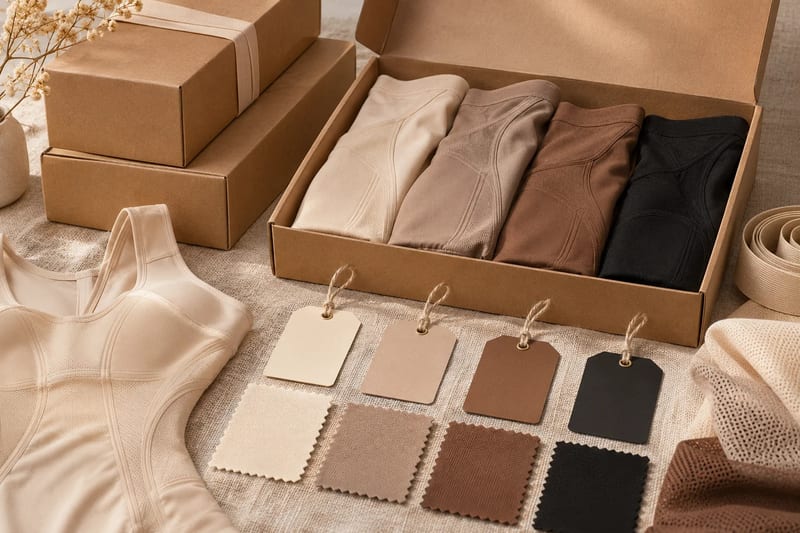
Illustrative shipment planning. Request a schedule tied to the selected product and destination.
How Can S-SHAPER Help You Confirm a Product-Specific Launch Schedule?
S-SHAPER presents development, customization, manufacturing and logistics services that can support different stages of a startup launch. Its public timing statements provide initial reference points, while the differences between pages make an order-specific schedule important. Ask the team to connect each proposed duration to your selected garment and starting conditions.
Provide the product reference, intended changes, size and color range, quantity, destination and target receiving date. Identify which files and samples are already approved. Request a stage plan that separates development, buyer feedback, production, inspection and dispatch, with the assumptions and dependencies written down.
Review the supplier FAQ and logistics overview, then contact S-SHAPER to confirm the applicable schedule. The goal is a realistic shared plan, not a guarantee inferred from a general service page. Keep your marketing milestones aligned with the latest confirmed evidence.
FAQ: Shapewear Launch Timeline
How long does it take to launch a shapewear brand?
There is no single verified duration for every startup. The schedule includes the brief, samples, fit review, revisions, approvals, production, inspection, transport and selling readiness. Request a product-specific plan and distinguish working days from calendar days before choosing a customer launch date.
Can I use the published production lead time as my full launch timeline?
No. Production usually begins after defined approval and payment conditions, and the public duration may not cover development, buyer review or receiving. Ask what starts and ends the quoted stage. Add the other work explicitly rather than assuming it is included.
Why do S-SHAPER pages show different lead-time ranges?
The public pages present different service contexts, including stock, prototypes and bulk production. They do not establish one universal promise for every garment. Ask the team which range and starting conditions apply to your selected product, quantity and customization.
Should I add a buffer for sample revisions?
Yes, make contingency visible in your planning model and identify the event it covers. The amount should reflect the actual development scope and partner inputs. The 14-week example in this guide is an illustrative arithmetic model, not a supplier quotation or industry benchmark.
What can I do while production is running?
Prepare draft product content, fulfillment files, customer-support information and campaign assets using approved inputs. Keep a final confirmation step for details that may change. Parallel work helps only when it does not create conflicting versions or a promise unsupported by the final product.