 EN
Quick Answer
Choose a shapewear niche by connecting one identifiable customer, one recurring wearing problem and one product benefit you can test. Then check whether a supplier can deliver that product at a quantity and cost your startup can manage. A useful niche changes your product brief, fit trials and customer guidance; it is more than a different brand name on a broad catalogue.
Good shapewear niche market ideas can begin with an occasion, a fit difficulty, an outerwear requirement or a buying experience that existing products handle poorly. Compare a few hypotheses before selecting one. Treat market reports as category context, then validate the actual problem with prospective customers and physical samples. Do not infer demand for your specific niche from global category growth.
Which Market Data Can Help You Choose a Shapewear Niche?
Grand View Research estimates global shapewear revenue at $2.9 billion in 2025 and forecasts $5.4 billion for 2033. Its 2025 figures attribute 38.5% of revenue to North America, 93.7% to female end users and 58.5% to specialty stores. These figures describe the publisher’s category definitions; they do not measure a startup’s addressable audience. Source: Grand View Research global shapewear outlook 2026–2033
The complementary shares are 61.5% outside North America, 6.3% outside the female segment and 41.5% outside specialty stores, calculated by subtracting each published share from 100%. Those are broad residuals, not named niches or proof of an underserved opportunity. Use them to ask better research questions rather than to claim an unexplored market.
For example, a strong specialty-store share can prompt a founder to investigate fitting assistance, product explanation and trusted curation. It does not prove that opening a boutique is the best channel. A large regional share can justify studying the region’s customers without proving that every product or price position will work there.
Build your own evidence around a narrower customer situation. Ask what garment people currently buy, when they wear it, what they stop wearing and why. Compare the issue with the products they already consider acceptable. An unmet need is meaningful when people experience it often enough, care enough to change and can identify a better result in a sample.
Keep category data and customer evidence in separate columns. One shows that a category exists; the other tests whether your proposed product deserves a place in it. This distinction prevents an attractive market forecast from becoming the main reason you order inventory.
| Published 2025 measure | Reported share | Calculated remainder | Useful research question |
|---|---|---|---|
| North America revenue | 38.5% | 61.5% other regions | Which launch country can you serve well? |
| Female end users | 93.7% | 6.3% other end users | Which specific wearer need will you test? |
| Specialty-store distribution | 58.5% | 41.5% other channels | What product advice does your channel need? |
Which Shapewear Niche Market Ideas Are Practical to Test First?
Begin with situations that lead to a specific garment decision. Everyday workwear smoothing creates questions about seated comfort and visible edges. Occasion dressing creates neckline, back coverage and outer-fabric questions. Thigh-length shorts create leg-opening and ride-up questions. A niche becomes testable when a customer can compare the proposed result with what they currently wear.
Fit-led niches can be valuable, but they need more than an inclusive slogan. If your audience reports torso-length problems, your development brief and trial group must address torso length. If the problem is waist-to-hip proportion, discuss grading and the relevant measurements with the supplier. Do not assume extending size names alone resolves the underlying fit issue.
A service-led niche may emphasize careful sizing support, a small curated assortment or clear instructions for first-time shapewear buyers. That promise should influence the product page, measurement guide and customer support process. It can complement an existing garment platform, provided the platform actually meets the wearer’s needs.
Avoid beginning with medical, recovery or weight-loss promises simply because related product names appear in a catalogue. Those claims require their own evidence and market-specific assessment. A startup can build a credible everyday apparel proposition through a demonstrable fit or wearing benefit without extending beyond what it can support.
| Niche hypothesis | Likely starting garment | Main trial question |
|---|---|---|
| Seated workday smoothing | Brief or mid-thigh short | Does it remain comfortable after sitting? |
| Specific occasion neckline | Bodysuit or separate shaping piece | Is it concealed under the intended outfit? |
| Shorts that stay in place | Thigh-length short | How do the leg openings behave while walking? |
| Torso-length fit difficulty | Bodysuit with relevant development | Can the target measurements wear it comfortably? |
| Guided first purchase | Focused existing-style range | Can customers select a suitable size confidently? |
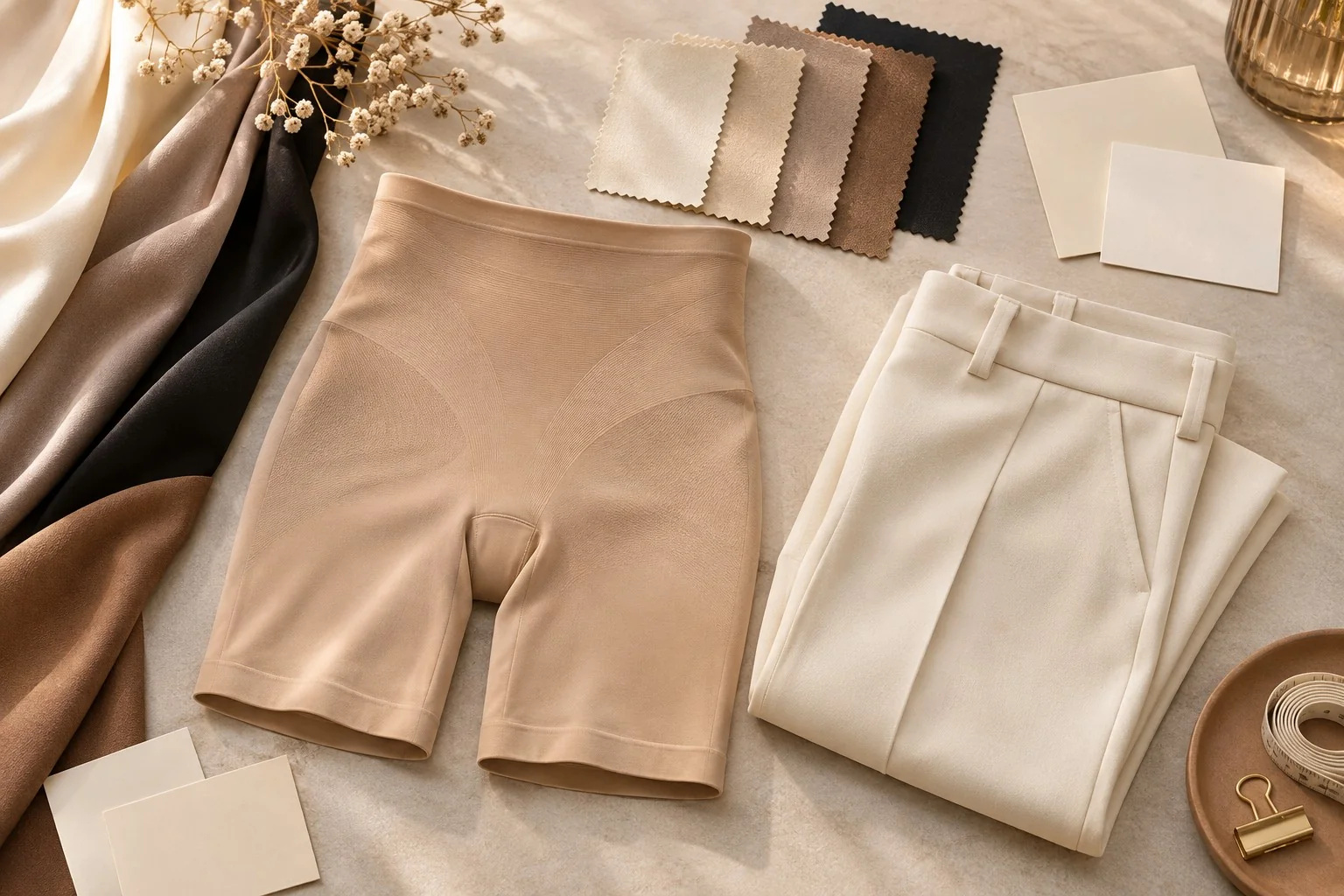
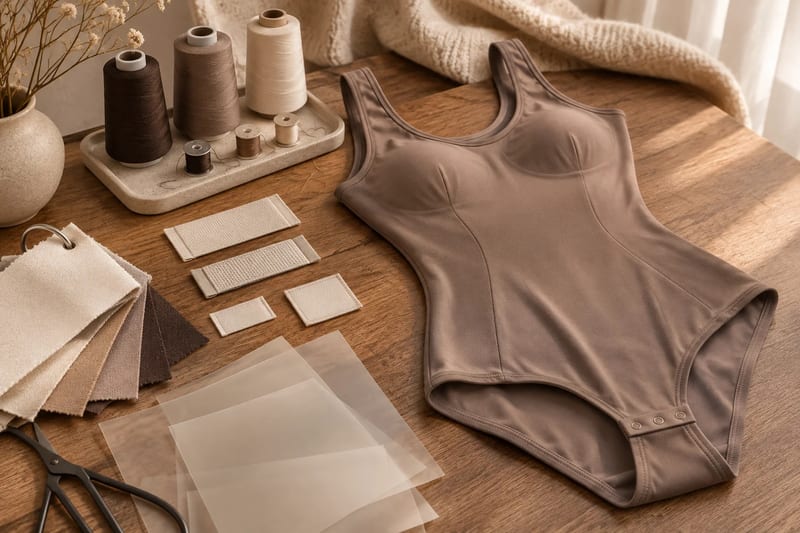
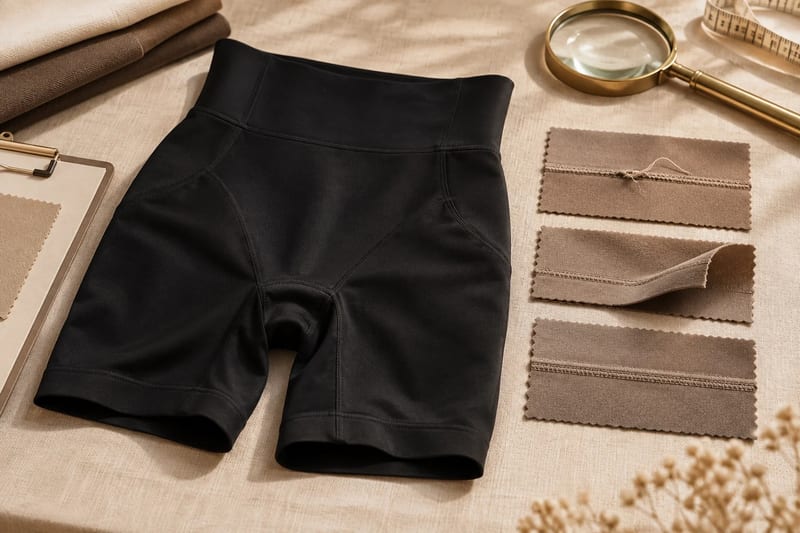
Illustrative occasion-led product planning. Compare occasion and fit as starting points for a niche.
Occasion-Led vs Fit-Led Niches: Which Is Easier for a Startup to Deliver?
Occasion-led positioning often starts with a clear context: a particular outfit or daily routine. The founder can select samples and test them in that setting. Fit-led positioning may require deeper changes to patterns, grading or product information. Neither route is universally easier; the key is the gap between available products and your proposed promise.
Use S-SHAPER’s product range to assess whether a relevant platform already exists. If the main need can be met with an existing style and better product guidance, your development scope may stay focused. If the need requires a changed torso length or proportion, ask the ODM development team what work and approval stages would be involved.
Compare the evidence burden as well as the product idea. An occasion-led product needs trials under relevant outer clothing and movements. A fit-led product needs participants representing the measurements you claim to serve. A service-led niche needs a customer journey that can guide the buyer accurately. Each should have a test beyond a persuasive headline.
Write a failure condition for every candidate. For example, if the garment remains visible under the intended outfit, the occasion proposition is not ready. If the extended size range does not fit the selected body measurements, the fit proposition is not ready. Clear failure conditions make it easier to reject an unsuitable platform before it absorbs more money.
| Decision | Occasion-led niche | Fit-led niche |
|---|---|---|
| Brief starts with | Outfit or wearing situation | Specific measurement or fit problem |
| Sample priority | Visibility, coverage and movement | Pattern proportions and graded fit |
| Customer evidence | Repeated use of the same occasion | Repeated difficulty with existing sizes |
| Supplier question | Which platform suits this outfit? | What changes solve this fit problem? |
How Should You Score and Shortlist Your Niche Ideas?
Use a decision matrix to compare hypotheses, then investigate the uncertain scores. A founder-generated score is a planning tool, not market research. Start with five criteria: problem frequency, importance to the wearer, ability to reach the audience, ability to verify the benefit and feasibility of the first order. Explain each score in one sentence.
For instance, use a one-to-five scale for each criterion and a maximum total of 25. This is an illustrative framework, not an industry benchmark. If one idea scores 20 but the supplier feasibility score is only one, the total should not conceal that blocker. Set critical conditions that must be met independently of the total score.
Bring evidence into each row. Customer interviews can support the problem description. Sample trials can support the claimed improvement. Supplier proposals can support feasibility. A competitor search can reveal the options customers already have, but it cannot establish why they would switch to your brand. Keep assumptions labeled until the relevant evidence arrives.
Shortlist two or three candidates and test their most uncertain point first. If the main uncertainty is fit, order a suitable sample before building a large content campaign. If it is audience access, test whether you can recruit relevant conversations. If it is production scope, send a focused brief to suppliers. This sequence spends effort on the decision most likely to change the project.
What Do Channel Price Differences Reveal About Your Chosen Shapewear Niche?
Price observations can reveal different positioning, but a premium niche is not validated merely because a brand advertises a high number. Compare the same wearer purpose and construction before interpreting the spread. Everyday seamless smoothing and structured fajas can differ in materials, components and development needs, while promotions and variant selection can move the displayed consumer price.
| Channel / buying model | Observed USD per garment | Product and order basis |
|---|---|---|
| Amazon US retail | $9.99–$43.99 | Seamless/lighter bodies $12.38–$19.99; Structured bodies $34.88–$43.99; Shorts $9.99–$28.60. |
| Brand websites / B2C | $26.99–$148.00 | Seamless/lighter bodies $29.99–$78.00; Structured bodies $69.00–$148.00; Shorts $28.99–$81.00; Briefs $26.99–$38.00. |
| TikTok Shop US / B2C | $19.99–$65.98 | Seamless/lighter bodies $21.99–$46.99; Structured bodies $39.99–$54.99; Shorts $19.99–$65.98. |
| B2B existing-platform garments | $2.50–$12.85 | Seamless/body-shaping offers; listed minimums 2–600 pieces; custom scope varies |
| B2B structured bodies / fajas | $14.00–$27.42 | More elaborate body shapers; listed minimums 1–500 pieces; specification-dependent |
US-facing USD single-garment observations reviewed November 10, 2026; variants, retail promotions and shipping/tax differ. Amazon uses May–October 2026 tracker snapshots, not live November checkout. These selected samples are not industry averages or matched constructions. B2B advertisements are not landed costs or final custom quotes. Deeper development needs separate specifications, deliverables and an itemized quotation.
Use the category-aligned comparison to formulate a testable offer. Ask what the customer values: a specific fit result, an outfit solution, a trusted identity or better guidance. B2B generally leaves more selling and inventory work with the buyer, so its lower piece price does not automatically create a profitable niche. For a private-label project, obtain the actual customization scope from S-Shaper and test the product benefit before choosing a larger order. A brand premium is a hypothesis your own customer experience must support, not money a new label automatically earns.
Which Shapewear Manufacturers Should You Consider for Your Chosen Product Niche?
Compare shapewear manufacturers in China, France, Colombia and Portugal for a niche-specific product. The recommendations below connect country-level capabilities with specific suppliers and the work your brand needs.
China Shapewear Manufacturer: Convert a Narrow Use Case into an Own-Label Brief
China shapewear manufacturers offering adaptable platforms can test whether a niche needs genuine product changes; preserve the wearer benefit while avoiding customization unrelated to the problem.
Recommended China Supplier: S-Shaper
S-SHAPER’s material, function and style recommendations can help a founder compare an existing platform with ODM changes for a defined niche. Its design, production, QA and export specialists offer a useful conversation when the same wearer problem affects construction, fit and branding. Global client experience informs market questions; your interviews validate the niche.
Conditional small-order routes and published quantity tiers can support an initial feasibility discussion, but the selected changes need a written scope. Ask which platform addresses the problem without unnecessary development and which size trials remain essential. This China factory-direct route suits an own-label niche that benefits from coordinated technical decisions; it does not turn a category trend into proven startup demand.
Source: S-SHAPER OEM/ODM and global-brand support.
France Shapewear Manufacturer: Test Occasion and Outfit Specificity
France shapewear manufacturer expertise in invisible and occasion lingerie is relevant when the niche depends on an outfit; judge concealment and coverage in that actual context.
Recommended France Supplier: Gilsa Paris
Gilsa Paris documents invisible-lingerie solutions for bridal, backless and deep-neckline situations, with professional resale and own-label development routes. That makes it a relevant comparison for an occasion-led niche. Ask which product solves the exact outfit problem, then test concealment, coverage and use under the intended outer garment instead of judging the sample alone.
Style adaptation, new development and packaging can require separate commitments, with own-label minimums depending on product type. Obtain the actual proposal before assuming the niche can begin with an available assortment. This route suits a founder whose differentiation rests on occasion-specific design and presentation. It may add unnecessary development if a standard shaping garment already satisfies the wearer and only the marketing language differs.
Source: Gilsa Paris professional resale and own-label development.
Colombia Shapewear Manufacturer: Compare a Specialist Shaping Assortment
Colombia shapewear manufacturer ranges provide specialist finished-product comparisons for shaping niches; test the intended support feel and coverage instead of assuming a shared national fit standard.
Recommended Colombia Supplier: Leonisa
Leonisa’s documented Colombian manufacturing and extensive shaping range create a useful finished-product benchmark for a fit or support-led niche. An established platform lets testers compare the proposed coverage, closures and support feel with what they already wear. The wholesale program provides a commercial route to investigate when the first business model is curated resale rather than original development.
Do not infer one Colombian fit standard, automatic startup access or an own-label service from that range. Confirm the relevant assortment and terms, then evaluate material and finish on the selected garment. This route fits a niche whose customers value a specialist finished product and good guidance. If your interviews reveal an unmet measurement requirement, a separately scoped development route may be necessary instead of relabeling an existing item.
Source: Leonisa Colombian manufacturing and shaping product range.
Portugal Shapewear Manufacturer: Investigate a Material-Led Difference
Portugal shapewear manufacturer development involving textile research belongs in a material-led niche assessment; require evidence that the proposed technical distinction matters to your intended wearer.
Recommended Portugal Supplier: Impetus
Impetus describes research capability, university and technology-center collaboration and technical development across seamless and cut-and-sew products. This is relevant when your niche depends on a material or construction result that an available style cannot deliver. Ask how that requirement would be investigated and what physical evidence would show a meaningful improvement for the wearer.
The cost and minimum of your project are unverified; research, laboratory work and new material scope may increase the commitment before a first commercial order. Use a defined development brief rather than an open-ended request for innovation. This route suits a validated technical niche with budget for evidence. It is less appropriate when the founder still needs to establish whether customers recognize the underlying problem at all.
Source: Impetus research and development.
Select the capability that makes your niche testable, then reject country-based positioning that does not change the actual garment, evidence or customer experience.
What Evidence Should You Have Before Committing to a Niche?
Prepare a short niche evidence file before releasing production. It should contain the customer description, repeated problem observations, alternatives people currently use, sample trial results and the specific product benefit you can demonstrate. Add the supplier’s response on feasibility, quantity and repeatability. This connects customer research with a buying decision.
Look for contradictions. If interviewees describe a major problem but prefer the existing garment in a sample comparison, investigate why. If they like the sample but will not consider it at the intended selling position, the proposition may need further work. Do not average away feedback that challenges the reason your product exists.
Choose a first success measure that reflects the niche. For a fit-led launch, useful evidence includes suitable size selection and concrete wear feedback. For an occasion product, it includes the intended outfit result. Sales interest matters, but a niche promise should also survive actual use. Define the next learning decision before expanding the range.
Keep the positioning narrow enough to guide development and broad enough to describe real buyers. You can expand after the first product teaches you something reliable. A niche is a starting focus for product and service decisions, not a permanent restriction on the brand’s future.
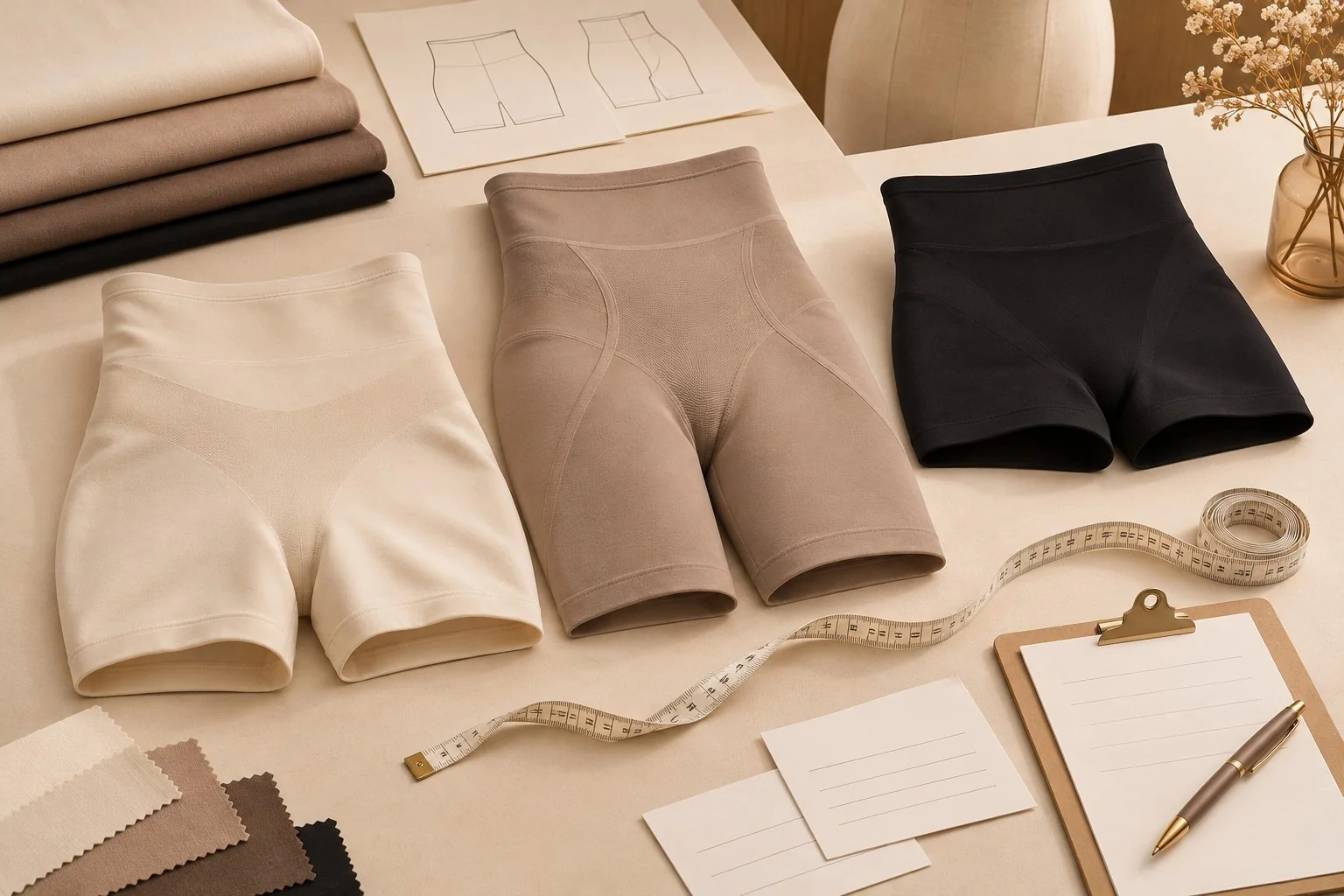
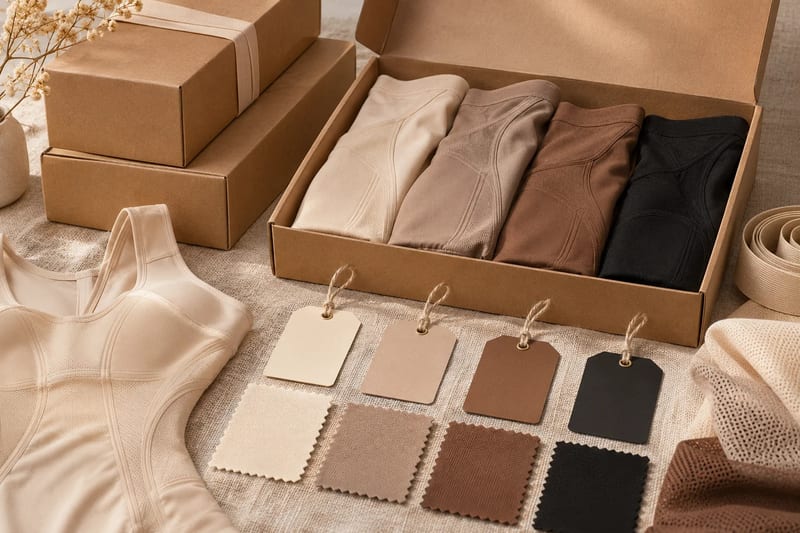
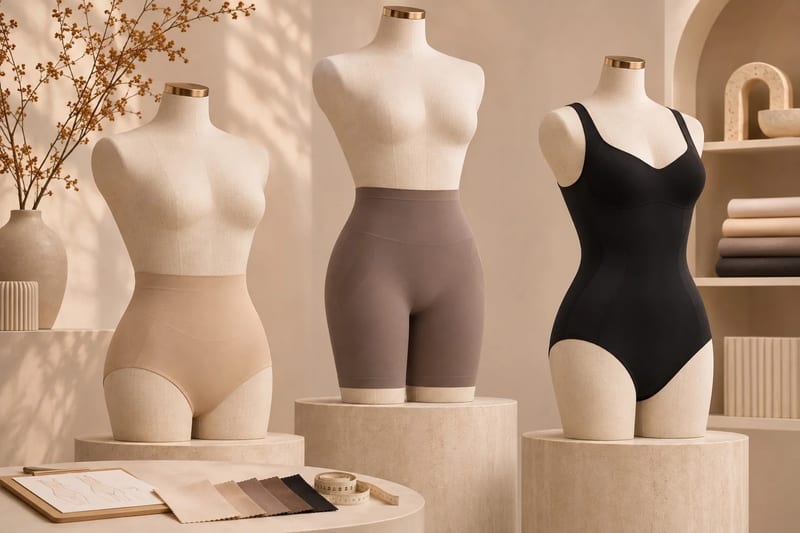
Illustrative fit research. Explore manufacturing support for a niche-specific product proposal.
How Can S-SHAPER Help Turn a Niche Idea into a Product Proposal?
S-SHAPER offers a catalogue of shaping garments alongside OEM, ODM and private-label services. For a startup evaluating niche ideas, the useful starting point is a discussion of the gap between an available product and the wearer problem you want to solve. That gap defines the development work more clearly than a trend label.
Share the niche’s use case, relevant body measurements, preferred silhouette, target country and first-order assumptions. Ask which platform the team recommends, what changes would be required and what samples could test the claim. Use the quality-assurance overview to frame the product checks relevant to your promise.
Then ask S-SHAPER for a niche-specific sample proposal. Compare its response with your customer evidence. A suitable manufacturing partner can support feasibility and development, while your interviews, trials and initial sales tests determine whether the niche deserves a commercial launch.
FAQ: Shapewear Niche Selection
What are useful shapewear niche market ideas for a new brand?
Consider a repeated wearing occasion, a specific fit difficulty or a buying experience that needs better guidance. Examples include workday smoothing, a particular outfit requirement or torso-length fit. These are hypotheses to validate, not proven opportunities merely because they sound specific.
Should I choose the fastest-growing niche?
Only use a growth claim when a reliable source actually measures that niche. The researched category report does not prove demand for your proposed garment. Prioritize a customer problem you can reach, test and serve with a feasible first product.
Can one product be enough to test a niche?
Yes, if it addresses the central problem and includes a credible size offering for that audience. A focused range can make feedback easier to interpret. Confirm that the selected platform and variants are available under workable supplier conditions.
How do I know whether my niche is too broad?
If it does not change the product brief, fit trial or customer guidance, it may be too broad to guide a launch. Define a wearer, situation and measurable product result. Then ask whether prospective customers recognize the problem without being coached.
Does a niche require a fully custom design?
Not necessarily. An existing platform may solve the problem when paired with appropriate fit validation and service. Custom development becomes relevant when the available garment cannot deliver the required result. Compare the actual changes needed before selecting a manufacturing route.