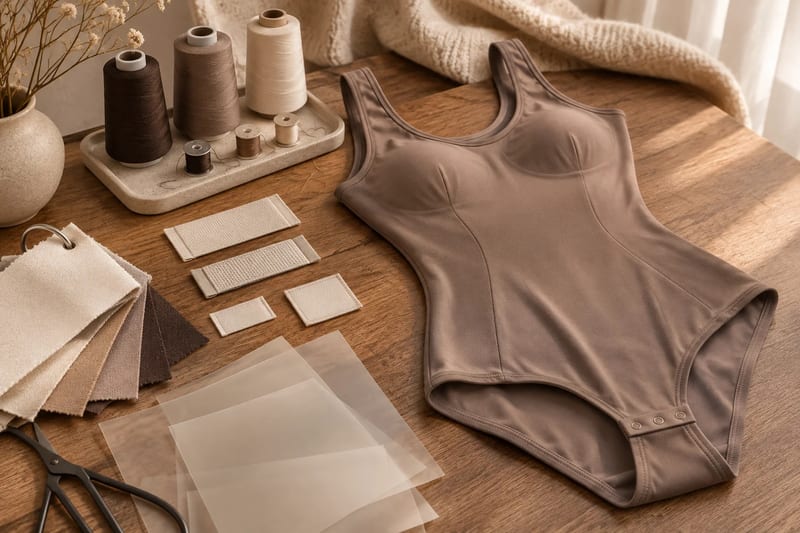
 EN
Quick Answer
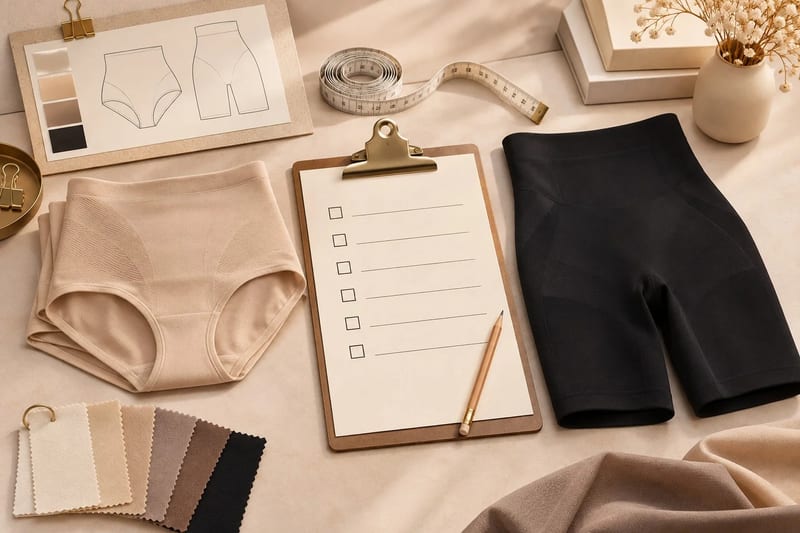
A shapewear business startup checklist should end with an evidence-based order decision: the product, fit, quantity split, labels, inspection plan, delivered cost and launch assets must all have a named owner and an approved record. Do not use a checked box to conceal an unresolved decision. Mark each item ready, blocked or intentionally deferred, and identify what would change that status.
Before paying a production deposit, obtain an approved sample and specification, an SKU-level order breakdown and a current written quotation. Before announcing a shipping date, confirm production and transport milestones. Existing-style launches may need fewer development steps, but they still need fit and order checks. This guide turns the shapewear launch checklist into practical acceptance gates for a first-time B2B buyer.
Who Should Own Each Item on Your Shapewear Startup Checklist?
A solo founder often performs several roles, but the roles still need to be visible. Separate the commercial decision, the technical approval and the logistics handoff. The same person can own all three; the benefit is knowing which question is being answered. A salesperson confirming that a sample was sent has not approved its fit for your customers.
Start a shared register with the item, decision owner, evidence location, due date and current status. Give every garment and sample a version number. “Beige bodysuit approved” is too loose if there are two fabrics, several torso lengths or a later waistband revision. The register should point to the exact photographs, measurement sheet and supplier acknowledgment that define the approved version.
Use three checkpoints: permission to sample, permission to produce and permission to sell. At the first gate, your brief is detailed enough for comparable proposals. At the second, the physical garment and commercial conditions are approved. At the third, your warehouse, product page and customer service team can support the product you actually receive. These are different decisions and should have different evidence.
Keep a short exception log. If you defer a second color, record that it is outside the order rather than leaving a blank cell. If a label translation remains open, identify the affected market and the person resolving it. This makes your checklist useful when a supplier asks for approval under time pressure.
| Gate | Founder owns | Supplier or partner provides | Acceptance record |
|---|---|---|---|
| Ready to sample | Wearer, style, quantity assumptions | Feasibility and sample scope | Versioned brief and sample proposal |
| Ready to produce | Fit and commercial approval | Final specification and production offer | Signed sample record and purchase order |
| Ready to sell | Customer promise and stock readiness | Dispatch and receiving information | Received inventory and tested product page |
Which Product and Fit Checks Must Be Complete Before Your First Order?
Choose one clearly defined first product before building a large range. “Comfortable shaping” is a positioning statement; a supplier needs the garment type, coverage, intended support feel, fabric preference and target wearer. Use S-SHAPER’s product catalogue to select a reference direction, then state what you want to preserve and what you need changed.
Your technical checklist should connect body measurements to finished-garment measurements. Ask which points are measured flat, which are measured stretched, and how the supplier grades between sizes. A size name alone cannot establish torso length, waist height or leg-opening comfort. Record the measuring method beside the value so two people can reproduce the check.
Plan fit trials around the relevant movements: sitting for workwear, walking for shorts, dressing and undressing for bodysuits, and wearing an outer garment over the sample. Ask testers to describe pressure, movement and visibility in their own words. Record their body measurements and the size tested with consent; a collection of anonymous “fits well” comments gives little direction for revision.
Check the garment after following the intended care instructions. Compare seam condition, shape recovery and measurements with the original record. Define tolerances with the supplier rather than borrowing arbitrary numbers from another product. If you need help converting these decisions into a specification, discuss the scope of S-SHAPER’s customization support before assuming it is included in the unit price.
Finally, confirm the size and color split. One style, two colors and five sizes makes 10 SKUs. At 100 total units, an equal split would leave only 10 units per SKU. That is arithmetic, not a stocking recommendation. Use your fit evidence and customer demand to determine the actual split, then ask whether each variant meets the supplier’s minimum.
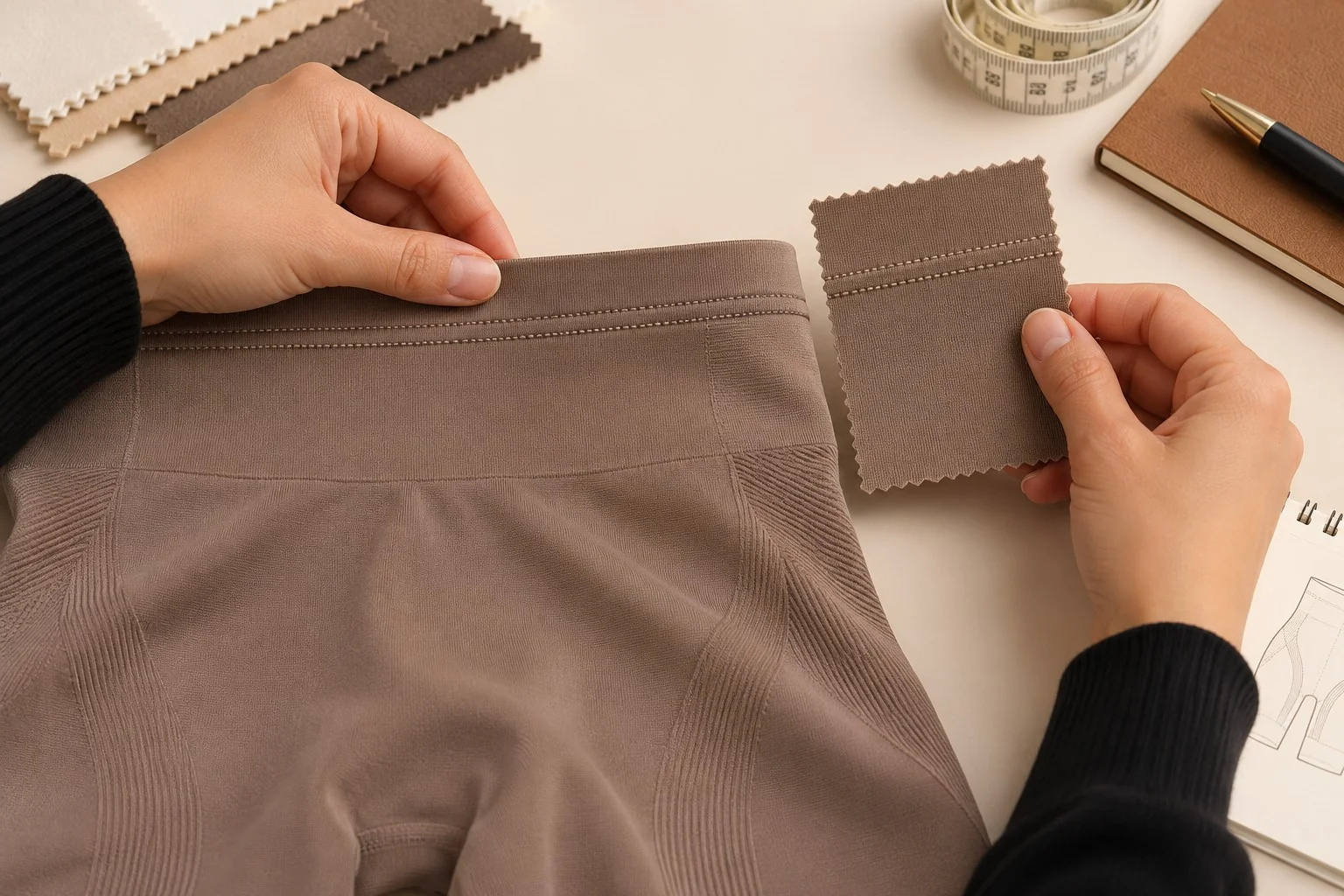
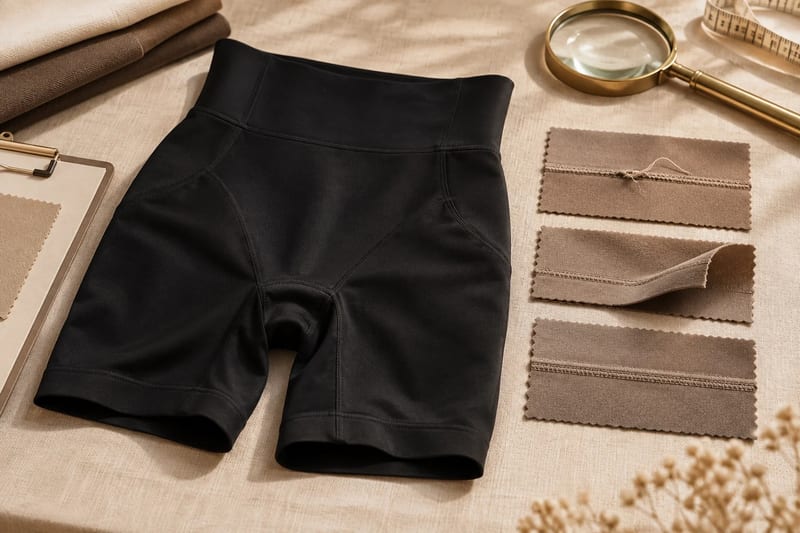
Illustrative waistband and material review. Compare how approval work changes between private-label and custom routes.
Private Label vs Custom Development: How Does the Checklist Change?
Private label usually starts with an existing garment platform. Custom development changes more of the underlying product. The checklist expands with the work involved, rather than with the name printed on the quotation. Ask what is already established and what has to be developed for your order.
For an existing style, verify the exact sample, available materials, current size chart and branding options. For a revised fit or new construction, add pattern changes, material sourcing, sample rounds and grading approval. A logo change does not automatically make a pattern exclusive, and an ODM proposal does not automatically transfer design ownership. Agree any restrictions explicitly.
The S-SHAPER OEM/ODM service page describes both manufacture from a client’s design and supplier-assisted concept development. Use that distinction to ask for a responsibility map. Who prepares the specification? Who approves the revised sample? Who confirms artwork dimensions? Who signs off packaging before it is ordered separately?
Do not mark development complete because a photograph looks attractive. A product can photograph well while its gusset, straps or waistband remain unsuitable for the target wearer. The production gate needs a physical reference and a complete change history. If a revision remains necessary, write it as an open condition rather than approving the whole garment with a casual message.
| Checklist item | Existing-style private label | Custom development |
|---|---|---|
| Product reference | Identify exact existing SKU and sample | Identify approved development version |
| Fit evidence | Validate the existing size chart | Validate changed pattern and grading |
| Branding | Approve placement and print file | Approve branding plus any construction effects |
| Ownership | Clarify resale and branding rights | Clarify pattern, artwork and exclusivity terms |
Which Channel Price Evidence Should Your Pre-Order Checklist Capture?
Add a price-evidence record to the checklist: channel, seller, garment construction, quantity basis, selected variant, promotion status and observation date. A screenshot of a consumer sale does not establish the production price your first order qualifies for. The channel table provides comparison context; the signed scope and current supplier proposal close the commercial approval gate.
| Channel / buying model | Observed USD per garment | Product and order basis |
|---|---|---|
| Amazon US retail | $9.99–$43.99 | Seamless/lighter bodies $12.38–$19.99; Structured bodies $34.88–$43.99; Shorts $9.99–$28.60. |
| Brand websites / B2C | $26.99–$148.00 | Seamless/lighter bodies $29.99–$78.00; Structured bodies $69.00–$148.00; Shorts $28.99–$81.00; Briefs $26.99–$38.00. |
| TikTok Shop US / B2C | $19.99–$65.98 | Seamless/lighter bodies $21.99–$46.99; Structured bodies $39.99–$54.99; Shorts $19.99–$65.98. |
| B2B existing-platform garments | $2.50–$12.85 | Seamless/body-shaping offers; listed minimums 2–600 pieces; custom scope varies |
| B2B structured bodies / fajas | $14.00–$27.42 | More elaborate body shapers; listed minimums 1–500 pieces; specification-dependent |
US-facing USD single-garment observations reviewed November 10, 2026; variants, retail promotions and shipping/tax differ. Amazon uses May–October 2026 tracker snapshots, not live November checkout. These selected samples are not industry averages or matched constructions. B2B advertisements are not landed costs or final custom quotes. Deeper development needs separate specifications, deliverables and an itemized quotation.
Assign an owner to reconcile the table with your chosen garment. Consumer pricing can include the value of merchandising, available stock, marketing and service, whereas a B2B figure often assumes the buyer takes over those responsibilities. Confirm whether a bulk offer concerns standard finished goods, private-label branding or deeper development. Keep unresolved setup, samples, shipping and receiving visible rather than checking the budget complete because a lower per-piece number exists. The final checklist needs a current proposal linked to the approved sample and matrix.
What Packaging, Quality and Fulfillment Evidence Should You Request?
Approve every customer-facing component against the actual garment: sewn label, care information, hangtag, barcode if used, outer packaging and size identification. Use final artwork with revision numbers. A neat digital mockup is not evidence that the print size, color or placement will work on the chosen material. Request an appropriate physical or production-ready proof and define who accepts it.
Discuss the checks relevant to your construction with the factory. S-SHAPER’s quality-assurance page provides a process overview, but your order needs its own acceptance criteria. Include measurements, seams, openings, appearance, labeling and quantity accuracy. If you appoint an independent inspector, establish access, timing, scope and responsibility for addressing findings before dispatch.
Create a receiving plan before the cartons arrive. Your fulfillment partner needs an SKU list, carton contents, dimensions when available and instructions for handling discrepancies. A launch can stall even when the garments are acceptable if sizes are mixed or stock cannot be identified. Ask for the packing list and compare it with the purchase order before the goods leave the supplier.
The S-SHAPER supply-chain and logistics page is a useful starting point for discussing dispatch support. Confirm the service for your own destination rather than treating general delivery statements as a guaranteed arrival date. Ask when tracking, shipping documents and final carton information will be available.
Before release, have another person match one complete SKU record across the order, label, carton list and product page. That small consistency check catches mistakes a founder may overlook after reviewing the same files repeatedly.
Which Shapewear Manufacturers Should You Consider for Your Startup Checklist?
Compare shapewear manufacturers in China, the USA, Canada and Portugal for first-order approval. The recommendations below connect country-level capabilities with specific suppliers and the work your brand needs.
China Shapewear Manufacturer: Coordinate Product, Branding and Export Approvals
Among China shapewear manufacturers, connected development and production support can help close interdependent checklist items; require distinct evidence for material, sample, branding and dispatch approval.
Recommended China Supplier: S-Shaper
S-SHAPER’s OEM/ODM team describes design, production, QA and export expertise, plus material and style recommendations informed by several customer regions. That makes a China factory-direct discussion useful when your checklist still has connected gaps in fabric, sample, branded components and shipping handoff. Request one current version linking those decisions rather than separate verbal approvals.
The published brief tiers provide a cost checkpoint, while small-batch conditions require item-specific confirmation. Ask whether your style, colors and components qualify before closing the commercial gate. A low starting quantity does not close fit or labeling checks. This route suits a founder who wants one coordinated own-label proposal and can keep technical, payment and receiving approvals distinct.
Source: S-SHAPER OEM/ODM and global-brand support.
USA Shapewear Manufacturer: Check the Resale Assortment and Replenishment
USA shapewear manufacturer proposals involving finished wholesale assortments shift checklist attention toward available sizes, resale terms and replenishment; do not mistake distribution readiness for domestic production.
Recommended USA Supply Partner: Vedette
Vedette’s wholesale program provides catalogue style and size selection and B2B support. A startup buying finished goods can focus its checklist on the selected assortment, fit trials, resale conditions and available replenishment. Ask for the exact stock position and dispatch arrangement before converting a catalogue choice into a launch promise.
The work removed from development is replaced by product-selection and merchandising decisions. Wholesale availability does not authorize relabeling or prove US production. Your checklist should identify the existing brand presentation and permissions explicitly. This route suits a retailer testing demand for a curated range; it is less direct when the launch depends on a new pattern, custom material or exclusive product identity.
Source: Vedette US-facing wholesale program.
Canada Shapewear Manufacturer: Give Technical Approval a Named Owner
Canada shapewear manufacturer arrangements can place technical review locally while production remains overseas; give specification approval and the subsequent factory handoff separate checklist owners.
Recommended Canada Development Partner: Hertex
Hertex describes design, pattern work, grading and quality control in Montreal, with production in China. This hybrid example is relevant when your founder checklist lacks technical review capacity. A local technical discussion can help turn fit comments into a coherent instruction while manufacturing remains a separate stage. Ask which documents the team would prepare for your project.
Do not mark production as Canadian or assume rapid local stock from the office location. Confirm startup eligibility, development charges and who acknowledges the final factory instruction. The checklist needs a technical sign-off and a manufacturing handoff, not one vague local approval. This arrangement suits a founder needing specialist pattern and grading communication, provided the combined development and production commitment is clear.
Source: Hertex Montreal development with China production.
Portugal Shapewear Manufacturer: Add Evidence for Material and Performance Decisions
Portugal shapewear manufacturer capabilities involving textile testing add a different approval requirement: decide which material evidence is necessary before marking the product ready for production.
Recommended Portugal Supplier: Impetus
Impetus describes physical and chemical checks on knitted materials, elastics, accessories and finished parts through its quality structure. For a material-led launch, this provides a useful comparison with an existing product that needs only fit confirmation. Ask which proposed tests relate to your claim and what sample or report would close the relevant checklist item.
Laboratory and development scope can create additional tasks and cost, and the reviewed pages do not establish minimums or startup terms. Request the applicable proposal before treating testing as included. This route suits a project whose differentiated material needs evidence beyond appearance. It is excessive preparation for a simple resale test if the founder has not identified which technical question the work must answer.
Source: Impetus quality control.
Release the order when the route-specific evidence is complete: coordinated factory approvals, a confirmed resale assortment, a technical handoff or a relevant material-validation record.
What Should a Founder Review in the Final Pre-Deposit Meeting?
Review the checklist with the supplier using the latest files on both sides. Open the specification, photographs and quantity breakdown during the conversation. Read unresolved items aloud and ask who will close each one. The purpose is to expose mismatches before they become production assumptions.
Use a stop condition for each critical area. An unapproved fit revision stops the production release. An unresolved carton label may stop dispatch. Missing customer instructions may stop the public launch. This is more useful than treating every task as equally urgent or allowing a completed logo design to distract from an unresolved garment problem.
Confirm what happens if a material becomes unavailable or a component changes. Require the proposed replacement to be identified and approved before it is used. Keep the approved sample available for comparison, and record which party holds each reference. A clear substitution process protects both the buyer and the factory from later disagreement.
Finish the meeting by issuing a concise written recap: approved documents, outstanding conditions, payment trigger, production milestone and next update date. Ask the supplier to acknowledge it. Then save that recap beside the purchase order. A startup checklist is complete when another person can understand the order from the records, not only from the founder’s memory.
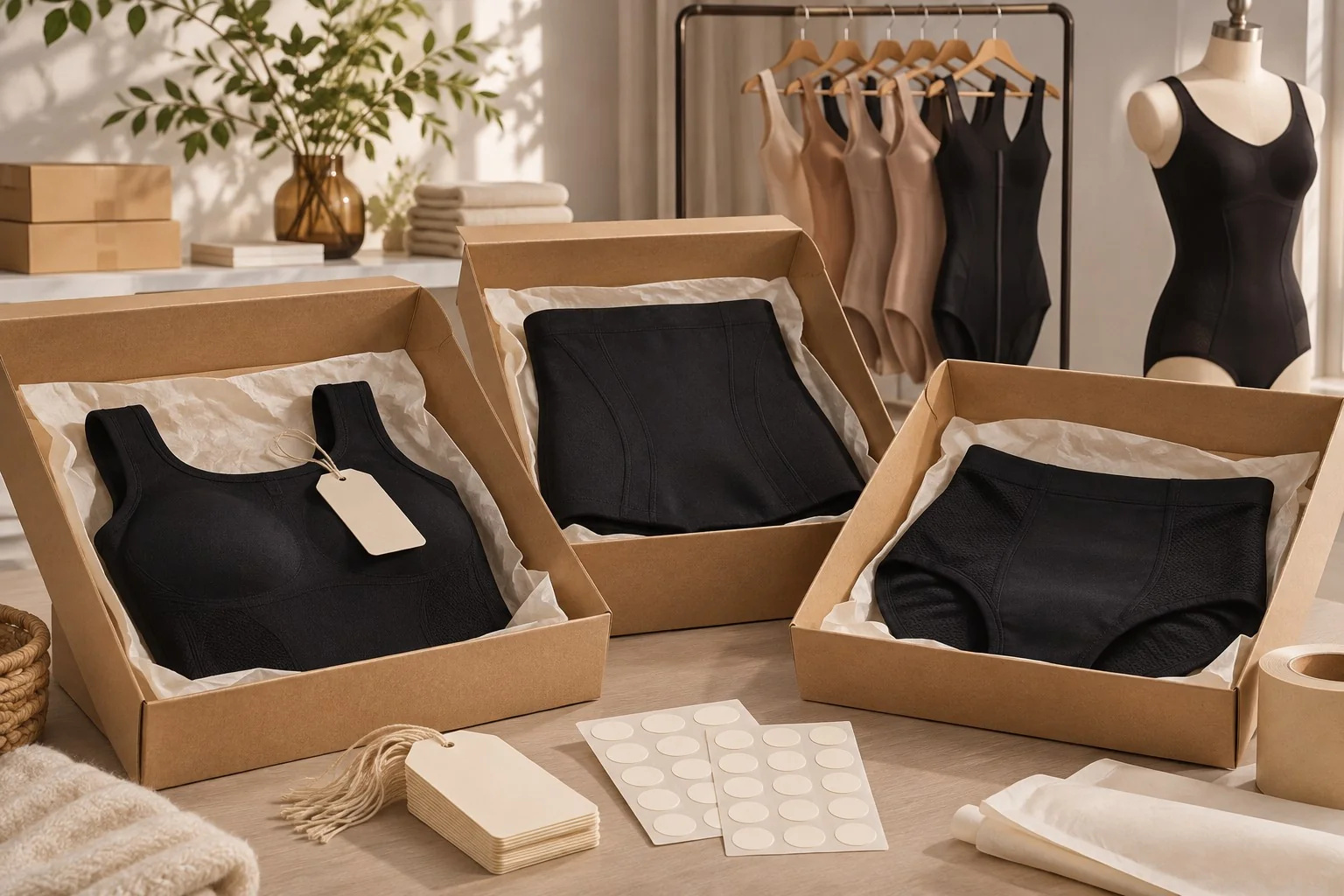
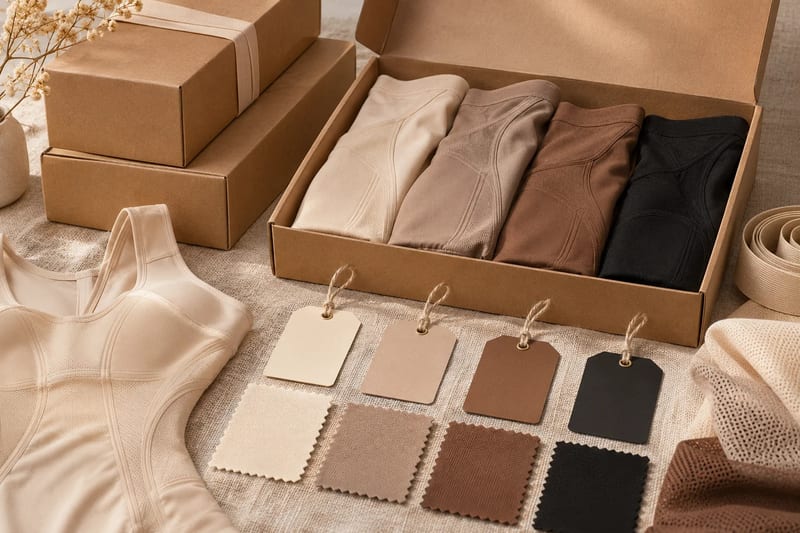
Illustrative packing preparation. Explore the S-SHAPER services relevant to your first-order checklist.
How Can S-SHAPER Help You Complete Your First-Order Checklist?
S-SHAPER presents OEM, ODM and private-label shapewear services for brands at different stages, including emerging businesses. Its catalogue provides concrete product references, while its development and customization pages describe support with materials, styles, samples and branding. These services can help a founder turn an incomplete idea into a discussable order scope.
Ask the team to review your open checklist against one selected garment. Request the available sample route, the specification documents you will receive, applicable quantity conditions and the information required for quotation. The published FAQ mentions a small initial testing option, but that should be confirmed for your item and customization rather than applied across the catalogue.
For a practical next step, send S-SHAPER your checklist and product brief. Highlight the three decisions you cannot yet complete. A useful response should identify the proposed support, its limits and the evidence needed for approval. That gives you a workable buying process while preserving responsibility for your brand’s final product decisions.
FAQ: Shapewear Startup Checklist
What belongs on a shapewear business startup checklist?
Include the target wearer, selected product, size and color split, sample approval, specification, branding, inspection, quote, shipping handoff and customer launch materials. Each item needs an owner and an evidence record. A generic list becomes useful when it describes your particular garment and order.
Can I place an order before the full size range is tested?
Discuss which sizes need physical verification before release. A single middle-size sample cannot prove that every size or torso length works. If testing is incomplete, identify the remaining risk and agree the approval plan instead of silently treating the range as validated.
Does a low MOQ mean my startup checklist can be shorter?
A small order can reduce inventory exposure, but it does not remove fit, specification or shipping decisions. Check minimums for style, color, size and branding components separately. The simplest route is usually the one with the fewest unresolved development changes, rather than the lowest headline quantity.
Should the checklist include exact prices?
Yes. Record current product-specific quotations, their currency, validity and exclusions. Published reference ranges help prepare an inquiry, but the actual order budget needs the selected specification, quantity and delivery responsibilities. Keep costs awaiting quotation marked as unresolved.
When is the checklist ready for a production deposit?
When the approved sample and specification match the purchase order, the quantity split and commercial scope are written down, and critical open conditions are closed. Confirm the payment trigger and production milestones with the supplier. The founder should be able to explain what the deposit authorizes.