 EN
Quick Answer
Shapewear MOQ can be counted per style, per color, per size, per material or per branding component. A supplier’s headline minimum is incomplete until it states which of these constraints applies to your proposed order. Ask for an approved quantity matrix, with every size and color shown, before treating a small total as an available manufacturing option.
The calculation is straightforward, but the commercial rules vary. One style in two colors and five sizes creates 10 SKUs. A 100-piece total would average 10 pieces per SKU, yet that does not prove the supplier accepts the split. Confirm the garment minimum, allowed mixing and separate label or packaging requirements in writing.
What Does MOQ per Style, Color or Size Actually Mean?
A style is the underlying garment platform, such as a particular shaping brief or bodysuit. Changing a neckline, construction or material may create a different style for purchasing purposes even if the consumer sees a similar product. Ask the supplier which product identifier defines the style and which changes move the order into a different program.
A color minimum concerns the quantity that must share an approved color or material batch. It may apply to the garment, fabric purchase or a coordinated group of components. A size minimum concerns the units required in a particular size or an agreed size pack. These rules can coexist. Satisfying the style total does not necessarily satisfy the color or size requirements.
An SKU is your inventory identifier for a sellable combination. It helps you count variants but does not establish the factory’s operating rule. The factory may permit several sizes within one color total, or it may require a particular size pack. Your website’s variant structure cannot decide that commercial condition.
Use S-SHAPER’s product catalogue to identify the exact reference before discussing quantities. Then describe whether the request is existing stock, an own-label version or product development. The supplier needs both the garment and the requested work to explain its applicable minimum.
Keep the rules in separate fields. Record style minimum, color minimum, size constraints, material commitment and branded-component minimum. If an answer is not available yet, mark it pending rather than assuming the headline total covers it. This turns a broad MOQ claim into something your startup can evaluate.
| Term | Example of the constraint | Buyer confirmation |
|---|---|---|
| Per style | One product platform must reach the stated total | Exact SKU or specification that defines the platform |
| Per color | Each selected color needs its own total | Whether sizes can mix within that color |
| Per size | Each size or pack has a minimum | Permitted size allocation and pack rules |
| Per component | Labels or packaging need a separate order | Component quantity, ownership and storage |
How Do You Build an MOQ Matrix Before Requesting a Quote?
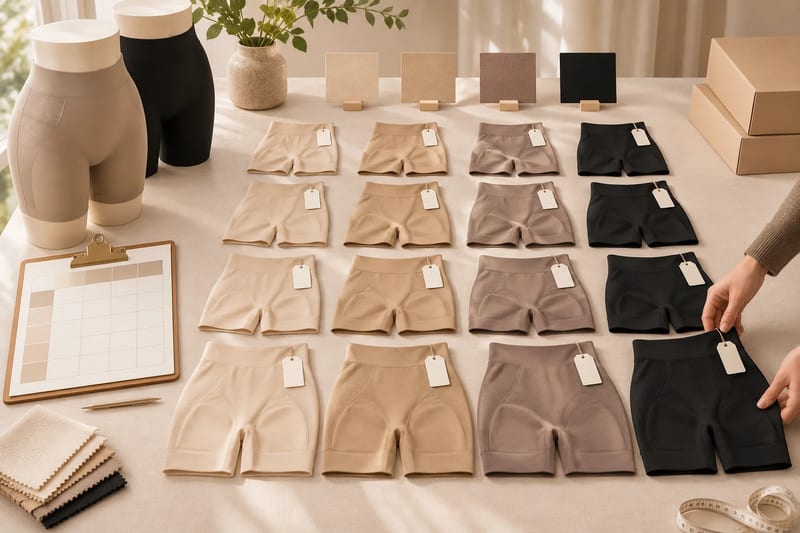
Create rows for sizes and columns for colors, then enter the units you propose. Add row totals, column totals and the overall total. Give the supplier the matrix with your product reference and ask it to mark acceptable cells, minimums and any required changes. A written matrix is less ambiguous than asking whether mixed sizes are allowed in general.
The following example is an editorial arithmetic illustration, not a S-SHAPER commitment or a recommended demand distribution. It assumes one style, five sizes and two colors, with 100 units equally split. The equal allocation makes the rule easy to see; it should not be copied as a real first-order size ratio.
Under a hypothetical 100-unit style minimum with free mixing, the example passes the total test. Under a hypothetical 60-unit minimum for each color, it fails both color totals even though the style total is sufficient. Under a hypothetical 20-unit minimum for every SKU, it would require 200 units. These are alternative invented rules used only to explain the arithmetic.
Ask the supplier which rule actually applies. If a proposed split fails, request the smallest feasible revision and identify why it changes. Reducing colors may solve a color constraint; changing sizes may not. Do not let the revised matrix silently become your production instruction before you have checked whether it still serves the launch audience.
| Illustrative size | Beige units | Black units | Row total |
|---|---|---|---|
| S | 10 | 10 | 20 |
| M | 10 | 10 | 20 |
| L | 10 | 10 | 20 |
| XL | 10 | 10 | 20 |
| 2XL | 10 | 10 | 20 |
| Color totals | 50 | 50 | 100 |
Total MOQ vs Per-Color MOQ: Which Rule Changes Your Cash Commitment?
A total-order rule offers flexibility only when the supplier confirms what can be combined. A per-color rule can increase commitment as colors are added. A per-SKU rule multiplies the burden again when sizes and colors are both expanded. Compare these rules against the audience you need to serve, not simply against the smallest available total.
Consider whether optional color breadth is worth the added stock. If your brand proposition requires a credible size range, dropping those sizes to fund a second color may undermine the product. Ask whether one existing color and the necessary sizes can meet the test more effectively than a broader but thinly supported assortment.
Also distinguish manufacturing acceptance from inventory wisdom. A factory may accept the matrix while your demand evidence remains weak. Supplier flexibility allows a purchase; it does not prove customers want the allocation. Keep the production feasibility decision and the merchandising decision visible as separate approvals.
When comparing suppliers, use the same matrix and specification. Otherwise one may quote a single-color order while another includes two colors with a higher material commitment. The resulting unit prices cannot be interpreted fairly without the quantity rules that produced them.
| Hypothetical rule for 1 style, 2 colors, 5 sizes | Minimum implied by the example | What it demonstrates |
|---|---|---|
| 100 total, unrestricted mixing | 100 units | A style-level total only |
| 60 per color, sizes can mix | 120 units | Color count changes the total |
| 20 per size-color SKU | 200 units | Variant count multiplies commitment |
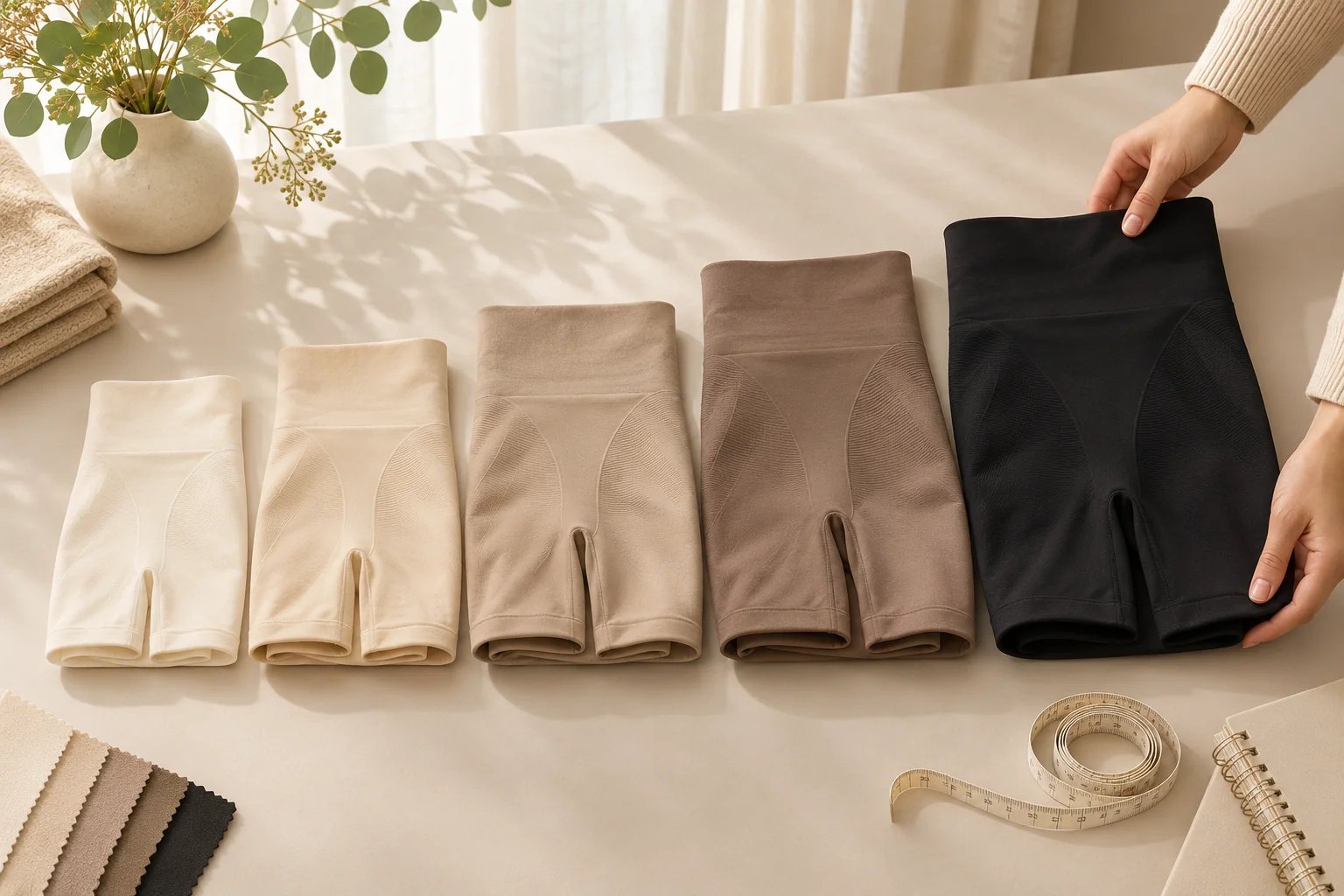
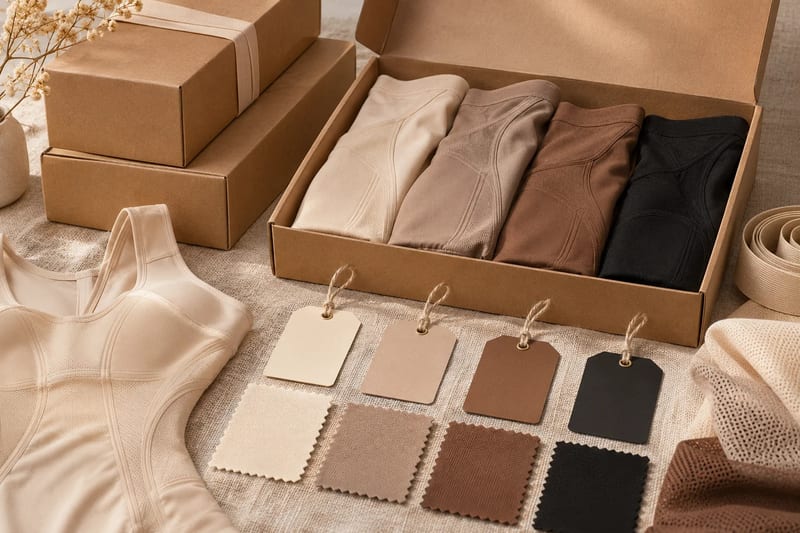
Illustrative sourcing and product-development scene. Click to continue the related buyer guidance.
How Do Channel Ranges Relate to MOQ per Style, Color and Size?
A B2B price requires its denominator: the actual garment, qualifying quantity and accepted size-color mix. Consumer single-piece offers use a different purchasing basis. The observations below therefore provide context rather than proof that your proposed matrix qualifies for a particular tier. Keep seamless and structured categories separate before comparing the ranges.
| Channel / buying model | Observed USD per garment | Product and order basis |
|---|---|---|
| Amazon US retail bodies | $12.38–$35.14 | Seamless/lighter bodies $12.38–$19.99; Structured bodies $35.14–$35.14. |
| Value/mid-tier brand DTC bodies | $29.99–$49.00 | Shapermint/Shapellx sale prices; no multi-pack or order code |
| TikTok Shop US bodies | $21.99–$54.99 | Seamless/lighter bodies $21.99–$46.99; Structured bodies $39.99–$54.99. |
| B2B small-order platform bodies | $3.18–$10.00 | Tianchen, Junmao and S-Shaper; listed minimums 5/2/10; not deep-custom eligibility |
| B2B higher-volume platform bodies | $2.50–$12.85 | Listed minimums 100–600; different garments, not a same-SKU volume discount |
US-facing USD single-garment observations reviewed November 10, 2026; variants, retail promotions and shipping/tax differ. Amazon uses May–October 2026 tracker snapshots, not live November checkout. These selected samples are not industry averages or matched constructions. B2B advertisements are not landed costs or final custom quotes. Deeper development needs separate specifications, deliverables and an itemized quotation.
B2B generally prices inventory below the consumer selling layer, but the matrix can still trigger garment, color, material or component minimums. Private-label or deeper custom work may change both the eligible quantity and quote. Ask S-Shaper to acknowledge each proposed combination and identify any difference by size or color. Consumer brand premiums, selected marketplace variants and promotions do not settle that production rule. Attach the accepted matrix to the current proposal and preserve it for receiving checks, instead of converting an observed bulk range into a purchase order before the allocation is confirmed.
This profile concerns everyday platforms. Structured fajas require a separate specification; new patterns, materials and deeper customization are not assumed included in ready-made bulk supply.
Can Labels, Packaging and Fabric Create Additional Minimums?
A garment factory may be able to make a small mixed-size order while a packaging or fabric program requires a larger commitment. Ask which components are already available and which must be ordered for your brand. The relevant threshold may be driven by an external supplier rather than by sewing capacity alone.
Discuss the options listed under S-SHAPER’s customization service: materials, colors, logos, labels and tags. Request the minimum and approval process for the particular method proposed. A woven label, a printed label and a custom box should not be assumed to share one quantity rule or setup scope.
If components exceed the garment count, establish ownership and use. How many will be made, what will remain after the order, where will the remainder be stored, and can it be used later if the design changes? Obtain the arrangement before buying the larger component lot. Unused branded materials represent a real commitment even when they are not garments.
Keep artwork approval separate from quantity approval. A correct component count does not prove the label text, size identifier or placement is right. Use revision numbers and appropriate proofs. Ask how the factory will match the correct components to each size during production and packing.
Use S-SHAPER’s quality-control overview to discuss variant identification and label accuracy within the inspection plan. A mixed-size order is only useful if the product and its identifiers remain aligned from production through receiving.
Which Shapewear Manufacturers Should You Consider for Your Size and Color Matrix?
Compare shapewear manufacturers in China, Turkey and France for a mixed style-color-size matrix. The recommendations below connect country-level capabilities with specific suppliers and the work your brand needs.
China Shapewear Manufacturer: Turn a small-order headline into an accepted matrix
When China shapewear manufacturers evaluate a matrix, ask whether the constraint belongs to the style, color, size or component and whether essential fit changes alter that rule.
Recommended China Supplier: S-Shaper
S-SHAPER’s item-testing and small-batch statements make China a practical route to investigate for a founder wanting an own-label garment. Its design, production and QA specialists can help distinguish a size-allocation question from a change to the pattern, material or construction. International-market experience and material recommendations can also inform which platform is worth testing before the matrix is finalized.
Ask which minimum applies to the selected style and whether colors and sizes can share it. The FAQ’s initial ten-piece item reference and the OEM page’s starting-batch statement are not universal permission for every customized combination. Attach the actual matrix and request the component conditions alongside the garment quote. The advantage is direct technical and commercial clarification; the cost is the need to approve a real product scope before using an attractive low total in your launch plan. See S-SHAPER OEM/ODM and global-brand support, S-SHAPER item-testing MOQ and stock/bulk conditions.
Turkey Shapewear Manufacturer: Connect color and size choices with seamless manufacture
For integrated Turkey shapewear manufacturers, additional colors may involve material coordination beyond extra SKUs, while size mixing must remain connected to the approved seamless platform and grading.
Recommended Turkey Supplier: SML Seamless
SML’s integrated yarn-to-packed private-label production is relevant when the proposed collection uses a seamless shapewear platform. A matrix discussion can reach the team responsible for knitting, dyeing and finished supply, helping the buyer understand whether adding colors changes material coordination rather than only the number of sellable SKUs.
Ask how the quoted platform is graded, which samples represent the range and what minimums apply to the desired colors. No universal SML mixing policy or small-order threshold is established here. The attraction is a technically connected production alternative; the limitation is that integration does not erase yarn, shade or component commitments. It suits founders whose garment requirements fit the offered process and who can distinguish an easier allocation from an unapproved change in fit coverage. See SML Seamless integrated private-label manufacturing.
France Shapewear Manufacturer: Separate resale assortment from own-label allocation
A France shapewear manufacturer comparison should separate ready resale size availability from own-label production requirements; the same numerical matrix can describe very different purchasing scopes.
Recommended France Supplier: Gilsa Paris
Gilsa Paris provides professional finished-product access as well as own-label adaptation and development. For an occasion-led collection, existing invisible-lingerie solutions may offer an appropriate fit or coverage starting point, so the first question is whether the matrix describes ready resale goods or a product that must be developed for the brand.
Those routes should not inherit each other’s quantity assumptions. Gilsa states that own-label minimums depend on product type, while the scope can involve adaptation, specific development and packaging. Request the actual size availability and color conditions, then price any new work separately. This is a useful comparison when the outfit application matters more than maximum optional color breadth; it is less informative if the founder only compares headline totals without identifying the intended commercial relationship. See Gilsa Paris professional resale and own-label development.
Keep the essential size coverage, then choose the confirmed production or resale route whose color and component conditions fit the test.
What Should Be Written into the Final Mixed-Size Order?
Attach the accepted matrix, product version and commercial quote to the order. Include the final size chart, color identifiers, branding files and packing instructions. Ask the supplier to acknowledge these records together so an approved total cannot be mistaken for approval of a different split.
Confirm the process for changes after approval. If one size becomes unavailable or a color cannot be supplied as planned, require a proposed revision and your written acceptance before substitution. A supplier should not replace missing units with another size simply to preserve the total without agreement.
Ask for the packing list to show quantities by variant, not only carton totals. Review the S-SHAPER logistics overview for dispatch discussion, then agree the documents your receiving partner actually needs. Check that purchase-order identifiers, sewn labels and carton records refer to the same combinations.
At receiving, reconcile what arrived against the approved matrix and record discrepancies. Preserve the first-order allocation rationale for the reorder review. Compare actual customer demand and fit feedback with the original assumptions instead of repeating the same mix automatically. The matrix should become a learning record as well as a manufacturing instruction.
How Can S-SHAPER Help Clarify Your Style, Color and Size Minimums?
S-SHAPER offers shapewear product references alongside OEM, ODM and private-label customization. For a startup planning mixed quantities, its public catalogue and pricing pages are useful entry points, while the selected item and requested work need a current proposal. Its development and manufacturing services can frame the discussion about whether an existing platform or a changed product is appropriate.
Send the team one reference, the intended country, your desired changes and the full matrix. Ask it to identify style, color, size, material and component constraints separately. Request a sample route and an explanation of any allocation revision required to make the order feasible.
Then contact S-SHAPER for an item-specific mixed-order quotation. Compare its confirmed conditions with your customer evidence and cash limit. A clear response should help you decide what to test first, without treating the smallest published quantity as a universal promise for every design.
FAQ: Is Shapewear MOQ Counted per Style, Color or Size?
Is shapewear MOQ usually per style or per color?
It can involve either or both, plus size, material and component conditions. Ask for the rule applying to the selected item and requested customization. A headline total is insufficient until the supplier confirms which variants can share that total.
Can I mix sizes within a 100-piece order?
Possibly, but the supplier must confirm the actual allocation. The 100-piece example in this guide is hypothetical and does not establish a manufacturing commitment. Send a matrix and request written acceptance of each size and color quantity.
Does adding a color double the minimum?
Only if the applicable rule makes the quantity proportional to color count. Other programs may use existing stock or different conditions. Ask which material and component commitments change with the added color before revising the order.
Should I split sizes equally to simplify the order?
Equal splits are useful for explaining arithmetic, but they are not a universal demand ratio. Use the measurements and buying evidence relevant to your audience, acknowledge the limits of that evidence, and confirm the resulting mix is commercially feasible.
What is the most important document for a mixed order?
An accepted size-color matrix linked to the exact product version and quote. Match it with the size chart, artwork and packing requirements. Preserve it for receiving checks and for comparing the next order with what the first test actually taught you.