 EN
Quick Answer
Review shapewear grading by asking how each important garment measurement and construction zone changes between sizes, then verify those changes in the relevant samples. Grading is not simply enlarging every dimension by the same percentage. Waist, hip, rise, torso, opening and support-panel relationships can need different decisions.
Request the base-size specification, measurement-point definitions, graded values, tolerances and the material version used for fitting. Keep body-measurement intervals separate from garment increments. A customer chart describes intended bodies; it does not supply a factory pattern by itself.
For a startup, prioritize the base, important transitions and range limits that could expose a failure. Confirm which size-set samples will be made and how revisions are controlled. Approve the graded product only when the technical record and wearer evidence support the range you actually intend to sell.
What Should a Shapewear Grading Record Contain?
Begin with the approved base size. Identify the pattern, material, component and sample versions that established it. A graded schedule built from an unresolved base can repeat the same problem across the range even if every spreadsheet increment is calculated correctly.
Define the points of measure with diagrams and handling instructions. A laid-flat width, seam path and extended opening are different measurements. Specify the state used so the development, production and inspection teams can reproduce the intended reading.
List the values in every planned size and make the increments visible. The technical team should explain why a particular point changes as proposed. A large range may include a transition where the pattern or component arrangement deserves separate review rather than the same increment repeated indefinitely.
Ask S-Shaper’s size customization team to distinguish an existing graded platform from newly proposed rules. Confirm what can be adapted, what requires another sample and whether material availability or construction limits affect the range.
Keep the customer chart in the record, but do not confuse it with the graded garment. ISO 8559-3 addresses body-measurement tables and intervals and explicitly excludes garment dimensions. Its scope reinforces the need to connect two different records through fitting, rather than copying body intervals directly into pattern increments.
| Grading record | Required detail | Reason |
|---|---|---|
| Base reference | Pattern / material / approved sample | Know what is being extended |
| Measurement points | Diagram / state / unit | Make readings reproducible |
| Size values | Each planned size and increment | Reveal local changes and transitions |
| Construction | Panels / openings / size-dependent trims | Preserve intended function |
| Approval status | Checked / revise / approved version | Prevent obsolete rules reaching production |
Uniform Enlargement vs Local Grading: What Should a Founder Compare?
Uniform enlargement treats the pattern as though every part should grow proportionally. Local grading reviews the effect at particular dimensions and zones. The latter does not mean every size must be a completely new design; it means the technical team must justify how the product continues to work.
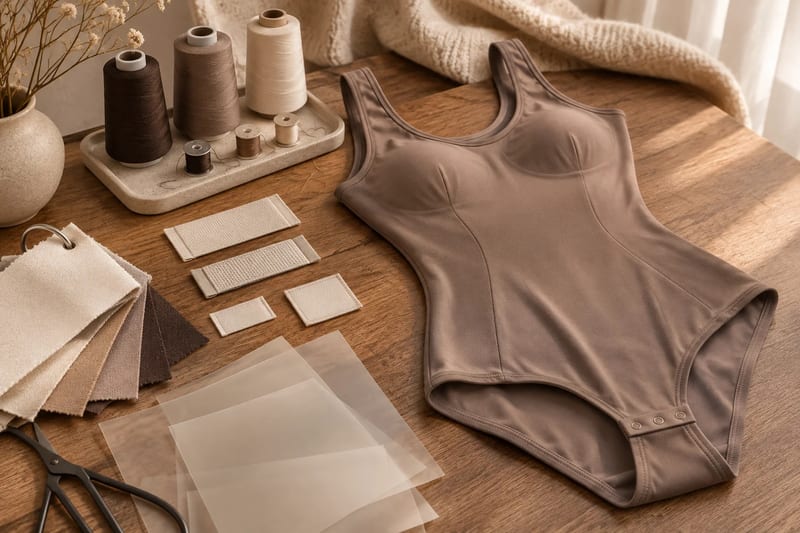
Consider a bodysuit. Increasing the waist and hip does not automatically require the same proportional increase in strap length, bust position or gusset. A longer torso can create a different problem from a larger circumference. Ask how these relationships are handled rather than assuming a more elastic fabric will absorb every discrepancy.
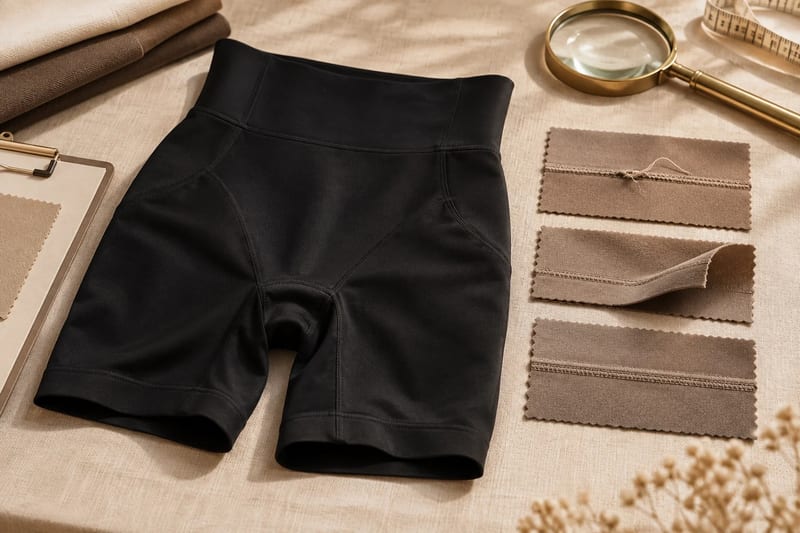
For shorts, examine rise, thigh opening and the relation between the waist edge and control panel. A dimensionally larger pattern can still put an edge in the wrong place. Fit feedback should identify the location and activity that reveals the issue, allowing a targeted correction.
Material response also matters. ISO 20932-1 concerns fabric elasticity, but a material test cannot dictate your entire grade. Ask how the chosen material and the fitted base informed the increments. If the fabric changes, review whether the earlier range evidence remains relevant.
The buying trade-off is preparation and confidence in the intended range. Additional technical review or samples can increase project work, while an unreviewed extension can leave the startup with inventory that lacks a defensible fit claim. Quote the actual sampling scope instead of treating every extra size label as a free administrative change.
| Area | Uniform assumption to question | Local review |
|---|---|---|
| Circumference | One percentage works everywhere | Waist, hip and abdomen relationships |
| Length | Girth increase implies equal length growth | Rise, torso and feature placement |
| Components | Same trim behaves identically | Size-dependent length, position or reference |
| Range limits | Central sample proves extremes | Critical-size measurement and fitting |
How Can You Read a Graded Measurement Table?
The following deliberately hypothetical schedule uses three sample labels and relaxed garment measurements. It is designed to show differing increments, not to recommend shapewear dimensions, customer body ranges or production tolerances. A real schedule needs the platform’s measurement diagrams and agreed method.
In this example, the flat waist increases by two centimetres per step, the flat hip by three and the defined torso path by one. The differences are not a mistake merely because the numbers are unequal. They would need a technical explanation and fitting evidence appropriate to the actual product.
Across two steps, the example waist changes from 32 to 36 centimetres, a four-centimetre difference or 12.5% of the starting value. The torso path changes from 58 to 60, about 3.45%. Applying the waist’s percentage to the torso would produce 65.25, not the chosen 60. This demonstrates how proportional scaling and independent increments differ; it does not establish which dimensions a real garment needs.
Do not interpret the flat waist as a customer’s waist circumference. A relaxed stretch width, the garment’s complete geometry and its resistance under extension need their own interpretation. Simply doubling the flat value does not identify the intended body range.
Ask the supplier to show the step differences and investigate unexpected jumps. Check whether the values are targets, actual sample readings or permitted deviations. Those three columns serve different purposes and should not be blended into one unexplained chart.
| Hypothetical relaxed point | A | B | C | Chosen step |
|---|---|---|---|---|
| Flat waist width | 32 cm | 34 cm | 36 cm | +2 cm |
| Flat hip width | 40 cm | 43 cm | 46 cm | +3 cm |
| Defined torso path | 58 cm | 59 cm | 60 cm | +1 cm |
| Status | Illustration only | Not a body chart | Not tolerances | Requires actual development |
Illustrative sourcing and product-development scene. Click to continue the related buyer guidance.
Which Sizes and Proportions Need Particular Attention?
Identify the range limits and any construction transition first. The smallest and largest proposed sizes can reveal entry, coverage or proportion problems that the base sample does not show. A transition where a trim, panel or cup arrangement changes also deserves an explicit approval question.
Consider proportion within a size location. Two people can share waist and hip measurements while differing in torso length or abdomen shape. Select fit cases relevant to the garment, record what they represent and avoid claiming universal coverage from a small group.
Use S-Shaper’s product references to decide which areas are critical. A high-waist short emphasizes different points from an open-bust body. The grade-review plan should follow that platform, not a generic checklist copied without examining its construction.
Keep the proposed body-range chart beside the garment readings. If a sample fails on a particular wearer, ask whether the recommendation, grade, material or construction needs revision. Automatically moving the person to another label can hide the actual issue.
Agree how much range evidence is sufficient for the next stage and what remains unresolved. A size set is not automatically a large wear study, and a fit model in each label does not test every proportion. Define the limits of the approval so the customer guidance stays aligned with the work completed.
How Should You Check the Size Set and Record Grading Revisions?
Measure each supplied size-set sample using the agreed points and handling state. Keep target values, actual readings, deviations and comments separate. If an item differs, investigate its pattern and production identity before assuming the entire rule is wrong.
Try the relevant samples on the planned fit cases and perform the chosen movement tasks. A sample can match its measurement sheet yet fail the wearer requirement. Conversely, a pleasing fit on one person does not authorize undocumented changes to the specification.
Discuss S-Shaper’s quality-assurance process and how dimensional findings affect approval. The factory and brand should know which discrepancy blocks the next stage, who investigates and which evidence closes it. Agree tolerances for the actual points and method; this guide introduces no universal centimetre allowance.
When revising, update affected adjacent sizes and components deliberately. A local correction can alter a seam join, opening or panel relationship. Ask the technical team to identify those dependencies and decide which samples or measurements need repeating.
Use a single live version and archive superseded schedules. Summarize the approved changes in a short release record instead of expecting production staff to reconstruct decisions from chats. A startup benefits from this discipline because the same modest range may be reordered long after the first sample conversation is forgotten.
| Size-set review | Record | Possible next action |
|---|---|---|
| Measurement check | Target / actual / deviation | Investigate identity or make correction |
| Wear finding | Location / task / body profile | Review recommendation or construction |
| Grade revision | Changed points / affected sizes | Recheck dependencies |
| Release | Version / approvals / unresolved items | Authorize only the defined scope |
Which Shapewear Manufacturers Can Support a Grading Review?
Compare the ability to explain and control the graded range, rather than selecting a country on the assumption that every factory uses the same proportions. Technical development and existing wholesale stock offer different levels of control.
China Shapewear Manufacturer: Review the Grade Before Committing Inventory
China shapewear manufacturers offering pattern development and production can be compared through their handling of local measurement increments, size-dependent components and the evidence required at the proposed range limits.
Recommended China Supplier: S-Shaper
S-Shaper describes coordinated design, production, QA and export specialists and material recommendations informed by international-brand work. Ask the development team which grade already exists for the platform and what new range work requires. Applicable low-quantity tests do not promise every graded extension under a stock minimum. Confirm the size-set plan, available material and any component procurement before fixing dispatch expectations. This route suits a founder who needs a direct factory conversation about both technical changes and their commercial conditions.
Canada Shapewear Manufacturer: Prioritize Grading and Pattern Communication
A Canada-based shapewear manufacturer comparison can be useful when the founder needs technical interpretation of step differences and proportion findings before those decisions are handed to an overseas production team.
Recommended Canada Supplier: Hertex Lingerie
Hertex identifies Montreal design, pattern, grading and QC functions with manufacturing in China. Ask which points and size locations its proposed review will cover and who maintains the live schedule. The model can help when the technical handoff is the buyer’s main gap, but development and coordination need an actual scope. Startup eligibility and sample availability must be confirmed. Canadian technical work does not mean Canadian-made replenishment stock. Verify how an approved grade change reaches materials, components and production records before relying on the next shipment.
Turkey Shapewear Manufacturer: Check the Seamless Size Architecture
Turkey shapewear manufacturers operating seamless facilities can be assessed through the relationship between their knitting platform, finishing and size architecture, rather than assuming cut-and-sew grading rules transfer unchanged.
Recommended Turkey Supplier: SML Seamless
SML describes private-label shapewear and integrated yarn-to-packed production. Ask how the proposed sizes are developed and checked on the actual construction, including openings and support zones. Integration is a capability context, not proof that every requested range is available or that its grade fits your audience. Material, color and production conditions need confirmation, with sample approvals kept ahead of dispatch. This route suits a compatible seamless product whose relevant sizes can be evaluated rather than selected only from a catalogue label list.
Portugal Shapewear Manufacturer: Connect Material Response with Range Development
Portugal shapewear manufacturer candidates with research and material testing can be relevant when a grading decision depends on how the chosen fabric and assembly behave at different size locations.
Recommended Portugal Supplier: Impetus
Impetus describes research collaboration, seamless and cut-and-sew development, and laboratory checks across materials and finished parts. Ask which technical evidence and size samples the proposed program will provide. A research function does not establish a universal grade, startup MOQ or completed fit validation. Additional material and evaluation work needs a quote and a development schedule. It suits a defined investigation where the founder can explain the range question and confirm the procurement dependencies before treating a promising base sample as production-ready.
Choose the route that can justify the proposed increments, preserve a live specification and verify the sizes most likely to change the buying decision.
What Grading Information Must Reach Production and Customer Support?
Release the approved grade with its pattern and component versions. Include the planned sizes, relevant measurement states, tolerances and identification rules. A correct spreadsheet is insufficient if production uses an earlier pattern or a substitute trim.
Confirm that the customer chart remains supported by the reviewed range. Body intervals should reflect the approved product and fitting evidence, not automatically expand because an additional garment label has been created. Give support staff the documented boundary and mixed-measurement guidance.
Use the S-Shaper supply and logistics handoff to align size labels, quantities, packing and receiving records. A small stretch garment can look deceptively similar across labels, so visual inspection alone is not a dependable variant check.
For reorders, confirm whether the pattern, material or components have changed. Investigate repeated fit complaints against the actual delivered version and relevant body profile. A change in customer feedback can indicate a guidance issue, a production discrepancy or a genuine grade problem; each needs another response.
Retain the reason behind important decisions. Knowing why the upper range uses another component or why a local increment changes helps the next technical team avoid reversing a necessary feature simply to make the table look more uniform.
How Can S-Shaper Help a Founder Review Shapewear Grading?
S-Shaper’s OEM/ODM, customization and quality services provide a starting point for discussing the relationship between an existing platform and a proposed size range. A startup can ask for the measurement and sample route needed to assess a particular grading question. The agreed proposal should define the actual technical and approval work.
Send the intended body profile, product reference, planned sizes and any observed fit problem. Ask which graded records exist and which range changes require development. Consult the S-Shaper order FAQ for initial conditions, then confirm the material, components and size-set quantities for the selected project.
To proceed, request a shapewear grading and sample review. Seek a justified, repeatable range with clear limits and responsibilities, rather than a long list of labels supported only by one central fitting.
FAQ: Shapewear Size Grading: What Founders Need to Review
Are body-size intervals the same as garment grading?
No. Body intervals describe intended customer measurements; garment grading changes the product’s specified dimensions and construction across sizes. Connect them through the selected material and fit evidence instead of copying intervals directly into the pattern.
Should every point grow by the same percentage?
Not automatically. Waist, hip, rise, torso and components can need different local decisions. Ask the technical team to explain the proposed increments and verify their effect in the relevant samples rather than assuming uniform enlargement preserves fit.
Which sizes should I sample?
Identify the base, important transitions, range limits and relevant proportion cases. Agree the size-set and fitting scope with the technical team. No universal sample count in this guide guarantees coverage of every body or construction.
Can a fabric change affect an approved grade?
It can change the basis of the fit decision. Review the material identity, relevant mechanical evidence and affected sizes before assuming the old pattern and chart remain suitable. A matching fiber percentage alone does not establish equivalent garment behavior.
What should be signed off before bulk?
Approve the live pattern and measurement schedule, material and components, relevant size-set findings, customer chart and identification records. Document unresolved issues and who can release production. Keep superseded versions out of active instructions.