 EN
Quick Answer
When sourcing private label shapewear bodysuits, specify the intended outfit, neckline and back shape, torso proportions, bust support, straps, gusset or closure arrangement, material and size range. Validate those features together on appropriate physical samples. A bodysuit can match the desired silhouette while remaining difficult to dress, uncomfortable in torso length or unsuitable under the intended clothing.
Start with an identifiable platform and ask which fit and branding changes it supports at your proposed quantity. The four-channel comparison below uses multiple sellers and keeps basic seamless bodysuits separate from structured body shapers. These sampled consumer and B2B offers frame the market, while the final private-label quote must identify the actual neckline, torso, material, closure and component scope.
What Should Your First Bodysuit Product Brief Define?
Choose the role the garment should play. A bodysuit intended primarily as an underlayer has different presentation needs from one intended to be visible as part of an outfit. Explain the outer clothing, coverage, wearing context and customer problem before selecting a neckline from a photograph.
Identify the intended audience through relevant body measurements and proportions. Torso length and the relationship between bust, waist and hips can matter alongside the label customers usually wear. Do not build the brief only around a generic small-to-large size list and assume the platform fits every proportion in that range.
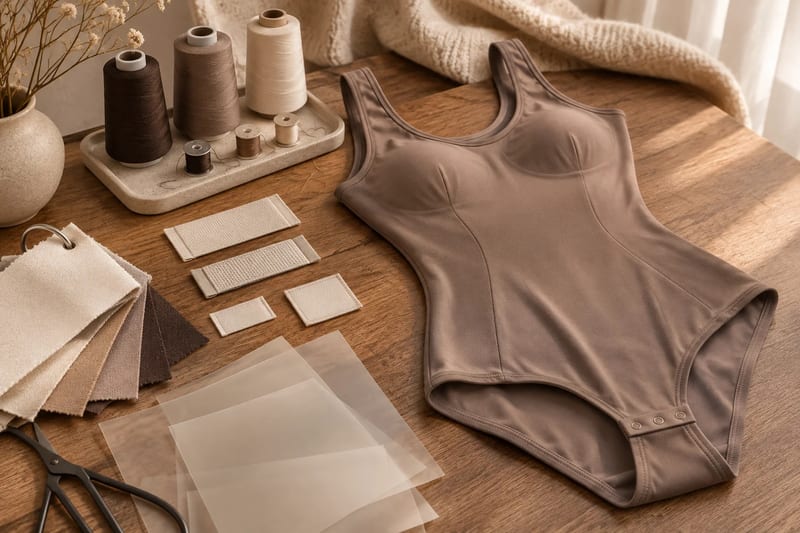
Use S-Shaper’s product catalogue to select reference directions. Mark which neckline, back coverage, straps or closure features are useful and which need changes. A reference should guide the requirement, not become an unexamined instruction to reproduce another brand’s product.
Separate essential outcomes from optional design preferences. If the bodysuit must remain concealed under a particular outfit, the required neckline or back shape may be central. If a preferred visual detail does not affect the wearer result, consider whether it belongs in the first order or a later revision.
Add the target market, intended size coverage, quantity matrix and brand components. Label unknown material or technical decisions and request appropriate recommendations. The supplier can propose a more useful route when it understands both the wearer need and what development support the founder lacks.
| Brief area | Buyer decision | Sample evidence |
|---|---|---|
| Product role | Underlayer or visible outfit component | Review under intended clothing |
| Coverage | Neckline, back and leg shape | Fit and edge visibility |
| Proportions | Relevant torso and body measurements | Appropriate wearer trials |
| Use | Dressing and closure access | Repeatable use tasks |
| Brand scope | Labels, tags and packaging | Approved component execution |
Low-Back vs Fuller-Coverage Bodysuits: How Should You Compare Them?
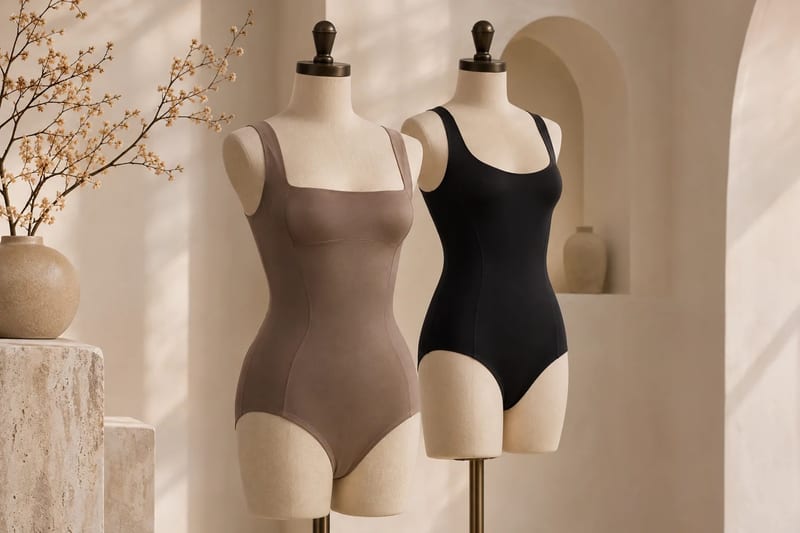
Compare the actual outfit result and support arrangement. A lower back or neckline may suit one garment while changing how coverage and support are provided. Fuller coverage may fit another use case. Neither is universally more comfortable or more suitable for a startup simply because it looks simpler.
Ask the developer to explain the construction proposed for the intended audience. Bust support, straps, body panels and closures interact. Do not assume a neckline can be changed independently of the rest of the bodysuit, or that the same support description remains valid after a substantial coverage change.
Trial the sample under relevant outer clothing rather than evaluating only the standalone appearance. Check visible edges, coverage during movement and whether the product remains where intended. A bodysuit can look correct on a form while failing the specific outfit promise the brand intends to market.
Review the trade-off with the wearer. A silhouette may suit the outfit but make dressing or closure access less convenient. Record the result rather than allowing visual preference to decide every technical issue. A clearly defined first product is easier to explain than one marketed as suitable under all outfits without evidence.
If the founder is comparing different platforms, identify their materials, sizes and approval status. A stock demonstration and a developed fit sample can both inform selection, but they do not establish the same readiness for production. Ask what additional work is needed before either can become the brand’s approved version.
| Feature | Lower-back or neckline direction | Fuller-coverage direction |
|---|---|---|
| Main use question | Does it work under the intended opening? | Does it provide the required coverage without visibility? |
| Support review | How does the proposed construction support the wearer? | How do panels and straps behave together? |
| Fit review | Check movement and edge position | Check torso and coverage interaction |
| Buying decision | Select a platform supported by the actual trial | Avoid assuming more coverage guarantees better fit |
Which Bodysuit Parameters Need More Than a Size Label?
Define torso length using an agreed measurement method. Ask how the garment measurements relate to the body guidance, and whether different torso proportions need consideration. A familiar size label cannot establish the distance or comfort between shoulders, bust and closure.
Review the bust and strap arrangement. Ask whether the platform is intended to be worn with a separate bra or includes a particular support construction. Do not infer cup accommodation or support for every bust shape from a product photograph. The proposed sample and customer guidance should describe the actual arrangement.
Examine the gusset and closure in use. Ask how the wearer dresses, opens and closes the garment, and whether placement remains practical across the intended proportions. A neat closure on a flat sample can still be difficult for the target wearer. Record the use issue rather than assuming a particular hardware change will solve it.
Discuss leg shape, opening and seam or edge appearance under clothing. A higher or lower cut changes the product experience and may affect which platform is appropriate. Identify the intended result before requesting a visual change that interacts with fit elsewhere.
Use S-Shaper’s customization service to discuss materials and construction options. Ask the supplier which changes require a new sample, grading review or different quantity conditions. Keep the body measurements, garment measurements and component identifiers in one current technical record so the range is not approved through unrelated assumptions.
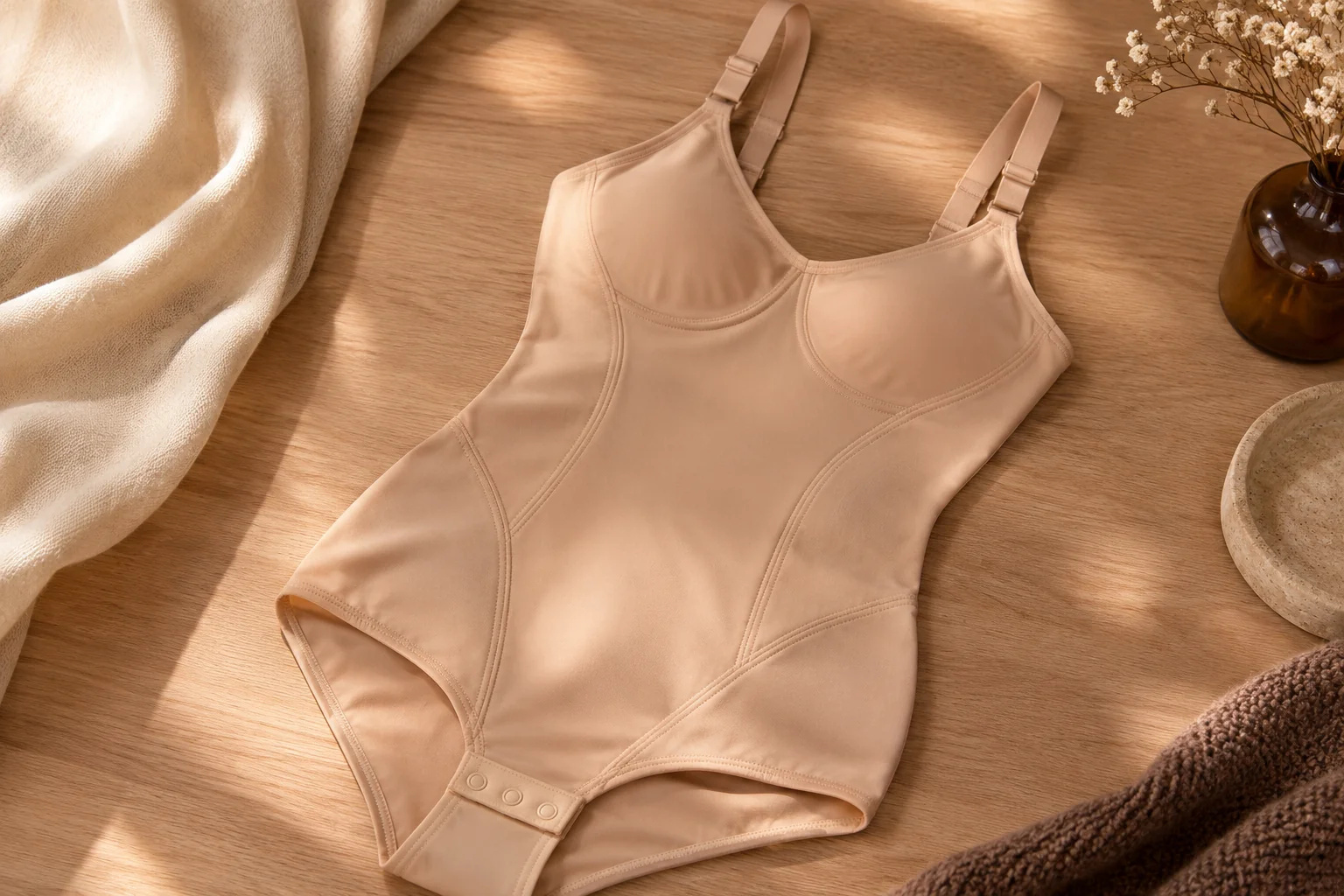
Illustrative sourcing and product-development scene. Click to continue the related buyer guidance.
How Should You Test a Private-Label Bodysuit Sample?
Identify the sample version, size, material and unfinished elements before the trial. Confirm whether it represents the proposed production garment. A reference using another fabric or temporary closure can provide useful information, but its limitations should remain visible in the approval record.
Use tasks that reflect the product: dressing, closing and opening, sitting, walking and wearing the intended outer clothing. Ask about specific pressure or movement observations and coverage. Do not lead the participant toward a positive answer simply because the sample resembles the intended campaign image.
Record the relevant body measurements and torso context alongside the selected size. Compare the result with the actual product guidance. A comment that a bodysuit is too short means more when the developer knows the measurements and closure behavior involved.
As a hypothetical planning example, six review areas across three sample sizes create 18 area-size checks. That is a checklist structure, not 18 independent customers or proof of the entire range. Decide which additional wearers and proportions are needed to investigate important uncertainties.
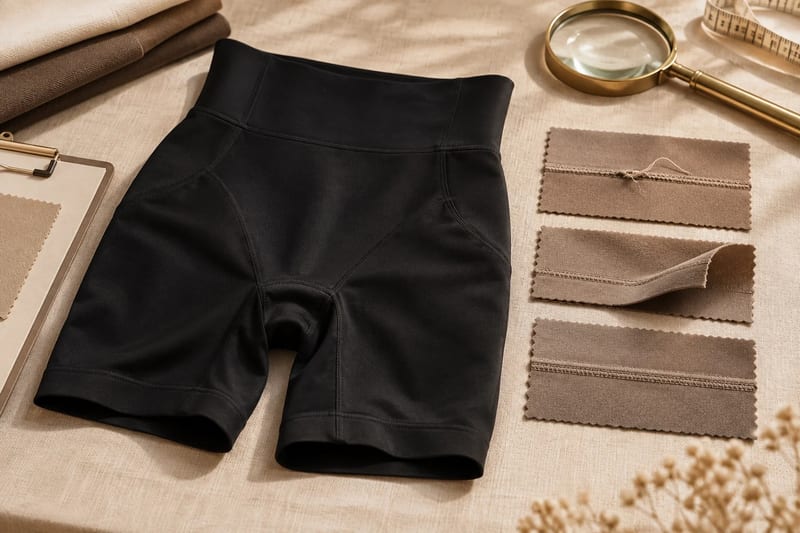
Review the intended care routine and inspect the sample afterward using agreed methods. Discuss acceptance through S-Shaper’s quality-assurance process. If a material, neckline or closure is revised, revisit the relevant tasks and the rest of the garment. A production approval should identify the complete accepted version, not only a corrected area.
| Illustrative review area | Question |
|---|---|
| Torso | Does the approved method and wearer trial support the length? |
| Bust/straps | Is the intended support and coverage arrangement appropriate? |
| Neckline/back | Does the product work under the target outfit? |
| Closure | Can the intended wearer dress and use it conveniently? |
| Leg/edges | What happens during sitting and walking? |
| Care/version | Does the reviewed sample represent the accepted post-care and production scope? |
How Do Comparable Bodysuit Prices Differ Across Four Channels?
For this sourcing decision, compare bodysuits with bodysuits rather than use briefs or shaping dresses to imply the relevant market range. Keep basic seamless bodysuits separate from structured faja bodysuits, whose panels, closures and coverage can create another physical scope. The observations below are selected US-facing USD product tickets and B2B listings, not a statistical bodysuit average.
| Channel | Basic seamless bodysuits: USD/piece | Structured body shapers/fajas: USD/piece | Observed scope |
|---|---|---|---|
| Amazon | $12.38–$19.99 | $34.88–$43.99 | Selected variants; dated tracker offers |
| B2C brand websites | $29.99–$78.00 | $69.00–$148.00 | Basic: Shapermint/Shapellx/SKIMS; structured: Shapellx/SPANX |
| TikTok Shop | $21.99–$46.99 | $39.99–$54.99 | FeelinGirl/YIANNA selected offers; campaigns vary |
| B2B finished/platform offers | $2.50–$12.85 | $14.00–$27.42 | Multiple suppliers; quantity/brand terms vary; development separate |
B2B finished bodysuits are generally available at lower acquisition prices than consumer tickets, with quantity, variant and customization conditions to confirm. Amazon and TikTok Shop promotions can lower displayed consumer offers; B2C brands can support different materials, fit guidance and service. The spread is not all brand premium or profit and does not show that two similar photographs represent equivalent garments.
Choose the actual neckline, torso, bust and closure arrangement first, then request the current quote and sample route for that platform. New patterns, fit work, labels, packaging and delivery may remain separate. Use the consumer side to test the offer against relevant alternatives, while the accepted technical specification controls what your private-label order will supply.
US-facing USD per single garment, reviewed November 10, 2026. Amazon uses dated May–October 2026 third-party PriceHistory snapshots, not live November checkout. These selected-seller observations are not industry averages or matched-quality comparisons. Variants and promotions change; shipping and tax are not normalized. B2B bands describe advertised garments, not landed costs or a final custom-development quote. Sources: dated PriceHistory Amazon records, official brand/TikTok Shop pages and Made-in-China supplier listings.
Which Shapewear Bodysuit Manufacturers Should a Startup Compare?
Compare the product and service route behind the bodysuit proposal. Direct development, occasion-led solutions and established finished ranges can support different startup models, while the actual fit, brand permissions and order conditions remain product-specific.
China Shapewear Bodysuit Manufacturer: Connect Fit and First-Order Scope
China shapewear bodysuit manufacturers offering development and production should connect torso, neckline and closure requirements with an identified platform before the founder relies on a low published entry quantity.
S-Shaper
S-Shaper describes design, material and function recommendations with QA and export expertise for international brands. Ask the development team which platform serves the intended outfit and proportions, and which changes require new samples. Item-specific testing and listing tiers provide useful starting references, not universal full-custom conditions. Confirm the accepted size matrix, components, material availability and dispatch dependencies. The advantage is a coordinated product conversation, with the founder retaining responsibility for actual wearer validation.
France Shapewear Bodysuit Manufacturer: Evaluate the Outfit Application
France shapewear bodysuit manufacturer and development comparisons can focus on neckline and back requirements, distinguishing an existing invisible-lingerie solution from an own-label product needing adaptation and new fit evidence.
Gilsa Paris
Gilsa specializes in bridal, backless and difficult-neckline lingerie applications, with professional resale and own-label development routes. Its design context can help investigate whether a suitable solution already exists for the intended outfit. Confirm that the proposed garment category and service actually match the brief, then request product-dependent minimums and development or packaging scope. A French service contact does not establish the manufacturing origin of every garment or automatic access to custom bodysuit production.
Colombia Shapewear Bodysuit Manufacturer: Trial the Finished Platform
Colombia shapewear bodysuit manufacturers supplying established shaping ranges offer a finished-product comparison, but torso fit, coverage and control feel still need validation on the intended customers rather than national reputation.
Leonisa
Leonisa identifies Colombian manufacture and an extensive shaping range with international wholesale contacts. A suitable available platform may serve a curated resale test without commissioning every feature. Confirm actual variants, stock and resale conditions, and trial the product’s guidance and closure experience. The reviewed wholesale route does not establish private-label or OEM development rights. It suits a finished-assortment business model when the platform is appropriate, rather than an unconfirmed proprietary fit project.
Turkey Shapewear Bodysuit Manufacturer: Check Seamless Construction Fit
For Turkey shapewear bodysuit manufacturers with integrated seamless facilities, assess how yarn, knitting, finishing and grading support the specific torso and coverage requirements before treating production integration as proof of wearer fit.
SML Seamless
SML describes private-label shapewear from yarn through packing. A compatible seamless platform can provide a connected route for discussing material and construction. Confirm that the actual bodysuit requirements fit the offered capability, including relevant closure, sizing and sample work. No universal MOQ or price advantage follows from the facility description. Ask for current material, color and dispatch conditions, then approve the physical product rather than assuming a country-level quality result.
Choose a route that can demonstrate the intended bodysuit experience and define its brand and supply scope; do not let an attractive silhouette replace fit evidence.
What Must Be Approved Before the First Bodysuit Production Order?
Preserve the final material, construction, torso and other measurement records, size-color matrix and branded components. Identify the approved physical reference and the checks used to accept the garment. The supplier should acknowledge the same current files before production release.
Reconcile the quote with the final version. A neckline, support, material or closure change can alter the scope compared with an existing listing. Confirm whether the proposed allocation qualifies and whether any component commitments exceed the garment count. Do not treat an early catalogue price as a final developed-product budget.
Set change authority for later substitutions. Another fabric or closure needs relevant review before use, with the effect on fit, guidance and price recorded. Keep old versions out of the live release files so a production team cannot accidentally follow an earlier torso chart.
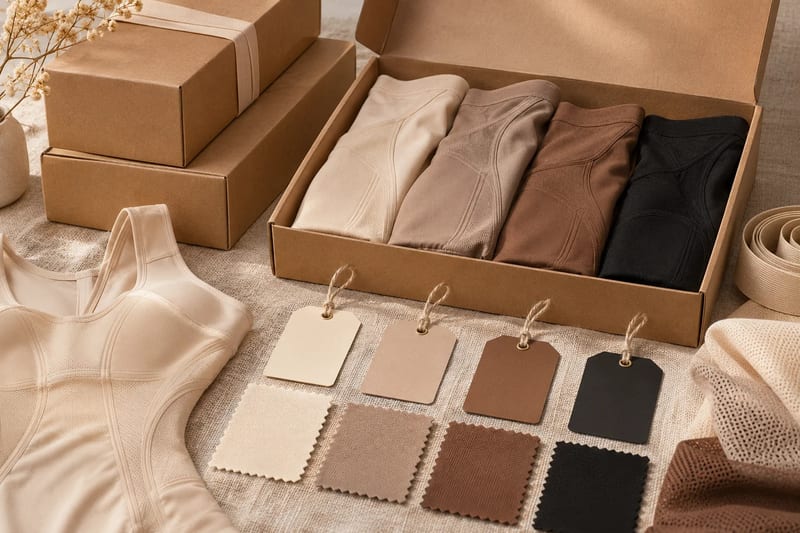
Use the supply and dispatch discussion to confirm identifiers, packing information and destination responsibilities. Store size guidance and customer service records should describe the actual version being supplied. A correctly made bodysuit can still cause avoidable confusion if labels or conversion advice refer to another platform.
Review the supplier FAQ for preliminary timing questions, then obtain the product-specific schedule. Factory completion, dispatch and receiving readiness are different milestones. Approve the product and order based on evidence rather than allowing a campaign date to decide whether an unresolved fit issue is acceptable.
How Can S-Shaper Help Source a First Private-Label Bodysuit?
S-Shaper presents shapewear products, OEM/ODM development and customization support that a startup can connect to a specific bodysuit brief. Its public product and service references provide a starting point, while the selected material, neckline, proportions and brand scope need a current sample and proposal.
Share the wearer, intended outfit and market, reference features, essential changes, size direction and first-order matrix. Ask the team to identify a suitable platform and explain the sample purpose, permitted customization and technical approval records. Keep item-specific public prices and component minimums separate from the conditions of a newly developed version.
To start, request a bodysuit sourcing discussion with S-Shaper. Compare its recommendation with actual wear trials and the launch model. The useful outcome is a garment your brand can fit, explain, identify and reorder responsibly, with the remaining development and supply decisions made visible before payment.
FAQ: Private Label Shapewear Bodysuits: A Startup Sourcing Guide
What should I specify for private label shapewear bodysuits?
Define the wearer and outfit, neckline and back, torso proportions, bust and strap arrangement, closure or gusset, leg shape, material and size range. Ask which platform can serve those requirements and what sample evidence is needed before production.
Can one size label establish bodysuit fit?
No. Torso and body proportions, the garment measurement method and construction also matter. Review the actual chart and relevant wearer trials. A familiar label from another brand cannot automatically establish equivalent fit for the proposed platform.
Which price references should I use for a bodysuit launch?
Compare the four-channel observations by construction: basic seamless bodysuits and structured body shapers are distinct groups. Preserve seller, variant, quantity and promotional conditions. The sampled US-facing USD bands are not a statistical average or a final private-label quote for your developed version.
Does a low B2B minimum include a fully custom bodysuit?
Not automatically. A finished platform, logo application and deeper pattern or fit development are different scopes. Ask for the exact garment, materials, quantity matrix, component conditions and sample work. Do not infer a complete custom program from one advertised minimum.
What should be approved before the first order?
The identified garment, measurements, material, construction, range, components, reference sample and relevant checks, with a current quote and delivery scope. Reconfirm changes and keep customer guidance aligned with the version actually supplied.