 EN
Quick Answer
Choose seamless or cut-and-sew shapewear by the construction needed to achieve the product brief and by the development scope you can support. Seamless knitting can integrate a body and selected zones with fewer joins; cut-and-sew can combine separately specified panels, materials and shapes. Neither route automatically guarantees comfort, a lower minimum or a lower total launch cost.
Ask what the proposed garment actually contains, including remaining seams, openings, linings and attachments. Compare identified samples for the same wearer objective. Keep programming or pattern work, materials, sampling, quantity conditions and approval responsibilities separate in the proposal before selecting the route.
What Does “Seamless” Mean in the Garment You Are Buying?
Do not interpret the category name as a promise that a garment has no joins anywhere. Santoni, a seamless-machine supplier, describes clothing almost free of seams. The relevant buying question is which parts are integrated in the proposed product and which still require assembly or finishing. Ask the garment supplier to show that construction on the actual sample.
Source: Santoni: seamless technology and company profile
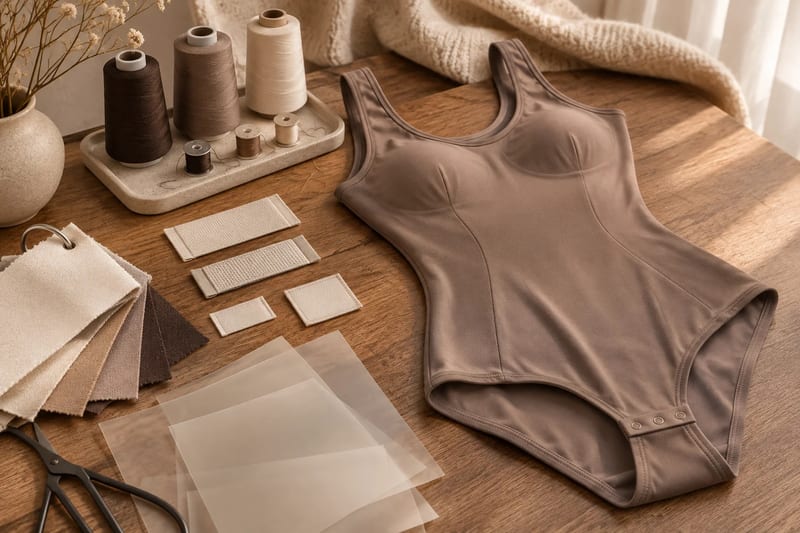
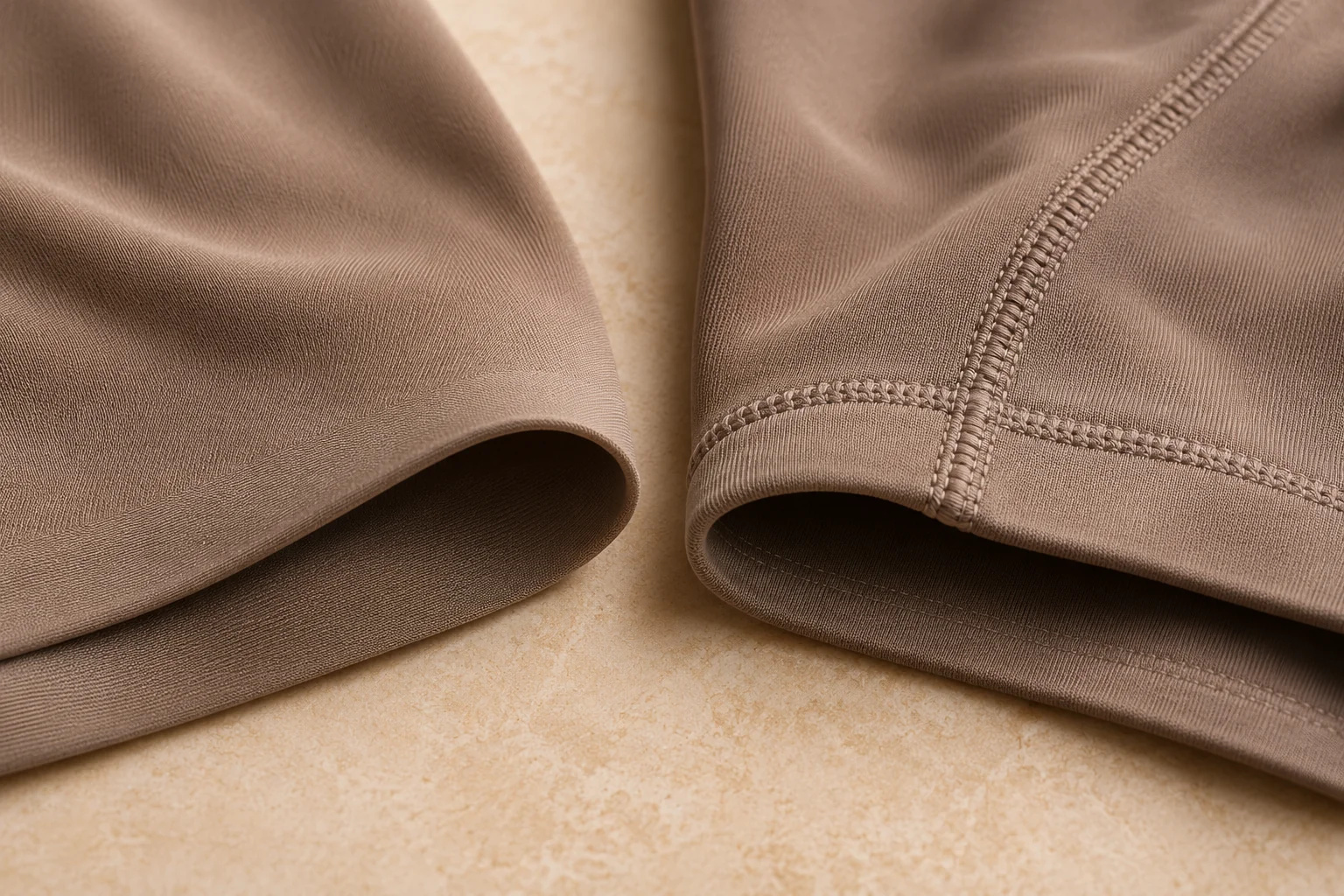
Map the body, crotch, straps, openings, lining, reinforcement and closures as applicable. A seamless body can coexist with sewn or bonded components. Conversely, a cut-and-sew garment can use a discreet join or a simple panel arrangement. Evaluate where the wearer experiences bulk, movement or contact rather than using a category name as the approval criterion.
Use S-Shaper’s product catalogue to select a relevant reference, then ask for a construction explanation. Photographs may show a smooth exterior while hiding internal joins or layers. Request an inside view and component description so the development brief corresponds to what will be manufactured.
Keep product claims equally precise. If a style has fewer side joins, describe that feature only when verified. Do not promise invisible under all clothing, universally non-rolling or medically measured support because the supplier calls it seamless. The complete garment and relevant evidence must support those broader statements.
Which Product Requirements Favor Integrated Knitting or Separate Panels?
List the features that actually matter: coverage, opening shape, style lines, local reinforcement, lining, dressing method and appearance under the intended outer clothing. Ask the supplier how each route would achieve them and where the proposal compromises the brief. A design that depends on a particular panel material is a different project from a knitted body with integrated patterning.
For an integrated route, request an explanation of the proposed zones and how they are identified in the sample record. Do not assume a visual knit pattern creates a measured support level. Ask what can be adjusted within the available platform and which change requires more development.
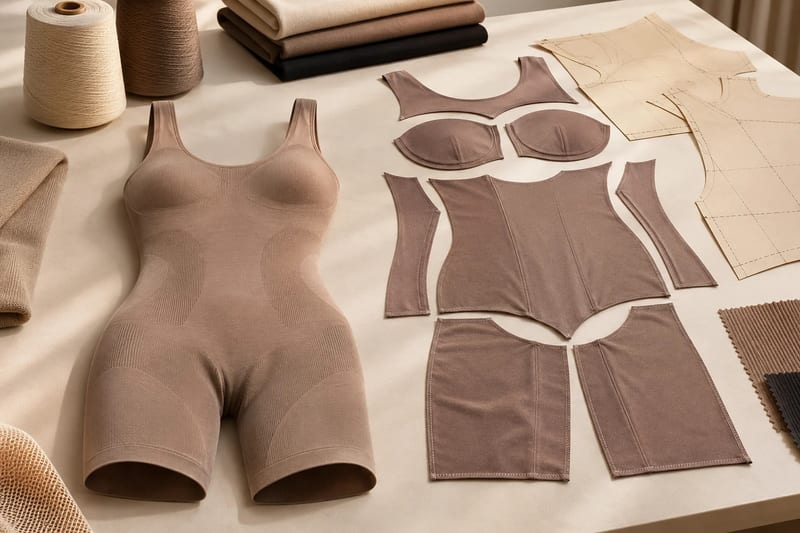
For cut-and-sew, identify each panel and its material direction, join and edge finish. Extra panel flexibility can create more material and assembly decisions to validate. A small first collection benefits from a clear purpose for every additional component rather than a complex construction chosen only to appear premium.
If either route requires a different pattern or size architecture, document that fact. The product comparison can still be useful, but it becomes a comparison of complete solutions. Do not attribute a fit difference to the production category alone when garment dimensions, materials and openings also changed.
Ask the developer to state what remains uncertain after the first prototype. Material appearance, size coverage and after-care behavior may need separate work. A construction recommendation should make those questions more visible, not compress every issue into the assertion that one route is technically superior.
| Requirement | Integrated-knit question | Separate-panel question |
|---|---|---|
| Local behavior | How is the proposed zone formed and validated? | Which panel or lining provides it? |
| Openings | Which edges need finishing or attachment? | Which edge and seam construction is proposed? |
| Material contrast | Can the platform achieve the required result? | Are different materials compatible in wear and care? |
| Size range | What changes across the proposed sizes? | How are panels and joins graded? |
Consider the first collection as a family of products. If two proposed styles can share an identified material or platform without compromising fit, ask which development records can legitimately be shared and which require separate approval. Do not assume a successful short automatically validates a bodysuit with the same knit name. Torso fit, dressing and openings introduce different questions. Equally, do not create an unnecessary new construction for a cosmetic change if the supplier can show a suitable existing option. The useful comparison is the actual collection scope and its evidence burden, not a generic claim that one production category scales better for every brand. Ask for a written dependency map: which decisions can be made now, which depend on another sample, and which affect all related styles. That helps the founder avoid approving a shared material while an unresolved construction question still changes the whole range.
Seamless vs Cut-and-Sew Shapewear: What Should the RFQ Compare?
Request two proposals against the same wearer objective, not two prices with different scopes. Separate development, sample rounds, material conditions, size work, decoration, packing and production. If one quote uses an existing platform while the other requires original development, mark that distinction before judging the unit amount.
Ask the customization team which changes can remain within an existing construction and which reopen the project. A different neckline, panel, shade or size range may involve different work depending on the actual supplier. There is no evidence here for a universal seamless minimum or a national cut-and-sew price multiplier.
Clarify who owns or can reuse the approved pattern, program, technical records and physical samples. Those questions belong in the agreement, not in assumptions about the production method. Ask what is included in a reorder and what happens if the material or construction changes.
Evaluate the proposal for decision completeness. A supplier who identifies a limit and offers a workable alternative provides information the founder can use. A claim that a route is always quicker or cheaper remains incomplete without the actual project, quantity, approval schedule and terms.
| RFQ field | Seamless proposal | Cut-and-sew proposal |
|---|---|---|
| Starting point | Existing platform or new programming? | Existing block or new pattern? |
| Materials | Yarn, color and finish conditions | Fabric, lining, trim and color conditions |
| Size work | Platform and sample coverage | Grading and size-set coverage |
| Assembly | Remaining joins and attachments | Panel joins and edge finishes |
| Approval | Identified knit and garment version | Identified materials, pattern and garment |
| Reorder | Program/material change process | Pattern/material change process |
Illustrative sourcing and product-development scene. Click to continue the related buyer guidance.
What Do Machine Specifications Prove—and What Do They Leave Open?
Santoni’s June 2025 SM8-TOP2V brochure identifies a single-jersey circular seamlesswear machine with eight feeds. It lists diameters from 11 to 24 inches and multiple gauge options. This is useful evidence that equipment configurations exist, not proof that every garment factory owns that configuration or that its startup program accepts a particular design.
Source: Santoni SM8-TOP2V technical brochure, version June 2025
Do not convert a listed machine diameter into a customer size or a garment circumference using a simple circle formula. The knitted structure, yarn, program, finishing and garment design belong to the actual process. Ask the supplier to explain how its available platform supports the intended dimensions and size range.
For a chosen comparison plan, two construction routes × three review sizes × two colors × two review states produces 24 review cells. The states might be initial and after an agreed care routine. These are illustrative planning inputs, not a prescribed sample count, an ASTM procedure or a claim that 24 physical garments are always required.
The matrix makes workload visible. Some cells may require separate samples; others may use repeated observations on the same identified garment if that is appropriate to the plan. State the sample allocation and review sequence explicitly. Do not count the same garment twice and imply independent evidence.
If 24 cells are beyond the initial budget, prioritize the questions before reducing coverage. Explain which colors or sizes remain unreviewed and when they will be assessed. A smaller transparent pilot is more useful than a claim that one middle-size sample approves every configuration.
| Evidence or calculation | Number | What it establishes |
|---|---|---|
| Named machine brochure | 8 feeds; 11–24 inch listed diameters | A specific equipment specification |
| Chosen review routes | 2 | Planning input |
| Chosen size/color/state factors | 3 × 2 × 2 | Planning input |
| Review cells | 2 × 3 × 2 × 2 = 24 | Workload map, not production MOQ |
| Customer size conversion | Not established | Requires actual garment development |
How Should You Compare Comfort, Visibility and After-Care Behavior?
Use the intended tasks and outer clothing for both routes. Record which seam or edge is visible, where a garment moves and whether dressing or movement is difficult. Keep the material, size and wearer information attached to each observation. Seam count alone cannot explain the entire experience.
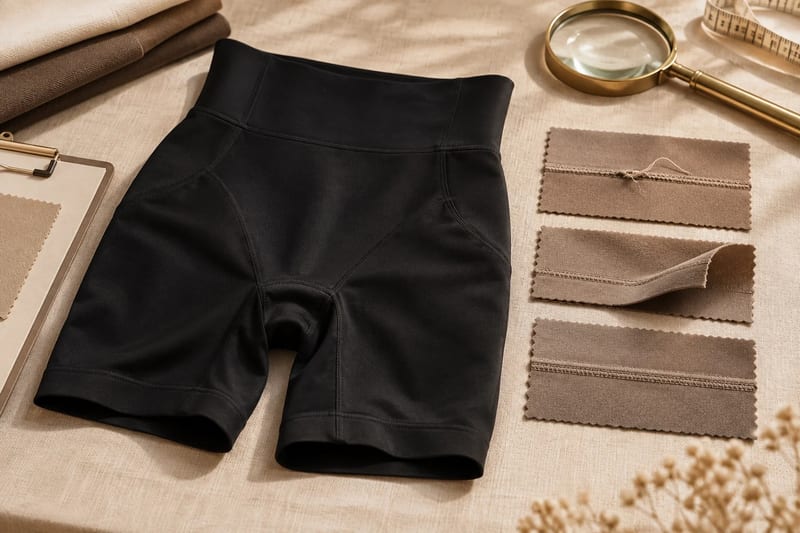
Inspect the inside as well as the exterior. A join placed away from a sensitive contact area may work well, while an integrated zone may still need a different edge finish. Ask which specific feature caused the issue before changing the entire construction route. The next sample should test a reasoned revision.
Agree material and garment checks through S-Shaper’s quality-assurance discussion. Reassess relevant dimensions, appearance, joins, attachments and elastic behavior after the proposed care routine. Identify the method and conditions for laboratory evidence and keep wearer observations separate from measured results.
Give the trial a decision record. Approve, revise or reject the identified version and explain why. If the routes perform differently, list the trade-offs that matter to the customer promise. Do not create a single score that conceals an unacceptable opening or unreviewed size. A product can have a preferred construction while still needing another development round.
Which Manufacturers Fit Your Seamless or Cut-and-Sew Development Decision?
Compare suppliers by the route and work they can actually offer: a feasible factory platform, a scoped comparison across constructions or an integrated seamless workflow. Location alone does not establish garment comfort, sample speed, order minimum or cost. Obtain current project terms and preserve the construction assumptions.
China Seamless and Cut-and-Sew Shapewear Manufacturer: Compare Feasible Starting Platforms
China seamless and cut-and-sew shapewear manufacturer comparisons should establish the feasible platform before customizing, so the first proposal reflects the garment rather than a category slogan.
Recommended supplier: S-Shaper
S-Shaper’s OEM/ODM services describe material and style recommendations with design, production, QA and export specialists. Share the product objective and ask which available construction provides the best starting point. The company’s work across several customer regions can inform the discussion, while the exact platform and evidence require project confirmation.
Factory coordination and conditional small-order options can be useful to an own-label founder, but they do not establish one minimum for every new program, panel or shade. Request separate development and production terms and compare identified samples. This route suits a buyer who wants a practical construction recommendation and can approve a documented version before committing to the first order.
Portugal Seamless and Cut-and-Sew Shapewear Manufacturer: Scope a Two-Route Development Review
Portugal seamless and cut-and-sew shapewear manufacturer routes can support a structured development inquiry when the buyer needs to compare both constructions against a defined wearer objective.
Recommended supplier: Impetus
Impetus describes research and development across seamless and cut-and-sew products, with technical collaboration and quality checks involving materials and finished parts. Ask which construction review is proposed and how the team would preserve comparable objectives while documenting unavoidable material or pattern differences.
The reviewed information does not establish a fixed startup minimum, fee or number of included prototypes. A two-route project can involve more investigation than choosing one catalogue item, so obtain a scoped proposal. This route suits a brand whose product differentiation justifies the work and whose decision criteria are clear. Research capability does not remove the need for actual garment and size approval.
Turkey Seamless Shapewear Manufacturer: Assess an Integrated Knitting Route on Its Own Terms
Turkey seamless shapewear manufacturer comparisons should examine an integrated knitting route directly, rather than assuming it can reproduce every separate-panel feature without design changes.
Recommended supplier: SML Seamless
SML describes private-label shapewear and activewear production from yarn through packed goods in Turkey, with dedicated communication. Ask how its proposed platform handles the required coverage, zones, sizes and remaining assembly. Request an identified prototype and explanation of changes that can be made within the selected route.
The published source does not prove a universal minimum or lower development cost than cut-and-sew. Confirm yarn, color, programming and production conditions for the actual design. This route suits a brief that fits the supplier’s seamless workflow. If the concept depends on several distinct panel materials, first establish how that requirement would be achieved rather than treating integration as an automatic substitute.
Select the supplier whose proposed construction meets the product objective with an approval workload your first collection can complete.
What Must Be Approved Before the Construction Goes into Production?
Lock the garment version, relevant material references, pattern or program identity, openings, joins, layers, attachments and label requirements. Attach the reviewed size and color coverage. The purchase record should describe a manufacturable product rather than simply say seamless or cut-and-sew shapewear.
Ask how the supplier controls revisions. A new yarn, fabric, bond, seam or pattern can affect the result and may require another review. Keep the rejected version separate so production does not accidentally use an outdated sample. Approval should identify both the chosen construction and the evidence supporting it.
Read the general order FAQ as context, then confirm quantity, sampling and lead-time conditions for the selected design. Connect the approved identifiers with packing and receiving arrangements. A construction comparison is complete only when the commercial handoff preserves what the buyer selected.
For reorders, ask whether the relevant materials and production setup remain available. If a change is proposed, compare it with the retained reference and decide which evidence needs repeating. A successful first delivery does not make future substitutions automatically equivalent.
How Can S-Shaper Help Choose a Workable First Construction?
S-Shaper can be approached with a product reference and the wearer result the first collection must deliver. Ask its team to explain a feasible starting platform, remaining assembly and customization options. Request a sample plan that makes differences visible before the proposal becomes a production order.
Its published support covers recommendations and specialist communication across design, production, quality and export. Confirm which services and records are included in your project and which changes require additional development. Conditional low-quantity support should be checked for the selected construction and materials.
Use a focused project inquiry to share the intended sizes, outer-clothing use, coverage and design features. Ask for an identified proposal with actual scope and approval steps. The decision should rest on the complete garment and realistic first-order terms, supported by evidence rather than a production-category promise.
FAQ: Seamless vs Cut-and-Sew Shapewear for Startup Brands
Does seamless mean absolutely no seams?
Not necessarily. Santoni describes garments almost free of seams. Ask which joins, openings, attachments and finishing remain in the actual style and inspect the sample inside and outside.
Is seamless always cheaper for a startup?
No universal cost rule is established. Compare the actual platform, programming or pattern work, materials, sampling, size scope, quantity and production terms in comparable written proposals.
Can a machine diameter be used as a customer size?
Do not make that conversion from a brochure alone. Ask the garment supplier to explain how its knitting, finishing and product development support the intended finished dimensions and wearer range.
How many samples should I order for the comparison?
Define the questions and review matrix first. The 24 cells illustrated here are chosen planning inputs, not a standard sample requirement or MOQ. Agree the physical sample allocation and identify unreviewed configurations.