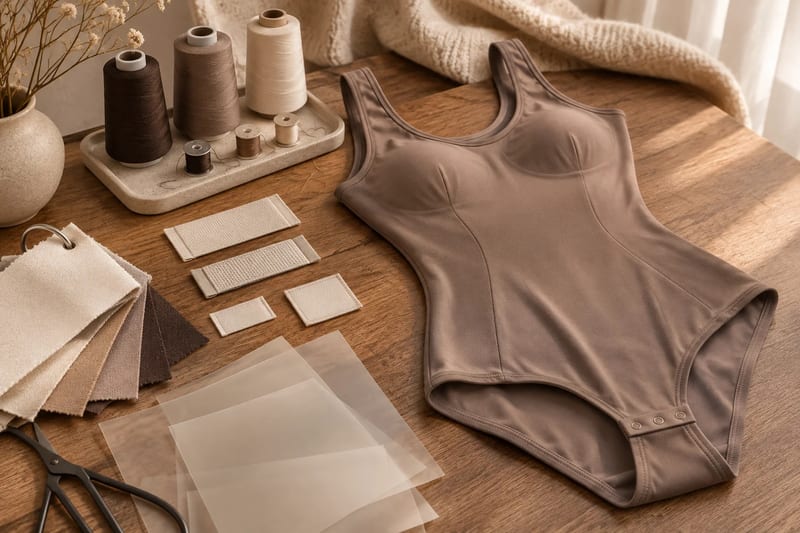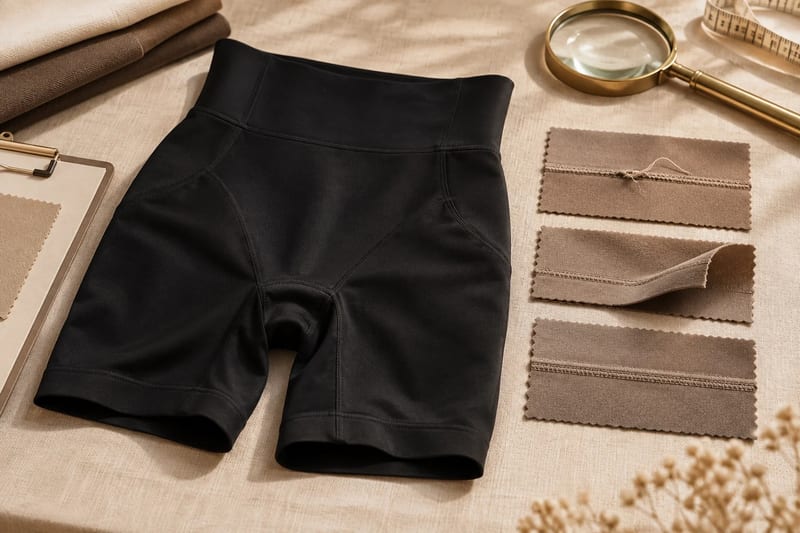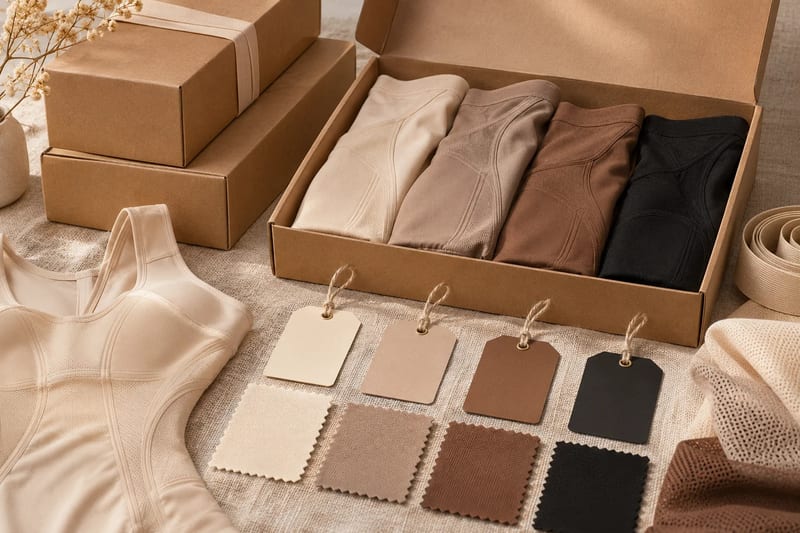
 EN
Quick Answer
Approve a custom shapewear color against an identified physical standard and lab dip made for the proposed material. Agree the viewing conditions, relevant components, observer or instrument method and decision authority. A color code or phone image can communicate an idea, but does not by itself define how the finished textile will appear.
Review the main material, lining, elastic, thread and other visible components together where relevant. Identify the accepted dip and what it authorizes before bulk dyeing. Keep later lot checks separate: approval of a small development sample is not proof that every future lot or viewing condition will match exactly.
What Color Reference Should the Buyer and Mill Actually Share?
Choose an identified physical reference and describe the material it represents. If a named color system is used, record the exact reference type and code rather than assuming all versions are interchangeable. A paper, textile or screen representation can serve different purposes and should not silently replace the agreed master.
Use a product direction from S-Shaper’s catalogue to define where the color appears. A body fabric, mesh panel, elastic and molded or metal component may have different surfaces. The buyer should decide which relationships matter to the design and what an acceptable coordinated appearance means.
Send a current, identifiable reference rather than a worn or discolored scrap with no history. Ask the supplier how it will be stored and compared, and retain a corresponding buyer reference where appropriate. A physical object without an identity can become as ambiguous as a digital file.
Mark the target material and intended finish. A color request for one base material does not automatically define the result on another structure or fiber system. If the material changes, ask whether a new dip is needed and how the appearance will be evaluated.
State the intended market and viewing context as a design question. The brand may sell online but customers encounter the garment in varied environments. Do not promise identical appearance on every monitor or under every light; specify the relevant approval conditions and preserve the limits of the decision.
| Reference field | Record | Why it matters |
|---|---|---|
| Master | Physical identity, type and code | Prevents an undocumented reference switch |
| Material | Article, structure and finish | Connects the color with the substrate |
| Components | Body, panel, elastic, thread as relevant | Defines coordinated appearance |
| Approval | Observer/method, conditions and owner | Makes the decision interpretable |
What Should a Lab-Dip Submission Include Before You Review It?
Ask for each submitted option to have a unique code, material identity and development date. Confirm whether it represents the proposed production substrate and finish or a declared substitute. The physical submission and any digital record should identify the same option.
Request enough information to compare the options without choosing from memory. Keep the target and sample handling consistent, and agree how thin or open materials are presented so background and layering do not change unnoticed. These presentation choices should be set with the color specialist for the actual material.
List the components that need review together. A matching body fabric does not approve a visibly different elastic or thread. Some components may be intended as a contrast; record that design decision instead of labeling every difference a defect.
If instrumental results are supplied, preserve the method, relevant settings, units and color-difference formula rather than copying one isolated number. Different formulas and conditions should not be treated as interchangeable. Agree an actual criterion with the supplier; do not invent a universal ΔE threshold for all shapewear colors.
Clarify the requested decision. The buyer may select an option for another development round, approve a dip as the working reference or hold for a missing component. These are different actions. A message saying option B looks nice is not a clear authorization to dye the whole order.
Distinguish a solid-color development request from artwork approval. A printed logo or pattern has its own identity and may need a different physical submission, while the base garment still needs the relevant color reference. Ask which object is being approved and which process will reproduce it. Do not send a branded packaging image and assume its screen color defines the body fabric as well. A coordinated brand palette can allow intentional differences across textile, paper and hardware, provided those choices are explicit. Keeping them separate helps the supplier respond to the actual mismatch instead of changing every component when only one item needs revision.
Physical Lab Dips vs Screen Images: What Can Each Support?
A screen image can help locate an option, discuss a direction or show the arrangement of a submission. It also introduces camera, display and viewing differences. Treat the image as communication evidence with a defined purpose, rather than a guarantee of the textile’s exact physical appearance.
A physical comparison lets the buyer inspect the submitted material and reference under agreed conditions. It still requires controlled presentation and an explicit decision. Merely receiving a swatch does not establish that it was compared consistently or that every component and light condition was reviewed.
ASTM D1729-22 addresses visual color appraisal of diffusely illuminated opaque materials and identifies simulated daylight D65 in its guidance. Its scope should be respected: it is not a universal opacity or seam-visibility test, and its public summary does not supply every procedure needed for an arbitrary open mesh or reflective component.
Source: ASTM D1729-22: visual appraisal of diffusely illuminated opaque materials
Ask a competent color specialist to select the appropriate evaluation for the actual material. Keep photographs, physical observations and instrument data identified as different evidence types. Their useful combination depends on the agreed method, not on a claim that one always replaces the others.
| Evidence | Useful role | Important limit |
|---|---|---|
| Screen image | Option identity and discussion | Display/camera appearance is not a universal textile match |
| Physical dip | Actual material comparison | Needs agreed presentation and viewing |
| Instrument report | Defined color measurements | Formula and settings must remain identified |
| Component review | Coordinated garment appearance | Main fabric approval does not cover every trim |
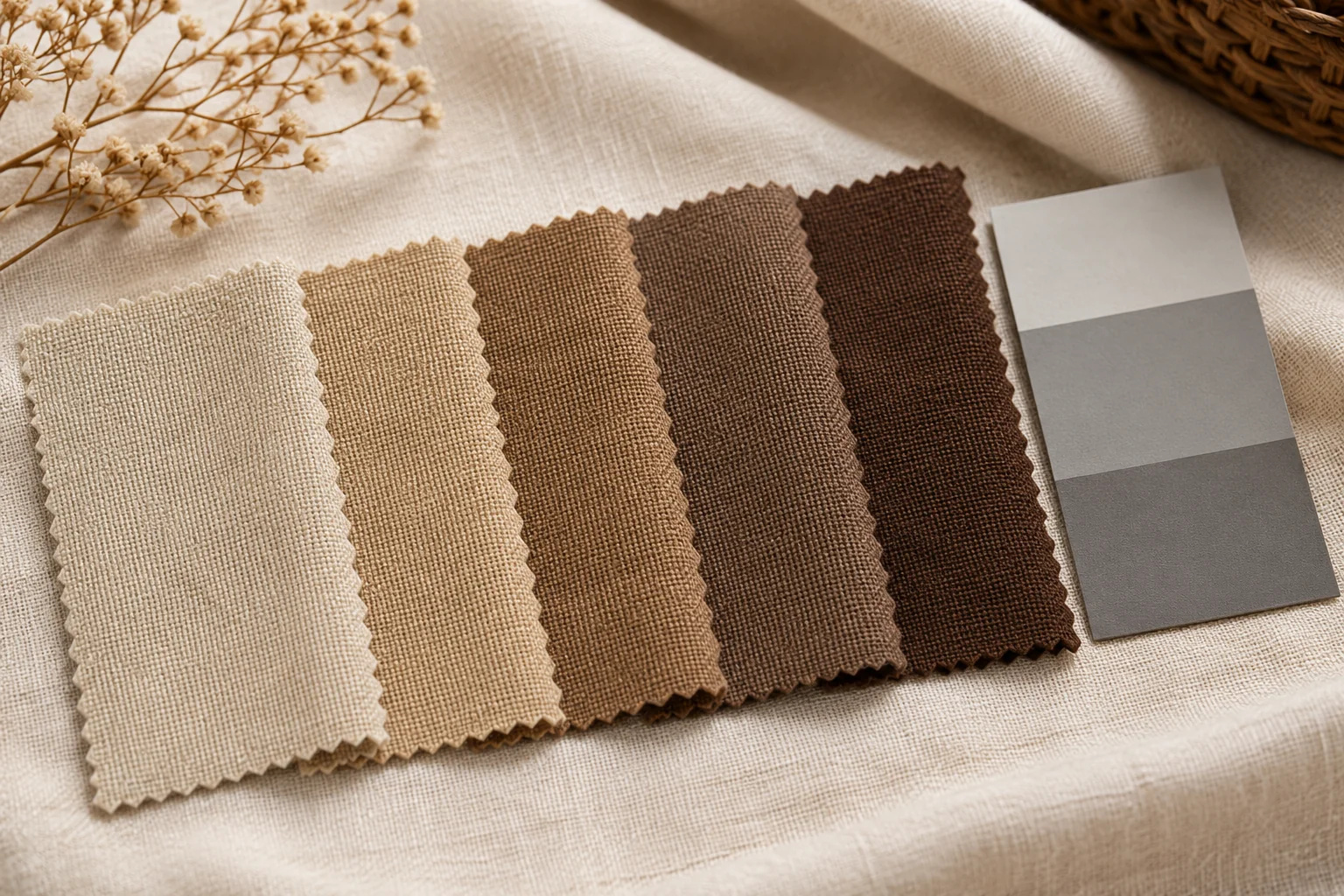
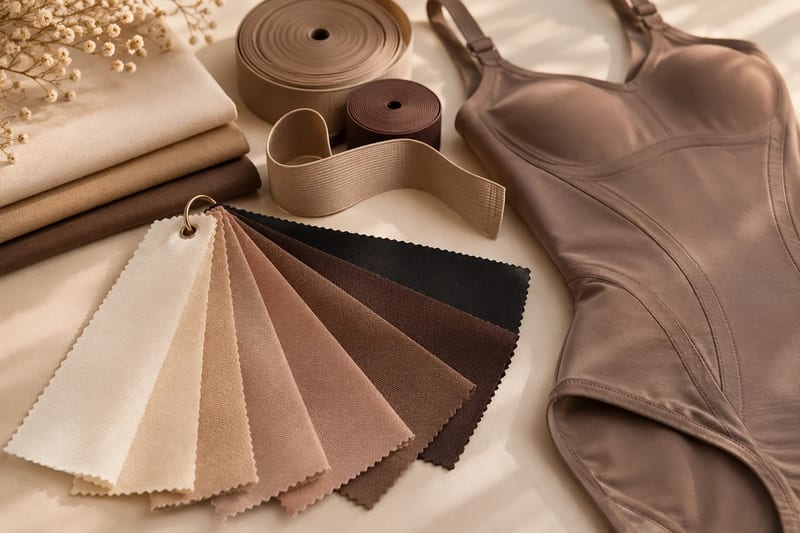
Illustrative sourcing and product-development scene. Click to continue the related buyer guidance.
Why Should You Check More Than One Relevant Lighting Condition?
Datacolor explains metamerism as a situation in which a pair can match under one condition and mismatch under another. Its guidance discusses comparing under a different light source. That is a reason to define the relevant light conditions; it is not a promise that checking two lights guarantees a match under all possible environments.
Source: Datacolor, Understanding Metamerism
For a fictional submission, option A appears acceptable against the reference under the chosen primary light but not under the selected second light. Option B is acceptable under both; option C is unsuitable under the primary comparison. Those are invented observations, not supplier results or a standardized pass scheme. The buyer and specialist must decide the actual criteria and significance.
For a chosen workload, three material components × three dip options × two lighting conditions gives 18 review cells. This is planning arithmetic, not a required number of dips or a laboratory protocol. If the garment includes another visible component, identify whether it needs its own comparison instead of silently assuming it is covered.
Keep the observations specific. If the issue is that the elastic differs from the body under one condition, record that pair and condition. Do not request a vague warmer whole garment if the body already matches the intended reference. A targeted color comment gives the mill a clearer next question.
Avoid reducing the decision to a fictional acceptance percentage. Selecting one of three options does not mean the supplier has a 33.3% quality rate. It describes one development choice with the criteria used. Preserve the accepted physical reference and relevant record rather than turning the submission into an unsupported performance statistic.
| Illustrative option | Primary-light observation | Second-light observation | Decision scope |
|---|---|---|---|
| A | Acceptable in the chosen example | Mismatch observed | Needs investigation under agreed criteria |
| B | Acceptable in the chosen example | Acceptable in the chosen example | Candidate for the stated scope only |
| C | Not acceptable in the chosen example | No implied approval | Do not infer a universal rejection rule |
| Chosen workload | 3 components × 3 options × 2 lights | 18 cells | Not a supplier quality rate |
How Should You Handle Main Fabric, Mesh, Elastic and Thread Together?
Map the visible components and their intended relationships. A tonal design may require coordinated appearance without every surface looking physically identical. A deliberate contrast should have its own approved reference. Agree the objective before rejecting a material simply because its texture changes the visual impression.
Discuss feasible material and shade alternatives through S-Shaper’s customization service. Ask whether the main material and trims can follow the same approval sequence and which components have different sourcing conditions. Availability and visual approval are separate questions.
Use the quality-assurance discussion to plan how production lots and component changes will be checked against the accepted reference. A lab dip establishes a development decision for its scope; bulk color still needs the agreed verification. Do not describe one accepted sample as a guarantee of perfect future matching.
Keep care-related appearance questions separate from initial color approval. A color can be acceptable initially while another test is needed for a proposed fastness claim. Ask which evidence supports that claim and identify the method rather than treating a pleasing dip as proof of laundering performance.
If a component changes after approval, review the actual effect on the coordinated garment. Preserve the old reference and record why the replacement is accepted or rejected. A same-name shade is not enough to establish the same appearance on another material or finish.
Which Shapewear Manufacturers Can Support Your Color-Approval Route?
Decide whether color work belongs within a coordinated garment project or a separately sourced textile program. The examples describe published models and limits. They do not establish national color accuracy rankings, one dyeing minimum or a promise that all materials will match identically.
China Shapewear Manufacturer: Coordinate Garment Materials and Color Decisions
China shapewear manufacturer comparisons for color approval should connect the body material and visible trims with the same garment brief, while preserving separate references where their substrates differ.
Recommended supplier: S-Shaper
S-Shaper’s OEM/ODM service describes material and style recommendations with design, production, QA and export specialists. Ask the factory team to identify which components need dips or other color references and how approval reaches production. Experience across several customer regions can inform the brief, while the actual appearance needs defined evidence.
Conditional small-order possibilities do not establish one minimum for every custom shade or trim. Confirm material and dyeing conditions before opening additional colors. This route suits an own-label founder seeking coordinated garment sourcing and a manageable palette. Request identified submissions and a written decision rather than treating a screen photograph as unrestricted bulk authorization.
Germany Shapewear Fabric Manufacturer: Keep Textile Development and Color Identity Linked
Germany shapewear fabric manufacturer routes should identify the actual textile and supply path when a color is approved, especially if fabric development and garment assembly involve different partners.
Recommended supplier: Penn Solutions
Penn Solutions describes development in Italy, its own German manufacturing facility and other manufacturing relationships. Ask which article and supply route the color proposal represents and how the accepted material reference reaches the garment maker. Do not infer one origin for every catalogue option.
The reviewed information does not establish a finished private-label garment, universal startup quantity or a standard color-development fee. Confirm textile commitments and the assembly handoff. This route suits a brand with garment-development support that needs an identified material. It adds a coordination responsibility: fabric color approval must remain connected with the components and garment appearance reviewed elsewhere.
Indonesia Shapewear Fabric Manufacturer: Narrow the Dyeing Request to a Specific Material
Indonesia shapewear fabric manufacturer comparisons should connect a custom color with the named knit and finish, rather than approve a broad family color without a production-material reference.
Recommended supplier: WinnerSumbiri Knitting
WinnerSumbiri identifies its factory in Tangerang and describes knitting with dyeing, finishing and printing facilities. Ask which actual material and color-development route fit the garment component and what the submission will identify. A broad fabric portfolio does not make every shade interchangeable across structures.
The published background does not establish a ready garment program, universal minimum or guaranteed color-match result. Obtain current material, shade and delivery terms and define the garment-maker handoff. This route suits a buyer with a clear textile requirement and assembly partner. Keep the accepted dip and its scope attached to the actual article rather than treating mill capability as approval of an unreviewed garment.
Choose the route that can identify the substrate, reference and approval decision, then preserve the connection with the finished garment.
What Must the Accepted Lab-Dip Record Say Before Bulk Dyeing?
Identify the accepted option, physical reference, material, finish, viewing conditions, method and decision owner. State what the approval authorizes and which components or conditions remain open. Retain a usable reference and agree who holds the corresponding factory or mill copy.
Use the order FAQ to prepare questions and obtain shade-specific quantity, development and timing terms. Do not assume a general small-order statement applies to every original color or material route.
Connect the approved color identity with lot identification and receiving arrangements. Bulk and reorder checks need the actual reference and agreed method. A product name or phone image alone may not support a later discussion about a shade difference.
If the material, finish or visible component changes, ask whether the original color approval remains sufficient. Record the new comparison where needed. The approval package should make its boundaries clear enough that another buyer can understand what was selected and why.
Write rejection comments in a way the color specialist can investigate. Identify the option, reference, material and viewing condition, then describe the observed direction of the difference without pretending to provide an instrumental diagnosis. If observers disagree, preserve the disagreement and check the setup before asking for another formula. Do not choose the most favorable photograph as the record of approval. The accepted decision should identify the actual physical comparison and any supporting data. When the buyer later receives bulk material, that record provides a reference for a focused investigation rather than a debate about whose monitor looked more accurate.
How Can S-Shaper Help Coordinate a Practical Shapewear Color Brief?
S-Shaper can be approached with the physical color reference, intended materials and a map of visible components. Ask its team to propose the approval route and explain which shade or trim conditions need confirmation. A focused palette can make the first project easier to define without promising a particular cost or timing result.
Its published support includes recommendations and specialist communication through design, production, QA and export. Confirm actual material availability, submission scope and bulk-reference controls for the chosen project.
Send the brief through S-Shaper’s project inquiry. Request identifiable dips and an acknowledged approval record. The useful outcome is a color decision the garment team and mill can reproduce and verify within its stated scope.
FAQ: Approving Shapewear Colors with Physical Lab Dips
Can a phone photograph be the only color approval?
Use it for a defined communication purpose and agree the actual approval method. Camera, display and viewing differences mean a screen image alone does not define a universal physical textile match.
Does one accepted dip approve the trims?
Not automatically. Identify the relevant body, mesh, elastic, thread and other visible components and review their intended coordinated or contrast relationship.
Is there one universal ΔE limit for shapewear?
No limit is prescribed here. Agree the actual formula, settings, material presentation and acceptance criterion with the supplier and color specialist.
Does checking two lights guarantee every environment?
No. It provides evidence under the chosen conditions. Preserve the method and limits rather than promising identical appearance under every light or on every screen.