 EN
Quick Answer
Request a shapewear size set when you need physical evidence that the approved base has been carried into the proposed range. Agree which sizes, materials, components and sample purpose the set covers. A base sample does not establish that every grade, opening, torso relationship or label has been made correctly.
Measure the supplied sizes against a defined garment specification, review relevant fit cases and record deviations separately from wearer observations. A sample can meet its dimensional target yet fail the intended fit; an attractive fitting does not authorize an undocumented measurement change.
For a startup, the useful approval is specific: identified samples, accepted versions, completed checks, unresolved issues and the next stage authorized. Do not treat a size-set courier delivery or one signed central sample as an automatic release of all bulk production, colors and materials.
What Does a Shapewear Size Set Establish That a Base Sample Cannot?
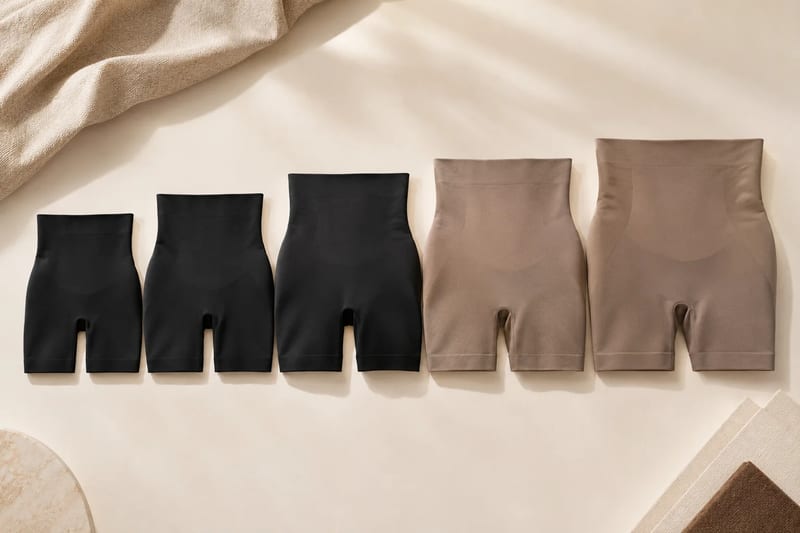
A base sample helps develop and approve a particular size and construction. A size set makes selected points in the graded range available for physical review. The supplier and buyer should agree the exact purpose because sample names and commercial packages can vary.
The set can reveal whether openings, panel placement, lengths and components follow the proposed schedule. It can also expose mismatched labels or a size-dependent construction issue. These findings are difficult to establish by looking only at a base garment and a spreadsheet.
Keep body ranges separate from garment dimensions. ISO 8559-3 concerns body-measurement tables and intervals and excludes garment dimensions. A customer chart therefore does not replace the finished-garment schedule used to inspect the set. ISO 8559-1 can help define relevant body measurements for fitting.
Ask S-Shaper’s sizing customization team which graded platform exists and where physical confirmation is needed. A newly extended upper size, another torso proportion or a changed trim may require particular attention beyond the original central sample.
The set is not automatically a statistically representative production inspection or a population fit study. It answers the development questions agreed for those samples. Keep any later bulk sampling plan and customer-range validation distinct so the approval does not imply more evidence than the set actually provides.
| Evidence item | Main purpose | Limit |
|---|---|---|
| Base sample | Develop one identified size and assembly | Does not physically verify the whole grade |
| Size set | Check defined sizes and local relationships | Not all bodies or every production unit |
| Pre-production approval | Confirm stated production-ready version | Scope and material must be identified |
| Bulk inspection | Review production under agreed plan | Not a substitute for development fitting |
Base Sample vs Size Set: Which Approval Should Release the Next Stage?
Approve the purpose rather than the label. A base fitting may justify a revision, a grading review or a size-set request without releasing bulk. A size-set review may confirm dimensional work while leaving final branding or material approval outstanding.
Ask whether each supplied piece uses the proposed production fabric, finish and components. If a substitute is used to demonstrate shape, label that limitation. It may support a narrow question but cannot approve final material behavior or every assembled detail.
Keep fit, measurements and presentation as separate connected decisions. A factory can make a sample to its schedule and still need a fit correction. A well-fitting sample may contain temporary labels or a component not yet available in production quantity. Neither observation should silently disappear from the approval record.
Before authorizing another commitment, identify what is stable and what remains open. A founder should know whether the next action purchases material, prepares components, makes another sample or begins a defined production stage. Sample acceptance and commercial authorization should be explicit.
The trade-off is targeted preparation against unresolved range risk. Not every project needs the same set, but a low first-order quantity does not make size-dependent issues irrelevant. Ask which physical checks are most likely to change the buying decision rather than omitting range review simply because the launch is small.
| Decision | Base evidence | Size-set evidence |
|---|---|---|
| Pattern foundation | One identified fitted size | How selected grades follow it |
| Range limits | Usually unresolved without more work | Physical checks at agreed locations |
| Material status | Record actual sample material | Confirm continuity across supplied sizes |
| Release meaning | Only the stated next stage | Only checked sizes, versions and conditions |
How Should You Specify the Size-Set Request?
Write the style, range, quantities, materials, color and component versions. Identify what each sample is for and which versions it must represent. A request for all sizes can still be ambiguous if the factory does not know which material or revision is current.
Prioritize the base, important transitions and range limits. Include relevant torso, bust or opening questions for the platform. If the garment changes construction at a particular size, make that an explicit review point rather than treating every label as another copy of the same assembly.
For a deliberately hypothetical order-planning example, one piece in each of five sizes plus a second piece in two critical sizes gives seven garments. If all five sizes were separately requested in three colors, that would be 15 garments before any duplicates. These are chosen counts, not a required sample package or proof that every color needs identical development work.
Discuss the actual rationale for color and material coverage. A size set in one shade does not automatically establish another finish or material, while repeating every color may add work without answering the sizing question. Ask the technical team which differences need separate evidence.
Use the S-Shaper OEM/ODM sample discussion to agree deliverables, preparation conditions and timing. A generic sample fee or garment minimum does not establish the price or quantity requirements for the requested set. Obtain a current project-specific proposal.
| Hypothetical request | Calculation | Chosen garment count |
|---|---|---|
| One piece in five sizes | 5 × 1 | 5 |
| Extra pieces in two critical sizes | 2 × 1 | 2 |
| Combined illustrative set | 5 + 2 | 7 |
| Alternative all-size / three-color request | 5 × 3 | 15 before duplicates |
| Scope | Planning arithmetic | Not a supplier package or required minimum |
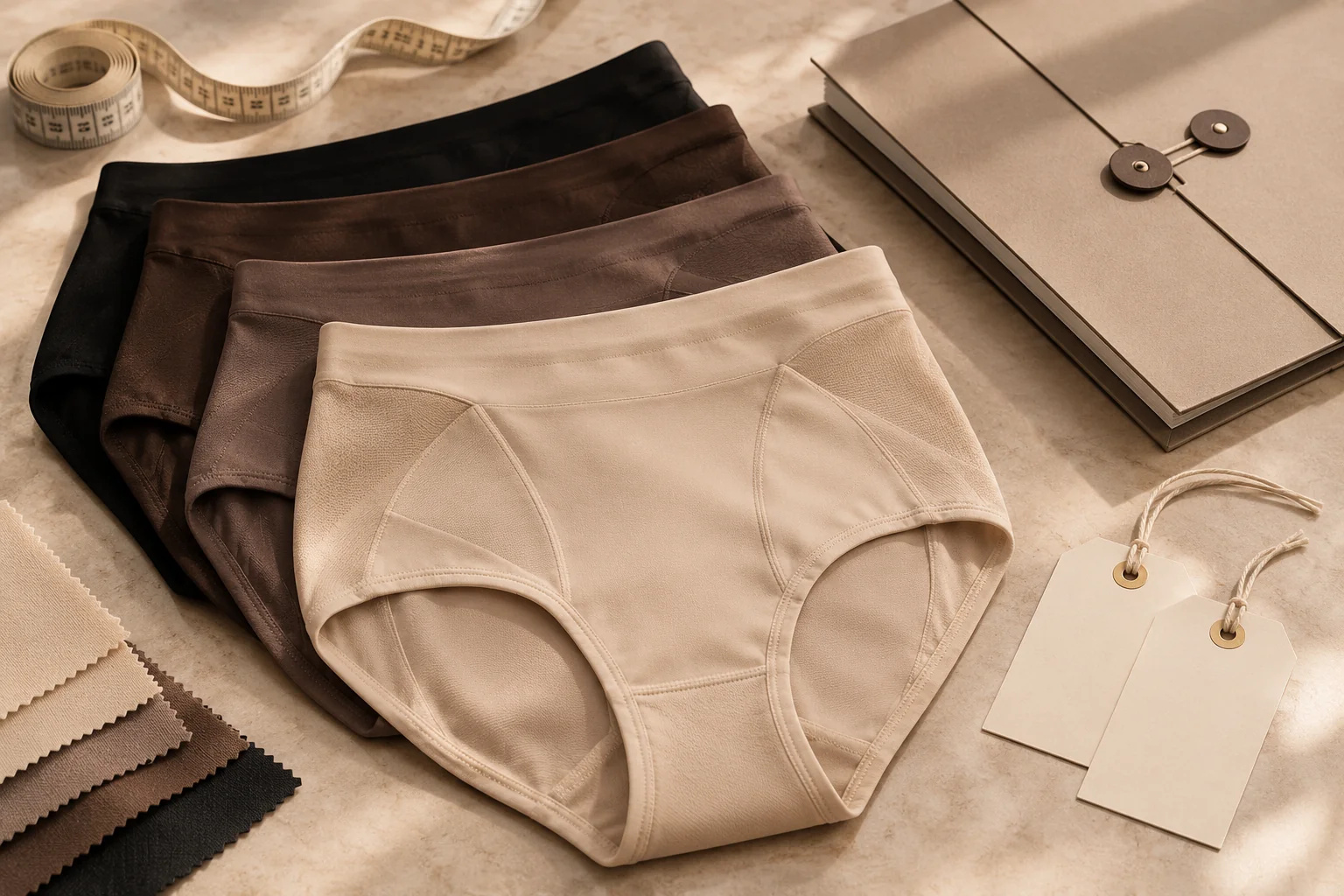
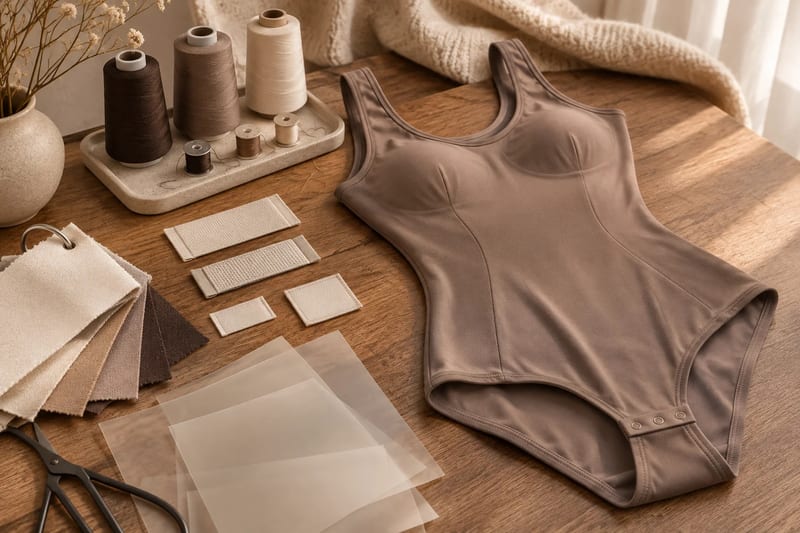
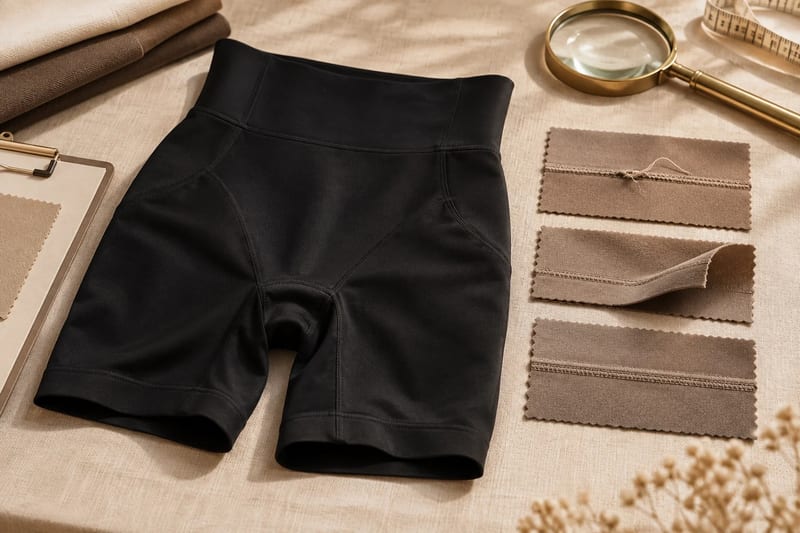
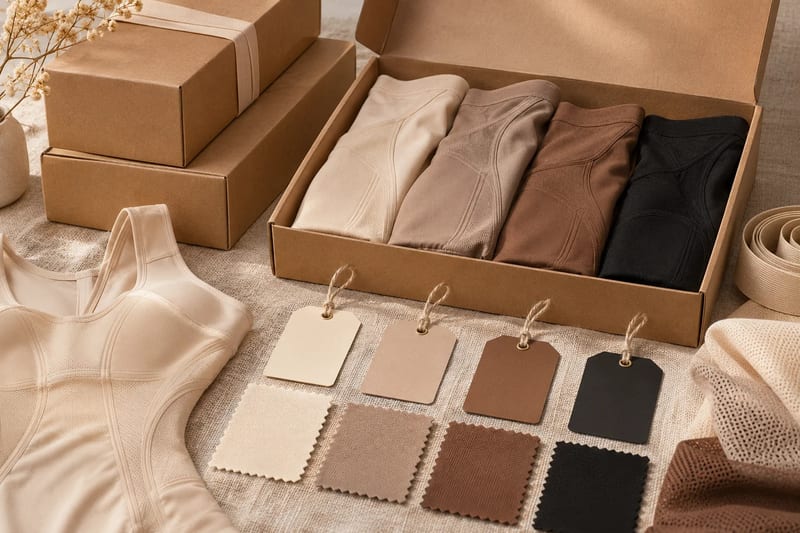
Illustrative sourcing and product-development scene. Click to continue the related buyer guidance.
How Do You Review Size-Set Measurements and Deviations?
Use the same points, handling state and units defined in the garment specification. Keep the target, actual reading and deviation separate. A measurement without a clear point or sample identity cannot establish whether the intended grade was made correctly.
For a deliberately hypothetical check, choose a flat-waist target of 34.0 centimetres, flat hip of 43.0 and defined torso path of 59.0, each with a chosen demonstration tolerance of plus or minus 0.5. Imaginary readings of 34.3, 43.8 and 58.6 produce deviations of plus 0.3, plus 0.8 and minus 0.4.
Under those invented criteria, the hip requires investigation while the other two readings fall within the chosen dimensional bands. This is not an actual test, a recommended tolerance or approval of fit. Real tolerances must suit the point, construction, measurement method and agreed project requirements.
Do not average a failed point with passing ones to declare the garment acceptable. Investigate sample making, pattern identity, material state and the measuring process. If the target itself changes, document the technical reason and review affected sizes rather than moving the limit only to accept the sample received.
Retain the individual readings and disposition. The useful output is a clear action for each finding, including remeasurement, correction, another sample or an approved documented change. A simple green checklist is insufficient when the underlying numbers cannot be reconstructed.
| Hypothetical point | Target / imaginary reading | Deviation | At chosen ±0.5 cm only |
|---|---|---|---|
| Flat waist | 34.0 / 34.3 cm | +0.3 cm | Within dimensional band |
| Flat hip | 43.0 / 43.8 cm | +0.8 cm | Investigate |
| Torso path | 59.0 / 58.6 cm | −0.4 cm | Within dimensional band |
| Limit | Chosen illustration | Not production data | No automatic fit approval |
Which Fit and Construction Checks Should Accompany the Measurements?
Select the relevant body cases for the supplied sizes. A measured garment is not a worn garment, and a single participant cannot represent every proportion within a label. Record which sizes and relationships were actually tried and which remain open.
Use S-Shaper garment references to identify the tasks the set must support. A body needs torso and closure checks; shorts need rise and thigh-opening review. Coverage and movement should be assessed on the actual proposed construction.
Check size-dependent components and labels. A correct pattern can still be paired with an unsuitable elastic, closure or strap. Confirm component references, placement and identifiers rather than assuming the base garment’s trim automatically serves the entire range.
Review material and care state consistently. If some samples were washed and others not, record the difference before comparing dimensions or feel. Do not treat an unspecified home-care trial as a standardized procedure or let a report on the main fabric approve the complete assembly.
Discuss S-Shaper’s quality-assurance process and how findings are closed. The record should distinguish a sample discrepancy, an approved grade change and a wearer limitation. Each can require another action, and the correct response is not always to adjust the chart or choose a different label.
How Should Size-Set Corrections Be Controlled Before Bulk?
Number the findings and connect each to the sample, point or wearer observation. State the proposed change, responsible role and evidence needed to close it. A vague instruction to improve fit leaves too much interpretation for a production handoff.
Ask which adjacent sizes and components the correction affects. A change to a seam length or panel boundary can require related updates. The technical team should list those dependencies before the new schedule is released, instead of correcting one sample and leaving the range inconsistent.
Recheck the necessary evidence. A documentary correction to a mislabeled measurement point differs from a new pattern or material. Decide whether remeasurement, photographs, a replacement sample or another fitting is needed for the particular finding. Do not require everything by habit or waive everything because of a deadline.
Maintain a single live specification and clearly supersede rejected samples. Store the approved reference so production and receiving can identify it. The final release should summarize the size set, checks completed, remaining conditions and the precise stage authorized.
Keep the customer chart and variant identifiers aligned with any accepted change. A corrected pattern that still ships with an obsolete label or product guide can create another sizing problem. Technical and commercial records need to converge before the bulk commitment becomes final.
Which Shapewear Manufacturers Can Support Size-Set Approval?
Compare the ability to make and control the requested samples, not just the ability to list many sizes. A supplier’s country does not establish the content, turnaround or acceptance meaning of a size-set program.
China Shapewear Manufacturer: Link the Set with Materials and Release Conditions
China shapewear manufacturers offering development, production and quality coordination can make a size set useful when every piece identifies the current pattern, actual material and component version proposed for the order.
Recommended China Supplier: S-Shaper
S-Shaper describes design, production, QA and export specialists and recommendations informed by international-brand work. Ask its development team which sizes and construction transitions need physical confirmation for the selected platform. Applicable small-order tests depend on the item; they do not automatically include a full custom size-set package. Confirm available material, component procurement and the approvals required before dispatch. This route suits a startup needing direct coordination between findings and the current manufacturing proposal, with the brand retaining a clear record of what the set actually approved.
Canada Shapewear Manufacturer: Manage the Grading Revision Handoff
A Canada-based shapewear manufacturer comparison can prioritize technical review when the founder needs help interpreting sample deviations and ensuring a local correction is carried coherently across the graded range and overseas production instructions.
Recommended Canada Supplier: Hertex Lingerie
Hertex identifies Montreal design, pattern, grading and QC with China production. Ask which size-set readings, fit cases and correction rounds the proposed scope includes, and who owns the final schedule. The hybrid route can help where technical interpretation is the main gap, while startup eligibility and sampling conditions need confirmation. Canadian involvement does not mean locally made samples or immediate replenishment stock. Agree the material and factory handoffs before treating the set’s delivery as a dependable bulk shipment milestone.
Turkey Shapewear Manufacturer: Verify the Actual Seamless Range
Turkey shapewear manufacturers with integrated seamless production can be assessed through how their proposed sizes are made, finished and checked on the actual platform, rather than assuming a cut-and-sew sample schedule applies unchanged.
Recommended Turkey Supplier: SML Seamless
SML describes private-label shaping products and yarn-to-packed facilities. Ask which physical size samples can represent the final knit and processing state, and how local findings affect the next version. Integration can simplify handoffs but does not prove range fit or disclose a universal size-set minimum. Yarn, dyeing, components and development work need current conditions. This route suits a compatible seamless product whose critical sizes can be evaluated, with sample approvals and material readiness resolved before dispatch planning.
Portugal Shapewear Manufacturer: Connect Material and Finished-Part Checks
Portugal shapewear manufacturer candidates with research and quality functions can be relevant when the set needs review of both dimensional development and the response of materials, elastics or other parts across sizes.
Recommended Portugal Supplier: Impetus
Impetus describes research collaboration and physical or chemical checks across materials and finished parts, with seamless and cut-and-sew development. Ask what technical and sample work the proposed program can supply for your range. Capability does not establish that every sample has passed your criteria, or that a startup quantity will be accepted. Laboratory, material and preparation commitments require a quote. It suits a defined investigation where the buyer can identify the critical questions and confirm development and production dependencies before ordering.
Choose the route that can deliver identifiable samples and close findings against an agreed specification, then release only the stage supported by the completed review.
How Can S-Shaper Help Organize a First Shapewear Size Set?
S-Shaper’s OEM/ODM, customization and quality services provide a starting point for connecting an approved base with the size range a startup wants to sell. Ask the team to identify the relevant samples, measurement records and construction checks for the chosen platform. The project proposal should state the actual set and approval scope.
Send the planned range, target body profile, live specification, material reference and any critical size concerns. Ask which findings need another sample and what conditions authorize production. Consult the S-Shaper order FAQ for preliminary information, then confirm item-specific requirements and the supply handoff.
To proceed, request a size-set and production-approval proposal. Seek an auditable connection between the physical samples and the order, rather than a signature whose meaning the factory and brand interpret differently.
FAQ: Why a Shapewear Size Set Matters Before Bulk Production
Is a base sample enough before my first bulk order?
It can support decisions about that identified size and construction, but it does not physically verify every grade or size-dependent component. Agree the relevant size-set and fitting evidence before approving the planned range rather than assuming one central sample proves it.
Must every size and color be sampled?
The appropriate scope depends on the range, construction, material differences and unresolved questions. Identify base, transitions and limits, then ask what physical checks are needed. A sample in one color does not automatically validate another material or finish.
Do passing measurements prove the garment fits?
No. Dimensional checks establish compliance with an agreed garment schedule under defined conditions. The sample can still fail the intended wearer or movement requirement. Keep measurement and fit evidence connected but separate.
Are the ±0.5 cm tolerances in the example universal?
No. They are deliberately chosen demonstration criteria, and all readings are hypothetical. Agree appropriate tolerances for the actual points, construction and measuring method before production review. Do not set a limit solely to accept a result already received.
What should the final size-set sign-off say?
Identify the samples, material, pattern and component versions, completed checks, corrections, remaining conditions and next stage authorized. Keep the live specification and customer identifiers aligned, and archive superseded records so bulk production follows one accepted version.